A collective effort by the people and authorities helped Mumbai’s Dharavi, once a hotspot of the coronavirus disease (Covid-19), reduce the number of infection, a senior health official said on Saturday, a day after the area reported zero positive cases for the first time since the pandemic in the country. The slum-dominated Dharavi did not report a single Covid-19 infection on Friday for the first time since April 1 when the first patient of the viral disease was detected in the area.
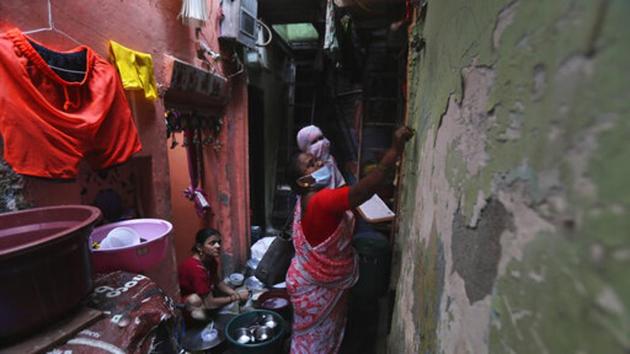
“Dharavi model underlines the importance of community-based model and community participation in any public health crisis,” Dr Pradeep Awate, Maharashtra’s state surveillance officer, was quoted as saying by news agency ANI. “The model of tracing, testing and treatment was found to be useful due to community participation and the vital role played by private doctors in Dharavi with the guidance of bureaucracy and public health department,” Awate, who heads the epidemiology cell of the state health department, added.
The total case count of Dharavi now stands at 3,788, with the number of active cases at only 12. The coronavirus caseload of Mumbai stood at 289,800 on Friday with 596 new cases being recorded in the last 24 hours. The death toll reached 11,056 after 11 new fatalities were reported in the city. Currently, Mumbai has 8,219 active Covid-19 cases with a growth rate of 0.21 per cent. Maharashtra reported 3,431 new coronavirus disease cases on Friday, taking the tally of infections to 19,13,382. There were 71 new fatalities pushing the state’s death toll to 49,129.
Dharavi model
{{/usCountry}}Dharavi model
{{/usCountry}}Asia’s largest slum saw its first positive case on April 1, when a 56-year-old man with no history of foreign travel died from the coronavirus disease. Hindustan Times had reported that eight of his family members were quarantined and were set to undergo tests. The man was a resident of a building commissioned under the Slum Rehabilitation Authority (SRA) project. Dharavi is spread over 239-hectares and housing close to one million people, making it next to impossible to enforce social distancing norms.
According to a report by the think tank Observer Research Foundation (ORF), Dharavi houses 20,000 small-scale work units, while the rest are made up of shanties with community toilets, one toilet complex shared by about 1,400 people on average.
The Brihanmumbai Municipal Corporation (BMC) relied on three tactics - tracking, testing, and treating, which came to be known as the Dharavi model and was driven by Kiran Dighavkar, an assistant municipal commissioner with BMC.
When HT interviewed the man at the helm of the Dharavi model, Dighavkar spoke at length about community toilets rendering contact-tracing efforts futile. “WHO or ICMR direct contact-tracing on a massive scale. But in Dharavi, contact-tracing is difficult because 5,000 people are using one toilet block. The only thing in our control is proactive work. We are chasing the virus, as opposed to people identifying they are unwell, doing a test and coming to us. We arrange a large number of fever camps, screen residents, identify suspected Covid-19 cases and shift them to institutional quarantine facilities,” he said.
Dighavkar said the Dharavi model is made for locations where social distancing and home quarantining of patients and high-risk contacts is not possible, like in slums. “Aspects of this model can be used in dense urban areas with high cases, such as organising fever camps, early detection, quarantining suspected Covid cases and institutional quarantine of a large number of high-risk contacts,” he added.
Private hospitals and practitioners were taken on board as stakeholders in the fight against coronavirus. As a result, the average growth rate of Covid-positive cases plummeted from 12 per cent in April to 4.3 per cent in May to 0.83 per cent in June and just 0.38 per cent in July and yesterday Dharavi reported zero cases for the first time since the Covid-19 outbreak.
Way forward
The Tata Institute of Fundamental Research (TIFR), Mumbai, did a seroprevalence survey in July, which found that more than half the population at Dharavi had Covid-19 antibodies, meaning they had already been exposed to the virus. Mumbai has experience when it comes to dealing with highly contagious diseases, it is after all the home to the largest drug-resistant tuberculosis cluster in the country.
Keeping talks of herd immunity aside commissioner Dighavkar told HT in July that screening and testing efforts will be continued along with an emphasis on hygiene and healthcare infrastructure. “We will keep screening and testing. We are working on behavioural change of residents for cleanliness and sanitary habits, especially while using community toilets,” he had said.
“I also want to create a permanent Covid health care infrastructure in Dharavi, like we built a 200-bed hospital in front of Maharashtra Nature Park, with oxygen supply beds in a record 15 days in April. This will be converted into a permanent structure,” he added.