E-Paper



Dharmendra Pradhan assures action on CBSE glitches
The education minister maintained that the digital evaluation system was a “progressive instrument” aimed at improving transparency and student access.

 Prefer HTon Google


Union education minister Dharmendra Pradhan on Thursday said the government was taking responsibility for discrepancies reported in the Central Board of Secondary Education’s (CBSE) new On-Screen Marking (OSM) system and assured students that all grievances would be addressed, even as he hit back at Lok Sabha leader of opposition Rahul Gandhi over criticism of the evaluation process.
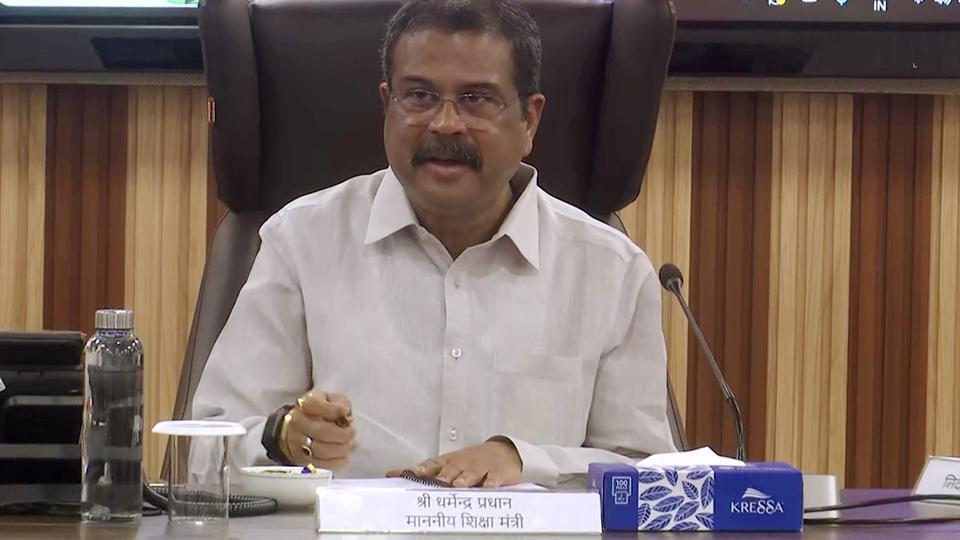
Pradhan said certain discrepancies had come to the government’s notice after the nationwide roll-out of OSM this year, but maintained that the digital evaluation system was a “progressive instrument” aimed at improving transparency and student access.
“This is the first time CBSE has implemented this system in the country. Certain discrepancies have come to our notice, and I take responsibility for them. These issues will be rectified, and appropriate solutions will be worked out. We will not leave a single student’s unanswered query or concern unresolved,” Pradhan told reporters in Delhi.
He said CBSE had digitally evaluated around 9.8 million answer scripts from nearly 1.7 million students, involving roughly 40 crore scanned pages. “OSM is student-centric and designed to ensure transparent information about marks,” he said.
Pradhan also said expert teams from Indian Institute of Technology (IIT) Kanpur and IIT Madras had been roped in to examine technical concerns linked to the rollout. He added that the Centre had integrated CBSE’s payment gateway with four public sector banks — State Bank of India, Indian Bank, Bank of Baroda and Canara Bank — to streamline student payments linked to post-result services.
Responding to Pradhan’s remarks, Gandhi said in a post on X that personal attacks would not “absolve” the government of responsibility over the CBSE evaluation controversy. Questioning the award of the OSM contract to Coempt Edu Teck — formerly known as Globarena Technologies — Gandhi asked why the company was selected despite past controversies and whether proper background checks were conducted.
Earlier on Wednesday, Gandhi had alleged CBSE skipped background checks, bypassed rules to award the contract to the Hyderabad-based firm and alleged a nexus between the company’s management and the government. CBSE denied the allegations, calling them “erroneous, misleading and not based on facts”.