
 E-Paper



Dharmendra Pradhan introduces Viksit Bharat Shiksha Adhishthan Bill in Lok Sabha
Opposition MPs opposed the introduction of the bill, stating that they did not get enough time to study the bill


New Delhi: Union education minister Dharmendra Pradhan on Monday introduced ‘The Viksit Bharat Shiksha Adhishthan Bill, 2025’ in Lok Sabha, which seeks to establish a three-council commission as a single higher education regulator, tasked with enforcing outcome-based accreditation, setting academic standards, and granting graded autonomy to higher education institutions.
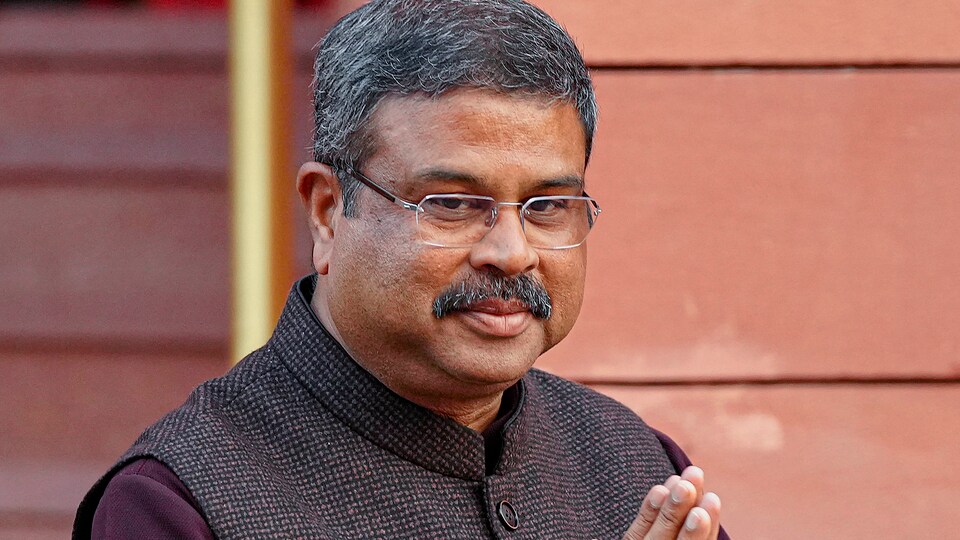
Introducing the bill, Pradhan said the legislation seeks to establish the ‘Viksit Bharat Shiksha Adhishthan’ to set standards, coordinate regulation, and promote excellence, autonomy, and transparent accreditation in higher education institutions. He said the legislation seeks to “facilitate the universities and other higher educational institutions to become independent self-governing institutions…”
Later, Parliamentary affairs minister Kiren Rijiju said the government is proposing to refer it to a Joint Parliamentary Committee (JPC).
Rijiju said, “Many MPs have requested that this is an extensive bill and they need further deliberations on this bill. So, the government hereby proposes to send this bill to the JPC.”
Opposition MPs opposed the introduction of the bill, stating that they did not get enough time to study the bill and and that it weakens state governments' power.
Opposing the Bill, Congress MP Manish Tewari said it suffers from serious constitutional and structural flaws and leads to “excessive centralisation of higher education,” and hence “violating the constitutional distribution of legislative powers.”
Tewari said the bill suffers from “excessive delegation of legislative power,” as crucial matters such as accreditation frameworks, degree-granting powers, penalties, institutional autonomy and even supersession are left to be decided through rules, regulations and executive directions and hence “violates core constitutional principles.” He said the bill has “overriding effect over existing laws and the sweeping powers to supersede institutions established under state laws,” warning that it raises “serious concerns of arbitrariness and legal uncertainty” without adequate safeguards.
Opposition MPs from southern states, including Kerala and Tamil Nadu, also opposed the bill over its “sanskritised” nomenclature and alleged Hindi imposition.
RSP MP N. K. Premachandran said his “first objection is the nomenclature of the Bill,” stressing that the authoritative text “shall be in English,” and warned of “centralisation of the power with the Centre.” DMK MP T.M. Selvaganapathi called the title itself “an imposition of Hindi” and termed the legislation a “colourable legislation” giving the Union government sweeping control. Congress MP S. Jothimani echoed these concerns, describing the name as “aggressive, unnecessary, sanskritised nomenclature” and calling the Bill “another way of imposing Hindi” and an “attack on the federal structure.”
Meanwhile, TMC MP Saugata Roy opposed the Bill, calling out the “ineptness of the Ministry of Parliamentary Affairs” for circulating it “late last night” and denying MPs time to prepare. He said the Bill seeks to “centralise power in the central government’s hands,” subsumes the UGC’s role, and gives the Centre excessive control over state universities, thereby undermining their autonomy and independence.
Approved by the cabinet on Friday, the Viksit Bharat Shiksha Adhishthan Bill, 2025--earlier called the Higher Education Commission of India (HECI) Bill--aims to replace the University Grants Commission (UGC), the All India Council for Technical Education (AICTE), and the National Council for Teacher Education (NCTE). It also seeks to regulate the establishment of higher educational institutes, imposing a fine of ₹2 crore on those who set up universities without proper government approval.
The new higher education commission will consist of three wings--the Regulatory Council, Accreditation Council, and Standards Council. The 12-member commission will include the presidents of each council, the Union higher education secretary, two eminent academicians from state higher education institutions, five distinguished experts, and a member secretary, the bill proposes. All appointments will be made by the Centre through a three-member search panel, the bill states.
The bill states that institutions violating its provisions might face fines ranging from ₹10 lakh to ₹30 lakh, and repeated offences could attract penalties of at least ₹75 lakh or suspension. It also stipulates that “if any person establishes a university or higher educational institution without the approval of the Central Government or the respective State Government, such person shall be liable to a penalty which shall not be less than two crore rupees”.


