
 E-Paper



Does rise in monkeypox cases lead to HIV? Here’s what top ICMR scientist says
There have been at least 90 countries that have reported more than 30,000 monkeypox cases across the world. India is one of them, and so far, a total of 10 confirmed cases have been detected in the country.

 Prefer HTon Google


Amid rising monkeypox cases in India and globally, a top scientist of the Indian Council of Medical Research-National Institute of Virology (ICMR-NIV), Pune, on Monday ruled out the possibility of the situation leading to human immunodeficiency virus (HIV).
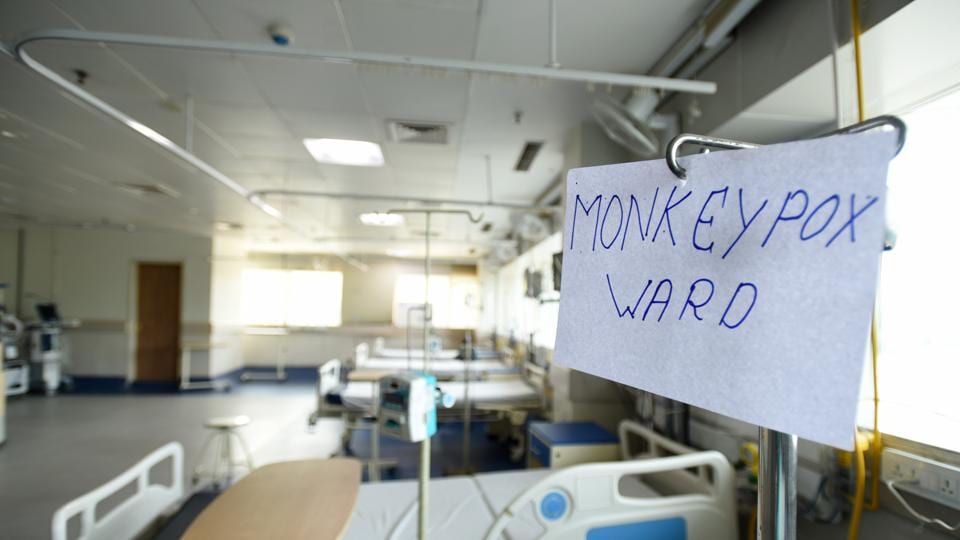
In an interview with news agency ANI, Pragya Yadav, a senior scientist at ICMR-NIV, Pune, said the spike in monkeypox cases will not “lead to HIV”.
“These monkeypox cases would have been tested for HIV during the detailed diagnosis to rule out other sexually transmitted infections (STIs),” she was quoted as saying.
Also Read | Monkeypox virus can stay on computer mouse, coffee machine for days: CDC study
She, however, said that monkeypox patients can be asymptomatic and in order to conduct studies on such cases, an “ELISA assay is currently being developed”.
Yadav also spoke about the effectiveness of the smallpox vaccine against monkeypox, stating that it is 86 per cent effective at preventing the zoonotic disease.
On the matter of the ICMR boosting testing facilities for monkeypox in the country, the scientist said the laboratory network of the central agency is currently being extended. “We are in the process of developing serological assays and working towards a vaccine as per the expression of interest released by ICMR,” she said during the interview.
There have been 10 confirmed cases of monkeypox in India so far, five each from Kerala and Delhi. Of these, the southern state has reported one fatality due to the zoonotic disease.
The World Health Organisation (WHO) declared monkeypox a global health emergency last month. The disease has now spread to at least 90 countries with more than 30,000 cases. The United Nations health agency, however, continues to urge the global community not to show discrimination as the disease has majorly been reported to affect men who have sex with men.
Meanwhile, limited supplies of the monkeypox vaccine has been a concern in the US and in Europe as well. To address the issue, the European Medicines Agency (EMA) on Friday (August 19) allowed countries to stretch the supplies by administering smaller doses of the jab. This advice is in line with the supposed fractional dosing approach advocated by US regulators wherein one vial of the vaccine can be used to administer up to five separate doses - instead of a single one.
(With agency inputs)


