
 E-Paper



‘Dominant resisting change,' says Jaishankar; warns of ‘double standards’
He said that India’s challenge and success at G20 Summit was steering the global conversation back to global growth and development issues.

 Prefer HTon Google


New York: External affairs minister S Jaishankar has said that India’s challenge and success was getting the G20 to talk about what the world wanted to talk about and steering the global conversation back to global growth and development issues affecting the global south that had got drowned due to the pandemic and the war.
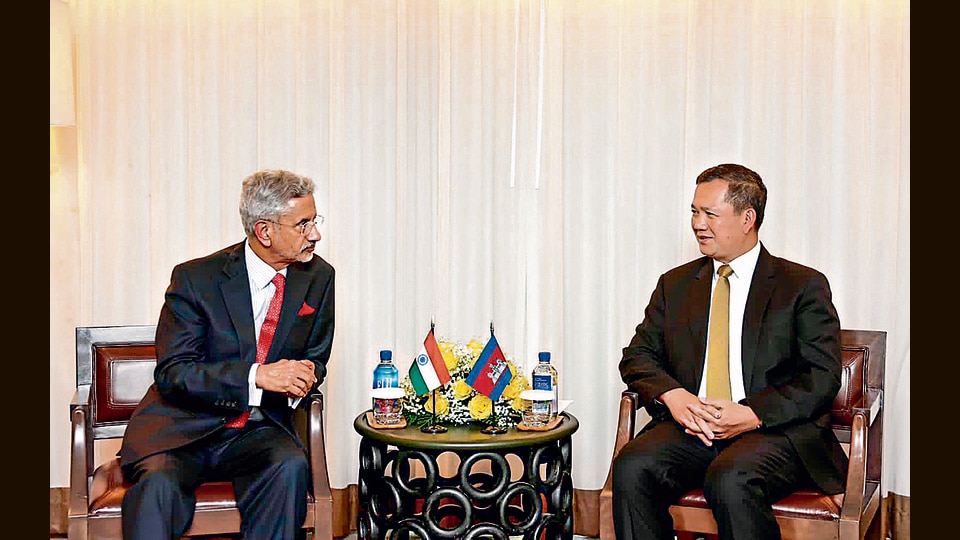
But he also warned that while the global south embodies this political pressure for change, there is political resistance with the dominant actors weaponising institutional and economic and capabilities and espousing “double standards”. And it wasn’t just those countries in the global north but others who may not think of themselves as the north which were resisting change, he said.
Also Read: Jaishankar kicks off intensive bilateral engagements in New York with close partners
Speaking at a ministerial panel on the theme of “South Rising: partnerships, institutions and ideas” in New York on Friday evening, asked about his assessment on how India is being viewed after meeting close to 20 counterparts in 36 hours in the city where the world has congregated for UN General Assembly high-level week, Jaishankar said that on Indian presidency of G20, there were two responses.
Some remained surprised that a declaration happened and were curious about how it happened; many others, including fellow countries of the global south, were appreciative that India got the G20 to get back to the job for which it was created — “global growth and development”.
Later in the conversation, Jaishankar was asked about one of his most quoted statements on Europe — where he had said it was time for the continent to stop thinking that the world’s problems weren’t its problems but Europe’s problems were the world’s problems — and whether there was enough political courage visible to make a change in global governance as sought by the global south.
Also Read: From global north to south, Jaishankar continues bilateral engagements
The minister said that his statement on Europe was made in a particular context. In its own interactions with countries of the global south, five issues often came up — debt, Sustainable Development Goals resourcing, climate action resourcing, digital access, nutrition and gender. It was PM Narendra Modi who said, “Let’s first talk to people who are not on the table,” leading to India convening the voice of global south summit; this gave Delhi “credentials and empirical evidence” to raise these issues. But then Jaishankar also credited all G20 members, including European states, for listening and responding to reason.
On the question of the presence or absence of political courage to effect change, Jaishankar said more than political will, there was political pressure to change and the global south embodied it.
“Those who are occupying positions of influence, we see this in the UN Security Council most of all, are resisting the pressure to change. Those who are economically dominant today are leveraging their production capabilities and those who have institutional influence or historical influence have actually weaponised a lot of those capabilities as well,” the minister said. He then added that while all countries mouth the right principles, the reality was that it is still a world “very much of double standards” and offered Covid-19 as an example.
This resistance against change came not just from the global north, but also countries that may not consider itself a part of the global south, Jaishankar said, in a possible reference to China. “I think this whole transition will really be in a sense the global South putting more and more pressure on the international system.”
Responding to a comment by Grammy winner Ricky Kej on the power of music of the global south, Jaishankar also spoke there was a process of cultural rebalancing, based on recognising the diversity of the world and giving other cultures and traditions their due respect. The global south would like to see their heritage, way of life, cultures, literature, traditions recognised as a part of this change.
The event was hosted by Observer Research Foundation and Reliance Foundation, along with UN India and the Permanent Mission of Indian to UN.


