
 E-Paper



Trump says will end birthright citizenship on day 1: Its impact on Indians
Donald Trump plans to end birthright citizenship upon taking office, a move that could impact 4.8 million Indian-Americans living in the US.

 Prefer HTon Google


Donald Trump has promised to end birthright citizenship as soon as assumes the office of the US President in January, making good on his campaign promise aiming to restrict immigration.
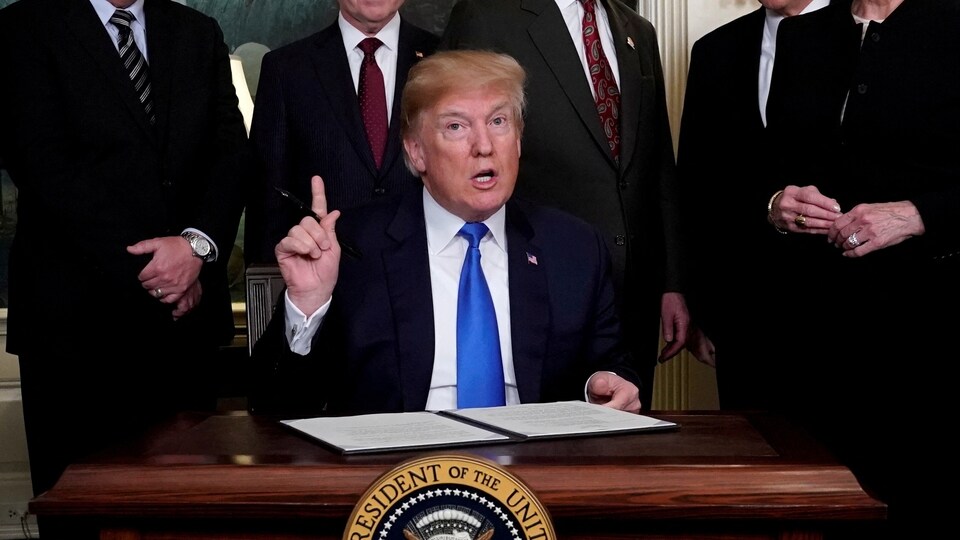
The controversial proposal seeks to end a longstanding American tradition that guarantees citizenship to anyone born on US soil, regardless of their parents' immigration status. This policy, enshrined in the 14th Amendment of the US Constitution, has been in place for more than 150 years.
What is birthright citizenship?
Birthright citizenship means anyone born in the United States automatically becomes an American citizen. It's been in place for decades and applies to children born to someone in the country illegally or in the US on a tourist or student visa who plans to return to their home country.
It is grounded in the 14th Amendment, ratified in 1868, which states: "All persons born or naturalized in the United States, and subject to the jurisdiction thereof, are citizens of the United States and of the State wherein they reside." This provision was originally designed to grant citizenship to formerly enslaved people and their descendants.
It's not the practice of every country, and Trump and his supporters have argued that the system is being abused and that there should be tougher standards for becoming an American citizen.
Opponents of the policy, however, contend that eliminating it would have far-reaching consequences, particularly for children born in the US to undocumented immigrants or visitors on temporary visas.
Trump's take on birthright citizenship
During an interview this week, Trump said he “absolutely” planned to halt birthright citizenship once in office.
“We're going to end that because it's ridiculous,” he said.
The President-elect argued that it enables "birth tourism," where pregnant women enter the US with the sole intention of giving birth in order to secure US citizenship for their child. "We're going to have to get it changed," Trump said. "We'll maybe have to go back to the people. But we have to end it."
Although Trump raised the issue during his first term, no substantial progress was made toward ending birthright citizenship. This time, however, the president-elect is determined to act swiftly, despite knowing that such a move would face significant legal and constitutional challenges.
Legal and political challenges ahead
In the aftermath of the Civil War, Congress ratified the 14th Amendment in July 1868. That amendment assured citizenship for all, including Black people.
A key case in the history of birthright citizenship came in 1898, when the US Supreme Court ruled that Wong Kim Ark, born in San Francisco to Chinese immigrants, was a US citizen because he was born in the states. The federal government had tried to deny him reentry into the county after a trip abroad on grounds he wasn't a citizen under the Chinese Exclusion Act.
"Simply crossing the border and having a child should not entitle anyone to citizenship," said Eric Ruark, director of research for NumbersUSA, a group advocating for reduced immigration. Ruark and others on the right argue that ending birthright citizenship would reduce the incentive for illegal immigration.
However, critics of the proposal warn that it could create a new class of people in the US who are excluded from full social and political rights. Alex Nowrasteh, Vice President of the pro-immigration Cato Institute, called Trump's plan "a non-starter." "I don’t take his statements very seriously. He has been saying things like this for almost a decade," Nowrasteh said. "He didn’t do anything to further this agenda when he was president before."
Impact on immigrants
Experts have pointed out that a large number of US citizens could be affected if the policy were to change. For instance, Pew Research estimates that there are approximately 4.8 million Indian-Americans living in the US, with 1.6 million of them born in the country. These individuals would no longer have proof of citizenship under the new proposal.
In a recent statement, Trump also expressed concern about breaking up families, suggesting that if birthright citizenship were eliminated, families would have to be deported as a unit, which could include US citizen children.
A 2011 factsheet by the American Immigration Council warned that eliminating birthright citizenship would make it difficult for US citizens to prove their citizenship, as birth certificates are currently used as the primary proof of citizenship. The factsheet also noted that repealing birthright citizenship would affect millions of American children and create a significant administrative burden for the US government.


