
 E-Paper



Education: How the pandemic has left young children vulnerable
The report highlighted several consequences of Covid-19 pandemic on the Indian education system, including the exodus of rural children from private schools, increasing dependence on paid tuition, and the existing digital divide

 Prefer HTon Google


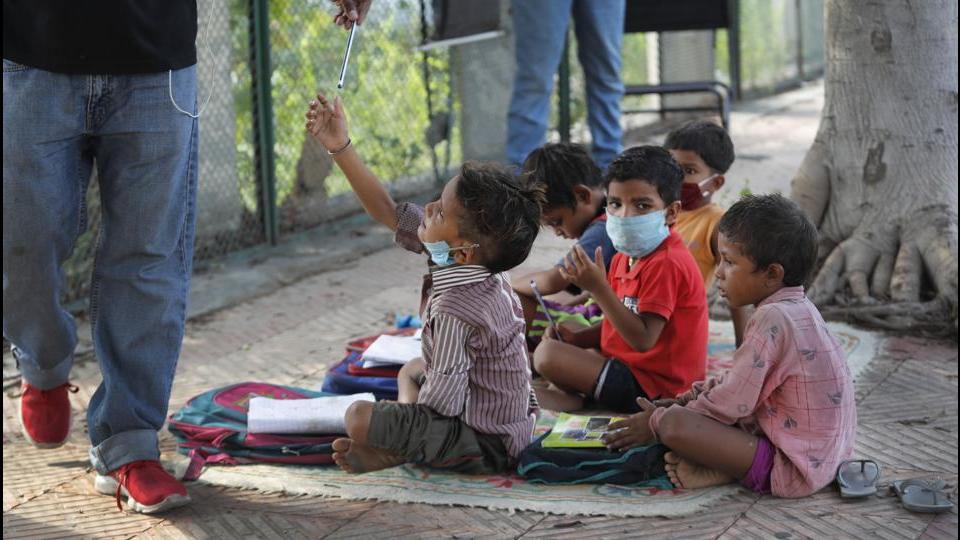
New Delhi: The youngest learners in early primary grades require “urgent attention” as schools are reopening, stated the Annual Status of Education Report (ASER) for 2021, released on Wednesday, while asserting that their situation should set off “loud alarm bells” even without measuring their learning outcomes.
The 16th edition of the report, issued by the non-profit organisation Pratham, was prepared on the basis of a household telephonic survey conducted in rural areas of 581 districts across 25 states and three Union territories between September and October this year.
The survey — which covered 76,706 households, 75,234 children between 5 and 16, and teachers and staff from 7,300 government schools — aimed to capture the transition in the education system at a time when schools are reopening in a staggered manner after almost 18 months due to the pandemic.
The report highlighted several consequences of Covid-19 pandemic on the Indian education system, including the exodus of rural children from private schools due to financial constraints caused by the pandemic, increasing dependence on paid tuition due to the prolonged closure of schools, and the existing digital divide, among others.
It, however, repeatedly emphasised how young children have been affected the most. For instance, the maximum shift from private to public schools was reported among younger students. For classes 1 and 2, the enrollment of boys in government schools rose 10.9% while for girls, the rise was 7.4% between 2020 and 2021. Similarly, more children in higher classes reportedly had access to a smartphone as compared to children in lower grades and it has also been found that the proportion of children currently not enrolled in schools was highest among 5-year-olds — reaching more than 14% in both 2020 and 2021.
All these revelations make younger children more “vulnerable”. “The consequences of not designing mechanisms to address the situation of the youngest learners will be extremely grave not only for individual children but for the school system as whole,” the report stated.
No classroom experience
The ASER report 2021 found that one in every three children enrolled in classes 1 and 2 had never attended in-person classes. The percentage of such children is 36.8% in government schools and 33.6% in private schools. As per the survey, overall 35.9 % of children enrolled in classes 1 and 2 have never attended in-person classes.
Suman Bhattacharjea, director of the ASER research centre, said, “Given the timeline of the pandemic, the incoming cohort of children in class 1 is unlikely to attend any pre-primary classes before beginning the primary school. Entry to the world of formal education can be a difficult process at the best of times but the challenges these young children face as learners are therefore likely to be far more complex than would have been the case in pre-pandemic times.”
The report suggested that teachers now have to pay more attention to such students as the schools are reopening.
Some teachers in rural areas also backed the survey observations. Akhilesh Sharma, a primary teacher at a government school in Uttar Pradesh’s Jhansi district, said, “A large number of students in classes 1 and 2 are new and they have no classroom experience. It is very difficult to even make them sit in the class first and basics like writing, reading alphabets and numbers.”
Digital divide, decrease in learning support
Even as smartphone ownership doubled between 2018 and 2021, the “youngest learners also have “least access to technology”, ASER 2021 stated. “Almost a third of all children in Classes I and 2 did not have a smartphone available at home.”
While the availability of smartphones in rural India was 36.5% in 2018, which increased to 61.8% in 2020 and 67.6% in 2021, only 19.9 % of children in Classes 1 and 2 have access to the devices whenever they require. As many as 39.3% of students in these classes have no access to smartphones, the survey stated. “There is substantial variation in access to smartphones by grade of children. More children in higher classes have access to smartphones compared to lower grades,” it added.
Similarly, the report raised grave concerns about the decrease in learning support to these students. Even as the ASER 2021 report found that 91.9% enrolled children have textbooks for their current grade, only about a third of children in classes 1 and 2, whose schools are yet to be reopened, reported to have received learning material from schools, in the form of worksheets in print or virtual form, and online or recorded classes.
“Even fewer had had some form of contact with teachers to discuss children’s learning (28.5%). The proportion of families who had some contact with teachers was heavily skewed towards better off families, as proxied by parental education levels,” said Bhattacharjea.
High proportion among not-yet-enrolled children
The proportion of children currently not in school is driven mainly by the 5 to 8-year old age group. “Among 5-8-year-olds, the proportion of children not currently enrolled in schools is 7.2% which is higher than the corresponding proportion among older children. This year too, the proportion of children not currently enrolled is highest among 5-year-olds, reaching more than 14% in both 2020 and 2021,” the report added.
The overall percentage of currently not enrolled children was found to be 4.9%.
Bhattacharjea said that getting these children into school is “urgent”. “These data point to a critical task ahead — that of ensuring that young children enrol in school or preschool. It may be that many 5 or 6 years old are simply awaiting admissions, as in the case every year. But this year is not normal. Getting these children into school is urgent. They have already missed many important months of engagements during the critical period of maximum brain development. “Once this period is over, the opportunity to help them build firm foundations during the viral early years will be lost,” he said.
Lagging behind
While the report doesn’t highlight the impact of pandemic on learning outcomes, a sample survey conducted in the 24 districts of Karnataka covering 20,000 students aged between 5-16-year-olds showed a “steep drop” in children’s foundation skills, particularly among those in lower primary grades. For instance, in class 3rd, only 24.2% students could read at least class 1 level of text. The figure was 41.% in 2018.
70.1% of the surveyed teachers also said that the students enrolled in classes 3 to 5 finding it more difficult to catch up with their grade-level curriculum as they return back to offline classes.
The way ahead
Educationist Meeta Sengupta said that for the younger students, the solution lies in community participation. “We need to urgently invest in community learning with trained para teachers who can guide the little ones based on intense, continuous and mentored support from an online learning system for the teachers. Our little children need a customised hybrid, and this can be done at mass scale, very rapidly, with local community participation to bridge the gap,” she said.
Sengupta said that efforts should be made to make learning joyful for younger children when they return to school. “We must revisit the idea of outcomes for the early years and redesign it to meet both the needs of socialisation into learning, and to make learning an act of joy so that they feel good about trying to do better and more,” she said.


