
 E-Paper



Efforts on to lift Afspa inall of North-East, says PM
Modi said the law was lifted from Meghalaya and Tripura as there was a 75% drop in violent incidents in the North-East over the past eight years — the BJP-led NDA government at the Centre came to power in 2014.


Efforts are on to repeal the contentious Armed Forces (Special Powers) Act (Afspa) from all regions in the North-East by bringing in improvements to the law and order situation, Prime Minister Narendra Modi said on his visit to Assam on Thursday.
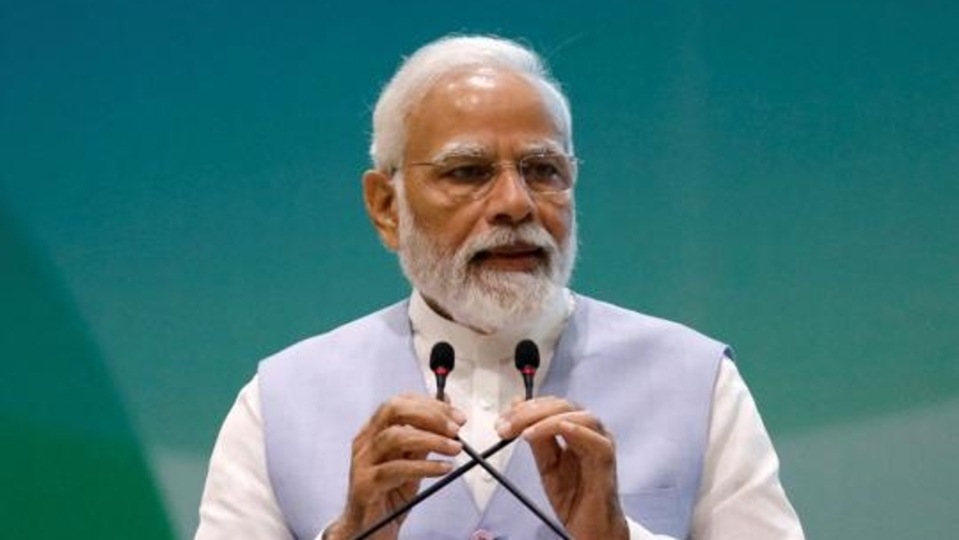
“For long, many states in the North-East were under the ambit of Afspa. But in the past eight years, due to permanent peace and an improved law and order situation, we removed the provisions of the Act from several parts of the region,” Modi said at a public meeting in Loringthepi in Karbi Anglong district.
He said the law was lifted from Meghalaya and Tripura as there was a 75% drop in violent incidents in the North-East over the past eight years — the BJP-led NDA government at the Centre came to power in 2014.
“In Assam, it (Afspa) has been in force for over three decades now. Due to a lack of improvement in the situation, earlier governments used to extend its enforcement repeatedly. But in recent years, due to improved ground situation, Afspa has been removed from 23 districts of Assam,” the PM added.
He was referring to the government’s move to repeal the controversial law from large swathes of Assam, Nagaland and Manipur earlier this month. The decision had drawn widespread praise from the region.
Afspa empowers security forces to conduct operations and arrest anyone without any prior warrant in a region that comes under the law.
“We are trying to bring the situation to normal in other parts of the state so that Afspa can be removed from there too. Similar efforts are also underway in Nagaland and Manipur (parts of both states are under Afspa) to remove the Act,” he added.
The PM also praised efforts undertaken by the states of the region to resolve long-standing boundary disputes among themselves. “Border disputes among states in the region are being resolved in a very cordial manner. The agreement between Assam and Meghalaya would inspire resolution of other disputes and it will help strengthen expectation of development across the region,” he said.
Last month, chief ministers of Assam and Meghalaya inked a deal in New Delhi in presence of union home minister Amit Shah to resolve six of the 12 points of dispute along their border.
The agreement between Assam and Meghalaya, which favours a give and take formula, was formulated after both states created several committees comprising ministers, visited the disputed areas and interacted with residents. As per the deal, Assam would get 18.51 sq km of the total 36.8 sq km disputed area while Meghalaya would get 18.29sq km.
The PM also praised the peace deal signed last September with 6 rebel outfits in Karbi Anglong as well as the peace agreement with three Bodo rebel outfits inked in 2020.
“Earlier, sounds of bombs and gunfire used to resonate in these parts. But now, we hear claps. Our regular and sincere efforts continue to bring lasting peace in all other areas as well,” he said.
As part of the peace deal with Karbi outfits, PM Modi laid the foundation stone of a veterinary science college, an agriculture college and a government college in Loringthepi. He also launched the Amrit Sarovar project to make 75 water bodies of one hectare area in each district of Assam.
Later in the afternoon, PM Modi inaugurated seven cancer hospitals and laid the foundation for seven more in Assam. According to officials, it is south Asia’s largest cancer care network.
He inaugurated a cancer hospital in Dibrugarh and virtually launched six more in Barpeta, Tezpur, Jorhat, Darrang, Kokrajhar and Lakhimpur. Foundation stones were laid for new hospitals in Goalpara, Sivasagar, Dhubri, Nagaon, Golaghat, Tinsukia and Nalbari.
“There was a time when setting up of one hospital in seven years was considered a big achievement. But today in Assam, seven new hospitals were inaugurated in one day. Three other cancer hospitals are under construction and the foundation stone of seven more have been laid,” Modi said at a public meeting at Khanikar in Dibrugarh district.
“Such a widespread and specialised cancer care network in Assam is needed as the state and rest of North-East has been witnessing a large number of cancer cases. Earlier, patients from poor and middle-class families had to go outside the state for treatment,” he added.
The 17 hospitals are a joint initiative of Assam government and Tata Trusts. The hospitals, which will be built at a cost of around ₹4,000 crore under the Assam Cancer Care Foundation, and according to state government officials, will be south Asia’s largest affordable cancer care network.
“Today is a very important day in the history of the state of Assam. It will take Assam to a higher level in terms of care and treatment of cancer that has not been experienced by other states in the country,” Tata Trusts chairman, Ratan N Tata, said at the meeting.



