
 E-Paper



Electoral bonds versus electoral trusts: The debate raging since Independence
Corporate or individual, anonymous or known, opaque or transparent — these keywords mark the committee reports on party financing and election expenditure.

 Prefer HTon Google


While striking down the Electoral Bonds Scheme last week, the Supreme Court’s constitution bench suggested reverting to an existing electoral trust mechanism that allows for pooling of sums of money from different entities and leaves it upon the trust’s management to decide where the money goes — thus putting some distance between the political organisation and the donor.
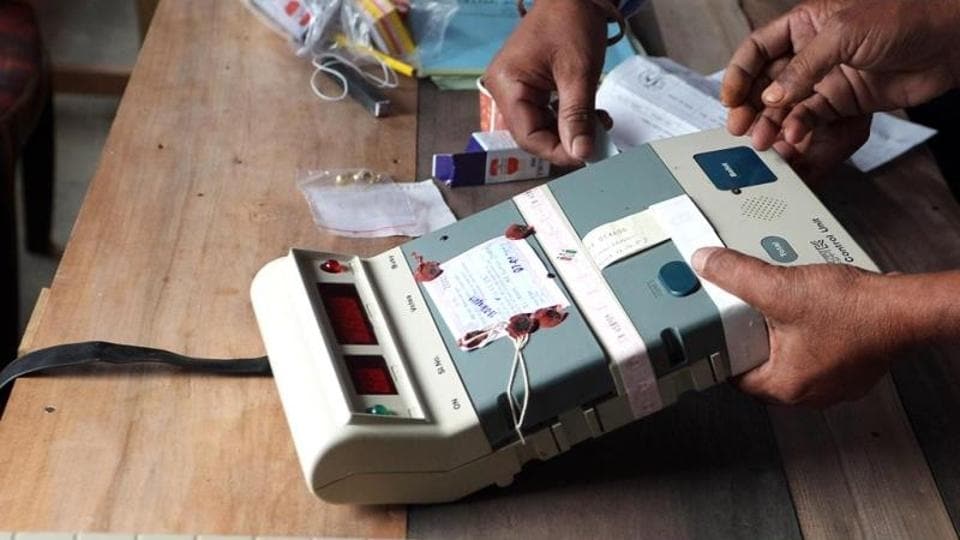
The objective of curbing black money in electoral financing can be achieved through electoral trusts, the judges held.
The nature and source of funding for political parties have for decades been a matter of close scrutiny over the implications money could have on the democratic process and the very lawmakers who determine policy.
This is best captured in how these regulations have evolved in India.
Independence to 1970s
Political parties traditionally relied on private donations and membership dues for financing, while corporate contributions were legal but subject to restrictions, requiring disclosure in company accounts. Black money became prevalent due to the high taxation regime and the protectionist policy framework instituted in the 1950s. Some of this black money was funnelled back to political parties and candidates for favourable policy decisions, a paper titled ‘Reforming India’s party financing and election expenditure laws’ published in 2012 stated. The paper was co-authored by Professor E Sridharan, academic director at the University of Pennsylvania’s Institute for the Advanced Study of India and professor MV Rajeev Gowda, Indian Institute of Management-Bangalore.
The authors, who studied the evolution of electoral financing, pointed out that the Santhanam Committee (1964) and the Wanchoo Committee (1971) were the first to highlight the influence of illicit funds on political decision-making.
In response, then prime minister Indira Gandhi banned corporate donations in 1968. However, in 1979, political parties were exempted from income and wealth taxes provided they filed annual returns, including audited accounts, listed donations of ₹10,000 and above, and disclosed the identities of such donors.
From 1980s to 1990s
An amendment to the Companies Act in 1985, through Section 293A, once again allowed corporate donations but with conditions. Companies could donate a maximum of 5% of their average net profit over the previous three years subject to approval by their board of directors, and disclosure was needed in the profit and loss account statements in audited annual reports.
In 1990, the Dinesh Goswami Committee recommended limited state funding (fuel charges for campaigning, rental charges for microphones, etc) for campaign expenses and advocated for a ban on corporate donations to political parties, leaving a gap in campaign finance. In 1993, the Confederation of Indian Industry proposed tax-deductible corporate contributions and state funding of elections. In 1996, the Supreme Court mandated political parties to file returns, ensuring transparency in party finance.
Two years later, the Indrajit Gupta Committee on State Funding of Elections recommended partial state funding for campaign-related expenses (including supplies like petrol, diesel, and paper for election literature), but proposed denying state funding to parties failing to maintain audited accounts and IT returns. Additionally, it suggested creating separate election funds, funded by Central and state governments, although most state governments expressed their inability to contribute. However, the committee did not address corporate donations to political parties.
In the 2000s
The Election and Other Related Laws (Amendment) Act of September 2003, enacted by the National Democratic Alliance (NDA) government, made company and individual contributions to political parties fully tax-deductible under Sections 80GGB and 80GGC of the Income Tax Act. It raised the threshold of mandatory disclosure of donations to over ₹20,000 from ₹10,000.
“Even if a political party got a very large sum of money in cash from a corporation, they could just break it down into smaller denominations using creative accounting and not reveal the donor,” said RTI activist Anjali Bharadwaj.
In 2013, the United Progressive Alliance (UPA) government brought a scheme to allow electoral trusts to be created under Section 25 of the Companies Act. Trusts allowed political contributions by pooling funds of donations made by multiple entities, thereby allowing for a distance between the funder and the party they donated to.
“Electoral trusts allow corporates to donate without engaging directly with the parties and also get a tax exemption on their donation. However, electoral trusts are transparent in the sense that we know which companies are donating to them,” said Professor Sanjay Kumar of the Centre for the Study of Developing Societies (CSDS).
“The Supreme Court has struck down electoral bonds, citing that the harm they cause outweighs their benefits, as they allow for complete anonymity in political funding. If the objective is to ensure transparency and curb black money, political parties should be banned from accepting or spending cash, with all donations made through transparent banking channels. If companies want to be anonymous then an alternative to electoral bonds could be electoral trusts, which offer some anonymity to donors in terms of which party they are donating to while still promoting transparency,” Bhardwaj said.
Between the 2013-14 and 2022-23 financial years (April 1-March 31 period in respective years), ₹2,603.3 crore was contributed to political parties via various electoral trusts. Between the years 2013-14 and 2016-17, the total amount of political donations through electoral trusts amounted to ₹637.54 crore.
By comparison, between the financial years of 2017-18 — the first year under electoral bonds donations — and 2022-23, electoral bonds worth ₹11,984.91 crore were encashed.
However, the NDA government, which introduced this scheme as a money bill in 2017, was clear that it would ensure transparency. The then finance minister Arun Jaitley made a case for electoral bonds in a 2018 Facebook post titled, ‘Why electoral bonds are necessary’ (later disseminated by the Press Information Bureau), stating: “A major step was taken during the first NDA Government led by Shri Atal Bihari Vajpayee. The Income Tax Act was amended to include a provision that donations made to political parties would be treated as expenditure and would thus give a tax advantage to the donor... The law was further amended during the UPA government to provide for ‘pass through’ electoral trusts so that the donors would park their money with the electoral trusts, which in turn would distribute the same to various political parties. Both these reforms taken together resulted in only a small fraction of the donations coming in the form of cheques,” he wrote.
Shortly after the bill was cleared, giving the legal basis for the electoral scheme (which was notified in January 2018), the NGO Association for Democratic Reforms moved the Supreme Court against the bonds.
The SC referred the pleas against the scheme to a five-judge Constitution bench in October 2023 and the battle reached a conclusion on Thursday when the bench ruled the scheme and related amendments unconstitutional.
“In the short term, SC has said that parties have to disclose the donations of the last six years. I think the ruling party will appeal against that as it will be tough to give a review so quickly before the current election. We have to wait and see to what extent the donations will be disclosed,” Sridharan said.
Going back to cash donations will be “negative” but bonds are “totally non-transparent”, Sridharan added. “They (government) will have to bring about a completely new system, something which is transparent and accountable.”


