
 E-Paper



Karnataka must vaccinate at least 2.5 lakh per day to blunt third wave impact
With experts predicting a possible third wave of the coronavirus in October and November, the most important question is: how deadly could this wave be? According to experts, it depends on how people are vaccinated in the coming four months.


Bengaluru: Between April 1 and May 27 this year, Karnataka recorded 14,167 Covid-19 deaths, becoming one of the worst-hit states during the second wave of the pandemic. In comparison, the state recorded 6,551 deaths during the two months of the first wave last year. According to state health department’s data, nearly nine out of 100 patients died outside a hospital during the deadlier second wave, with experts and analysts saying the healthcare system was not prepared for the spike.
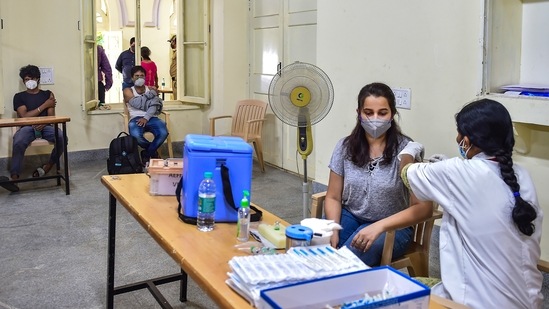
With experts predicting a possible third wave of the coronavirus in October and November, the most important question is: how deadly could this wave be? According to experts, it depends on how people are vaccinated in the coming four months.
“There is no doubt that if we don’t vaccinate enough population, the third wave will be as bad, or even worse, than the second,” said CN Manjunath, Karnataka Covid-19 Task Force member and director of Sri Jayadeva Institute of Cardiovascular Sciences and Research. “Only if are able to build enough herd immunity can we blunt the impact of the third wave. But it is going to be a challenge,” he said.
On the minimum target for vaccination to avoid a severe third wave, experts said anywhere between 60 and 75% of the population should get at least the first dose of the vaccine before the third wave hits. To break down the numbers, the population of Karnataka, according to the government projections, is approximately 65 million. According to the Karnataka election commission, around 51 million people in the state are eligible voters, which is roughly the estimated number of those eligible for the vaccination.
According to Dr Vishal Rao, a member of the expert committee on Karnataka’s Covid task force, the state should vaccinate at least 60% of the population to control the third wave. “Quick vaccination is crucial. So far, we have been vaccinating those above 45 years of age. But in the state, the majority of the population falls in the 18-44 age category. With multiple variants that are being reported, this age group is one of the most vulnerable sections,” said Dr Rao.
The second wave has shown an increase in the number of deaths in the 30-45 age group. A comparison of the numbers of the first and second wave shows that in the first wave, around 11 out of 100 deaths were reported in the 30-45 age group, while in the second wave, 16 out of 100 deaths were reported in this category. For the under-30 age category, in the first wave, 2.2% of deaths belonged to those under 30, while in the second wave, it increased to 2.9%, according to state data.
Dr Manjunath said the state should vaccinate at least 70% population in the next four months. Dr Ravi V, virologist and a member of the Karnataka Technical Advisory Committee, also said 70-75% population should get at least the first dose of vaccination before the onset of the third wave.
If going by an average of the experts’ opinion, at least 45 million people in the state should get the first dose of vaccination before November. So far, approximately 17 million people have got at least the first dose in the state. Thus, to meet the requirement of the experts, the state government will have to vaccinate at least 250,000 people every day.
According to a senior health department official, the state is administering around 150,000 jabs per day on an average. He added that the vaccination depends on the availability of the vaccine doses, which currently is in short supply.
Dr Manjunath said the state has a good infrastructure in place to quickly vaccinate the population if vaccines are available. “With more vaccines coming to the market, we hope that the availability will increase by August. The government should be prepared to distribute it effectively when they are available in large numbers. Restrictions on vaccine distribution should be removed and it should be made even without the Cowin app. One good that came out of the second wave is that the reluctance against the vaccine has reduced, which will be helpful,” he added.
On whether vaccinating around 70% of the population could in reality make the third wave less deadly, Dr Ravi cited example of England, saying the country was not affected badly by the third wave because it was able to vaccinate more than 60% of its population.


