E-Paper



Explained: What is PNG connection, how to get it as US-Iran war shakes up LPG supply
The government is pushing for wider adoption of PNG connections as it prioritises domestic gas supply amid the ongoing war in Iran

 Prefer HTon Google


The energy supply chain has been disrupted due to the ongoing war between Iran, the US and Israel, and the The West Asia region is paying the price of the war, despite not being directly involved in it. Amid the crossfire of the war are Gulf countries, which are also the major suppliers of oil and gas to many countries, including India.
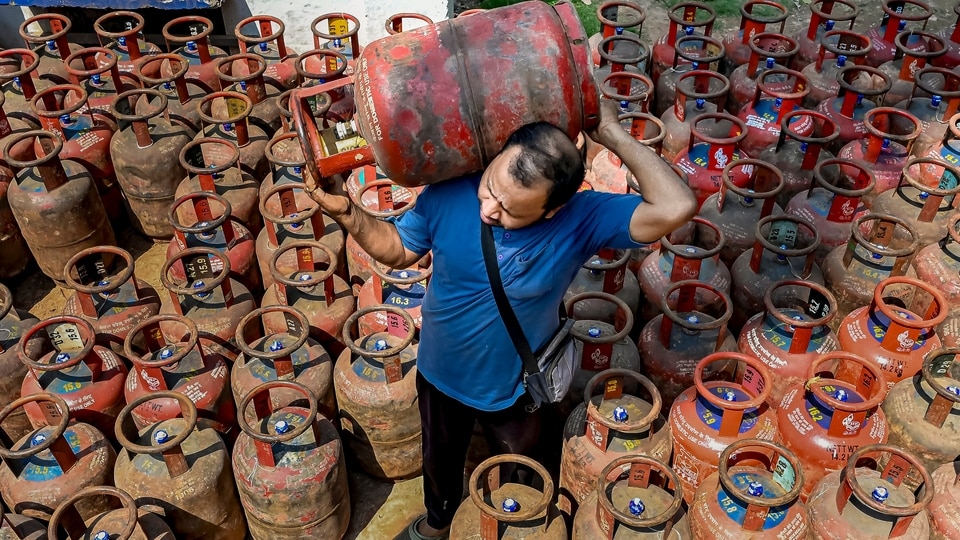
The West Asia conflict has given birth to a cooking fuel crisis in India. For context, India imports about 60% of its overall cooking gas requirements. Of this, around 90% is routed through the Strait of Hormuz, which Iran has currently blocked.
Panic began to spread in India after restaurants and hotels across the country flagged the issue of LPG shortages and warned that they might have to shut down operations if supplies did not improve.
The concerns soon spilled over to domestic consumers, prompting many households to start buying induction cooktops as an alternative. However, the government has urged people not to panic, stating that retail outlets have not run dry and that domestic consumers are being given priority in LPG supply.
Government directs entities to speed up conversion of PNG connections
The government on Sunday announced a key measure regarding cooking gas usage. Individuals who have a piped natural gas (PNG) connection will no longer be allowed to obtain a new liquefied petroleum gas (LPG) connection or keep an additional LPG connection.
In a notice issued on March 14, the ministry of petroleum and natural gas directed that households with PNG connections but not yet using the service should begin availing it. According to the ministry, India currently has 1.65 crore PNG connections, of which 1.03 crore consumers are actively using natural gas.
The government has instructed city gas distribution entities to speed up the conversion of the remaining consumers in areas where PNG infrastructure has already been laid and where households are willing to switch to PNG.
The ministry said expanding PNG usage will reduce pressure on the LPG supply chain and help diversify cooking fuel options.
But what is the difference between PNG and LPG connections?
Many people might not know what PNG and LPG are. To understand which service you have been using and how the new government mandate affects you, it is important to understand the difference between the two.
Without going into technical details, one key point to understand is that LPG (Liquefied Petroleum Gas) is stored in cylinders and supplied to homes through a distribution network. PNG (Piped Natural Gas), on the other hand, is delivered directly to homes through an underground pipeline network. In this system, gas flows from production facilities to households through a distribution network.
To avail PNG, the required infrastructure must be in place, where pipelines are connected directly to your kitchen. This system ensures a continuous supply of gas, as you do not need to book a cylinder. Instead, you pay based on the consumption recorded by a meter installed at your home.
The composition of these two gases are different too. PNG is largely methane, and it is supplied through pipelines at low pressure. Even if there is a leak, the methane is dispersed upward as it is thinner than air. On the other hand, LPG consists of propane and butane, and stored in liquid form under pressure in cylinders.
LPG mainly consists of propane and butane, which are stored in liquid form under pressure in cylinders. PNG is largely methane, supplied in gaseous form through pipelines at relatively low pressure. Because methane is lighter than air, it disperses upward if a leak occurs, whereas LPG is heavier than air and tends to settle near the ground, which can increase risks in poorly ventilated areas.
How can you avail a PNG connection?
According to the Petroleum and Natural Gas Regulatory Board (PNGRB), consumers can apply for a Piped Natural Gas (PNG) connection by filling out a registration form. After the application is submitted, the process moves to KYC verification and payment of the required charges.
Once the application is approved, the customer is assigned a Business Partner (BP) Number. This is a unique system-generated identifier given to each consumer after paying the security deposit and other applicable charges. The BP number helps the company track and manage the customer’s account in its system.
After approval, the service provider installs the required infrastructure at the consumer’s home, including a pipeline connection, gas meter, valves and a regulator. Once the installation is completed, the household receives a continuous supply of natural gas for cooking and other domestic uses.
Typically, it may take up to three months after applying for the connection to become operational.
The total cost includes a refundable, interest-free security deposit for equipment and facilities, along with installation charges for last-mile connectivity. This amount does not exceed ₹6,000 for a standard domestic connection. However, if the company installs a smart meter instead of a regular meter, the deposit can go up to ₹9,000.
Consumers can apply for a PNG connection through multiple channels provided by their City Gas Distribution (CGD) companies. Applications can be submitted via email, customer portals, letters or call centres of companies such as Indraprastha Gas Limited, Mahanagar Gas Limited, GAIL (India) Limited, and Bharat Petroleum Corporation Limited.
What consumers need to know is that once you have taken a PNG connection, you will no more be given access to LPG connection.