
 E-Paper



Eye on China, Modi-Abe Summit could be held in October; Philippines next
India and Japan are assessing if the Modi-Abe can be held over video conference.

 Prefer HTon Google


India and Japan have restarted discussions to firm up dates for the annual summit between prime ministers Narendra Modi and Shinzo Abe, possibly around October. The summit is expected to focus on an expansionist China that has been attempting to change the status quo on its borders with India, and in the East China Sea around the Senkaku Islands, people familiar with the development told Hindustan Times.
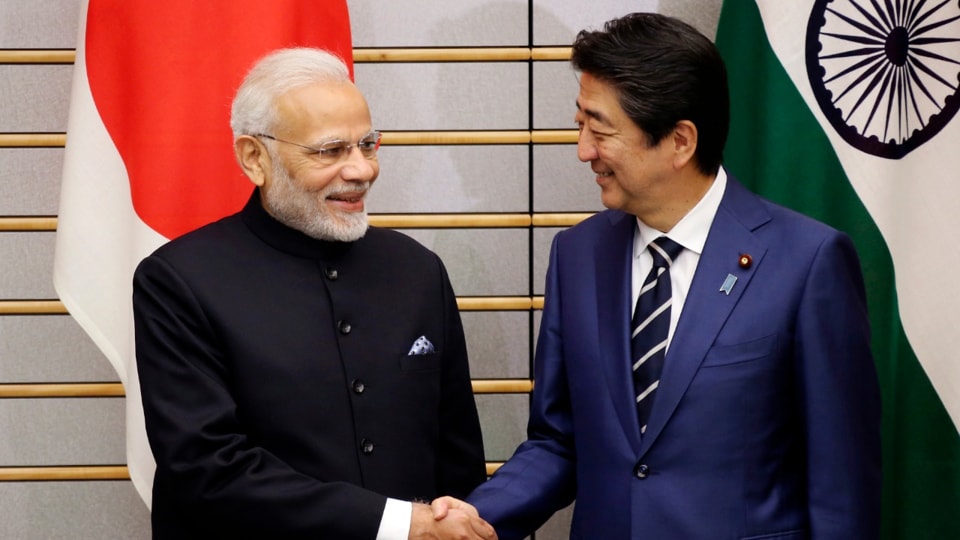
The Modi-Abe summit, initially scheduled to be held last December in Guwahati, was put off due to protests in Assam over the passage of Citizenship Amendment Act (CAA) law. Discussions on the next date were paused after the virus that originated in China spread across the world soon after, killing over 600,000 people and grounding the world economy.
But as the world suffered, China’s Xi Jinping went on an overdrive to expand its territory in the South China Sea and its land border with India. It has lately initiated the process to get its army to disengage along the Line of Actual Control in Ladakh but the troop withdrawal process has been a slow and deliberate process.
A defence white paper by the Shinzo Abe government released this week counted China’s aggressive moves in the East China Sea and the South China Sea and its “relentless attempts” to alter status quo by coercion as a key concern.
The Abe government, which had taken a lead role in crafting the quadrilateral security dialogue process in the Indo-Pacific region, also noted that a regional cooperation framework “had not been sufficiently institutionalised” in the Indo-Pacific region. The Quad comprises the United States, Japan, India and Australia with the door open for others to join in.
During the summit, India and Japan are also expected to formalise a logistics sharing pact, Acquisition and Cross Servicing Agreement, that would give militaries of the two countries access to each other’s bases.
Japan would get access to major Indian naval bases including the Andaman and Nicobar islands, which lie near the Malacca Straits through which a large amount of Japan’s but also China’s trade and fuel supplies is shipped. It would also help India’s naval ships to send ships further to counter China’s expanding presence in the Indian Ocean. India had signed a similar agreement with the US, and has firmed up the pact with Australia, the other members of the Quad.
A government official said the summit could be held in October, not earlier. It is not certain yet if PM Abe would travel to India for the summit as had been planned earlier or hold the summit meetings over video conference.
India is expected to also deepen strategic ties with other ASEAN countries that have also been at the receiving end from Beijing. “We expect a meeting between PM Modi and Philippines President Rodrigo Duterte shortly,” the official said, adding that it could also be held in October. President Duterte was supposed to travel to India in March but the bilateral meeting was postponed due to the global pandemic. Apart from growing defence cooperation, India and Philippines are expected to join hands to ensure free navigation and over-flights in the South China Sea.


