
 E-Paper



Farmers in Odisha continue to be the poorest: Govt surveys
Despite a separate budget for agriculture from 2012-13 and around ₹9,000 crore cash assistance to millions of farmers under the Kalia scheme since January 2019, farmers in Odisha continue to be the poorest in the country, two surveys conducted by the Centre have found

 Prefer HTon Google


Despite a separate budget for agriculture from 2012-13 and around ₹9,000 crore cash assistance to millions of farmers under the Kalia scheme since January 2019, farmers in Odisha continue to be the poorest in the country, two surveys conducted by the Centre have found.
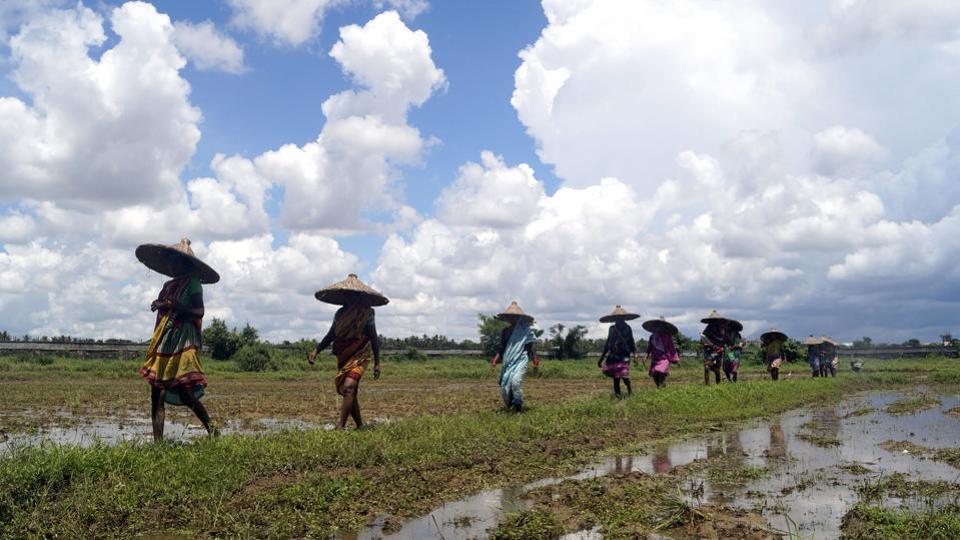
The All-India Debt & Investment Survey, 2019, conducted between January and December 2019 by the National Sample Survey Organisation (NSSO), the report of which were released this month, showed that the average value of assets (AVA) per farmer household in the state was ₹6.21 lakh. According to the last such NSSO survey in 2013, the AVA per farmer household in Odisha was ₹5.71 lakh.
As per the latest NSSO survey, the AVA in rural Odisha was ₹5.32 lakh while in urban Odisha it was 13.41 lakh. It showed the rural farmer households in Odisha were the poorest in the country. They were poorer than those in rural Assam with an AVA of nearly ₹7 lakh. In Jharkhand, the AVA in rural households was ₹8.6 lakh. In Chhattisgarh, it was ₹8.9 lakh and ₹7.89 lakh in West Bengal.
Also Read | Three government school teachers suspended for submitting fake OTET certificate
The Situation Assessment of Agricultural Households and Land and Livestock Holdings of Households in Rural India, 2019, conducted by the National Statistical Office, the report of which was released last week, showed that the average monthly income of an Odisha farmer was ₹5,112. The income was second lowest after that of farmers in Jharkhand ( ₹4,895).
In 2021-22, Odisha allocated ₹17,469 crore budget for agriculture. The allocation was almost double of ₹5,627 crore allocated in 2012-13.
Farmer leaders said despite this, they are not surprised by the findings of the surveys as there has been no significant investment in the agriculture sector in the state in areas like irrigation.
“More than 45% of the farmers in Odisha are sharecroppers who have very little landholdings or are landless. If they toil in the lands of others, how much would they earn? If they till their own land, the rising input cost, as well as lack of remunerative prices for the harvest, locks them in a cycle of debt. The announcement of the Naveen Patnaik government about irrigating at least 35% farmlands in all the 314 blocks of the state has remained a mere slogan. Besides, there is no separate mandi for cotton, maize, onion or any other vegetable produce. How would the income from farming grow?” asked Ashok Pradhan, convener of the Paschima Odisha Krushak Sangram Samanwaya Samiti, a farmers’ association.
Farmer leader Akshay Kumar said despite assistance under the Kalia scheme and having a separate budget for agriculture, Odisha has failed to create agricultural infrastructure. “Whatever is being done is only for short term relief measures. Besides, as a coastal state, farmers in the state are bearing the brunt of climate change almost every season. This year, rains arrived in September when paddy sowed in western Odisha districts has almost died. The farmers in Odisha lurch from one crisis to another without any major support from the government.”
Another farmer leader Saroj said the Kalia scheme or PM-Kisan failed to benefit the intended beneficiaries as such schemes cannot address a deep-rooted problem. “Multi-pronged approach and systemic change can bring gradual transformation. While the Odisha government keeps demanding the Centre raise paddy MSP to ₹2,930, it is yet to give the bonus to farmers like neighbouring Chhattisgarh. It is interested in paying lip service.”
State agriculture minister Arun Sahoo said his government is committed to ushering in sustainable growth in the agriculture sector. “The existing network of procurement centres is being strengthened to benefit small and marginal farmers.” He said a new agriculture policy aims to cash in on the untapped potential of the state’s agriculture sector while ensuring environmentally, economically and technologically inclusive growth. “Farmers are being imparted training on the use of technology in terms of emerging agriculture issues and solutions.”



