
 E-Paper



Final report on reforms in Arbitration and Conciliation Act awaited: Centre tells SC
The constitution bench is seized of two batches of matters arising from a legal question whether a person ineligible to nominate an arbitrator can do so and the validity of such a decision passed under Section 11 of the Act


The Union government on Wednesday informed a constitution bench of the Supreme Court that the final report of an expert committee, set up in June to recommend reforms in the 1996 Arbitration and Conciliation Act, was still awaited, prompting the court to postpone the legal scrutiny of an issue involving the appointment of arbitrators.
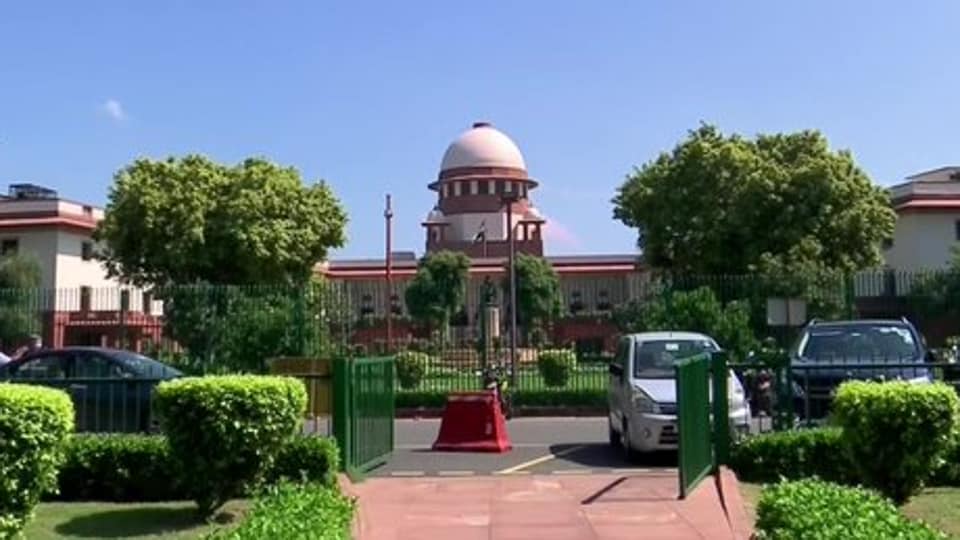
Underlining that the consultative process initiated by the Centre was still underway, a five-judge bench, led by Chief Justice of India Dhananjaya Y Chandrachud, deferred the hearing till mid-November while recording that there could be “some clarity” on the proposed changes in the law by the next date of hearing.
Earlier, attorney general R Venkataramani, representing the Centre, submitted that the term of the expert panel, appointed on June 14 to examine various aspects relating to the 1996 Act, has been extended by another month and that their report is now expected by the beginning of November.
Taking his statement on record, the bench, also comprising justices Hrishikesh Roy, PS Narasimha, Pankaj Mithal and Manoj Misra, adjourned the adjudication of the matter till the middle of November and recorded that the Centre will apprise the court of the progress made in this regard by the next date of hearing. Previously, the A-G had obtained a deferment in July by apprising the bench of the formation of the expert panel.
The constitution bench is seized of two batches of matters arising from a legal question whether a person ineligible to nominate an arbitrator can do so and the validity of such a decision passed under Section 11 of the Act. Section 11 deals with the appointment of arbitrators.
The Court was dealing with two reference orders passed by two three-judge benches in 2021 and 2022, where a doubt was raised on the finding arrived by a previous three-judge bench in 2019.
In ‘Union of India vs Tantia Construction Limited’ (2021), while deciding the issue of whether the appointing authority incapable of appointing an arbitrator could be allowed to appoint arbiitrator, held that it cannot. However, it came across the 2019 decision in ‘Central Organisation for Railway Electrification v M/s ECI-SPIC-SMO-MCML Joint Venture’, which held to the contrary by approving an ineligible arbitrator to be appointed. The 2019 decision was referred to a larger bench which was the first reference that came up before the Constitution bench.
In 2022, a similar question of law arose in ‘JSW Steel Limited vs South Western Railway’, where the top court was informed that the issue stood referred to a larger bench. Accordingly, the top court referred the case before it also to the larger bench which was listed as the second reference before the Constitution bench.
In June, the Centre set up an expert committee, chaired by former law secretary TK Vishwanathan, to suggest changes in the law in order to enhance the arbitration process by reducing court intervention, improving cost-effectiveness, and ensuring timely resolution.
The seven-member committee was initially given a month to present its recommendations, but that deadline has been extended. The panel is expected to propose measures to fast-track enforcement of award by suggesting modification to existing provision relating to setting aside of award and appeal so as to lend finality to arbitral award, expeditiously, besides recommending statutory means to minimise recourse to judicial authorities or courts in arbitration centric dispute resolution mechanisms. It has also been tasked with examining the feasibility of enacting separate laws for domestic arbitration and international arbitration and for enforcement of certain foreign awards, among other terms of reference.


