
 E-Paper



Former ECs call for more discussions on ONOE bills
At least two former election commissioners called for extensive electoral reforms, irrespective of the fate of the two bills in Parliament that could allow simultaneous polls from 2034


More substantive electoral reforms are required in the country, at least two former election commissioners said as they called for considered deliberations on the two bills that could allow general and state elections to be held simultaneously from 2034.
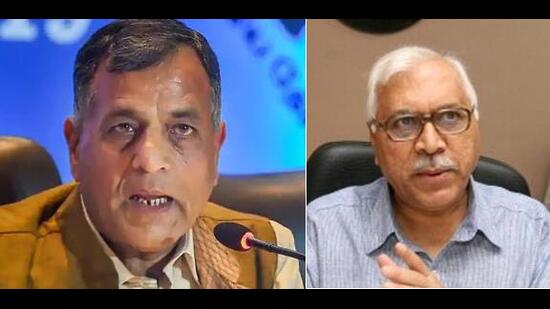
They questioned whether the amendments, including constitutional amendments, proposed by the two bills that the government plans to introduce in Parliament on Monday – the Constitution (One Hundred and Twenty-Ninth Amendment) Bill, 2024, and the Union Territories Laws (Amendment) Bill, 2024 – were required, and if they would meet the stated goals of “simultaneity” and reducing the costs and disruptions associated with staggered elections and related imposition of the Model Code of Conduct.
Ashok Lavasa, former election commissioner of India, said, “The proposed bills need to be deliberated at length by the parliamentarians to consider the benefits arising out of the management efficiency aimed to be achieved by holding simultaneous elections and the issues that affect the basic character of our democracy by mandatorily aligning Parliament and Assembly elections.”
He explained that simultaneous polls were held for the first fifteen years after 1951 without “an express provision to this effect in the Constitution” and that the framers of the Constitution left it to the Election Commission of India (ECI) “to act within the constitutional framework to deal with the exigencies of any situation”.
“[T]he existing provisions of the relevant law do empower the ECI to hold elections six months prior to the expiry of the term of the House. This gives the ECI a certain flexibility in scheduling and bunching elections for efficient management. However, recent examples would show that ECI has opted for staggering elections that could have been easily combined. Clearly, ECI seems to be persuaded by practical considerations rather than a hidebound adherence to the principle of simultaneity,” Lavasa said.
Dr SY Quraishi, former chief election commissioner of India, called for the bills to be sent to a joint parliamentary committee as they do not cover panchayat and municipal elections. “The Bills do not cover panchayat and municipal elections. Excluding three million elected representatives is a grave dilution of the idea of simultaneous elections. It leaves the large-scale disruption meaningless. Let the Bills be discussed in a joint parliamentary committee to seek consensus,’ he said.
The Kovind committee had recommended that elections to the panchayats and municipalities should be held within hundred days of holding elections to the Lok Sabha and the state assemblies, a recommendation that Quraishi says not only meet the idea of “simultaneous” elections but also places undue stress on the election officials who would have resumed normal work after pulling off the general and state elections.
Both former commissioners called for extensive electoral reforms, irrespective of the fate of these two bills in Parliament.
“Whether this so-called reform passes muster in the Parliament or not, it is time that the government and the political parties take up more substantive electoral reforms pertaining to disqualification of candidates that have been suggested by ECI, and which have been pending for a long time. While simultaneous elections are intended to bring about a putative decline in election expenditure, there is a crying need for political parties and government to find ways to control the use of black money in elections and find transparent ways for political funding,” Lavasa said.
“If the government really wants to save money, it should put a cap on how much political parties spend during a political campaign,” Quraishi said. Currently, candidates, can spend a maximum of ₹95 lakh ( ₹75 lakh for smaller states) to fight for a Lok Sabha seat and ₹40 lakh ( ₹28 lakh for smaller states) to fight for an assembly seat. There is no upper limit on how much a party can spend on electioneering.
Quraishi also questioned the need to hold general elections in seven phases over more than two months. “State resources should be saved by holding general elections across the country in fewer phases. As per the home minister, there is a higher degree of peace in the country compared to ever before, so more paramilitary forces can be deployed across a greater breadth of the nation to conclude general elections faster,” he said.


