E-Paper



4 days, four ‘tomorrow’ predictions by IMD, but southwest monsoon yet to arrive
Since July 9, IMD has promised an onset over the Capital, where rainfall so far in the June-September southwest monsoon is 67% deficient, “in the next 24 hours”.

 Prefer HTon Google


On Monday, the monsoon missed yet another date with Delhi, and the India Meteorological Department got another forecast wrong.
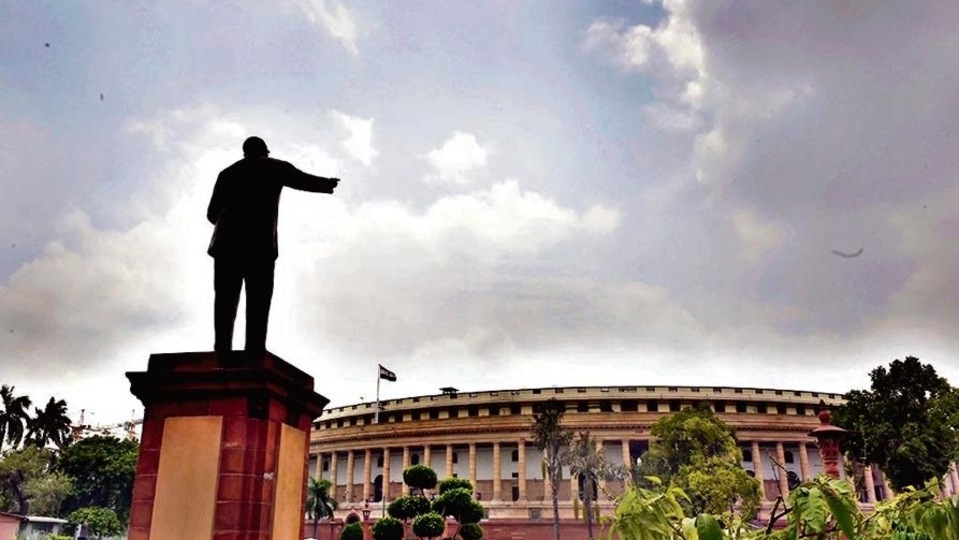
Since July 9, IMD has promised an onset over the Capital, where rainfall so far in the June-September southwest monsoon is 67% deficient, “in the next 24 hours”.
And each time, the 24 hours have come and gone with no sight of the monsoon. Sure, Monday saw some clouds over the city early in the morning, and a stiff easterly breeze blowing -- but till evening there was no sign of rain.
But IMD continued to hope.
At around 5pm on Monday, its official Twitter account predicted a thunderstorm with “light to moderate intensity rain and gusty winds” over isolated “places of Delhi, north Delhi, northeast Delhi, southeast Delhi, and east Delhi”.
It followed up, a few minutes later with another tweet predicting “thunderstorm with light to moderate intensity rain and winds with speed of 20-40 km/hr” in “few places” in “south, southwest, New Delhi...”.
The thunderstorms never came.
Earlier, at 8.15 am, IMD said: “Conditions are favourable for further advance of southwest monsoon over Delhi…today, the 12th July.”
But the 3.30pm bulletin didn’t even mention Delhi.
“In association with the continued prevalence of moist easterly winds from the Bay of Bengal in the lower levels since past three days, enhanced cloud cover and scattered to fairly widespread rainfall during past 24 hours, the south-west monsoon has further advanced and covered most parts of Rajasthan and Punjab and some more parts of Haryana and West Uttar Pradesh today, the 12 July 2021. IMD is continuously monitoring further progress of the monsoon into remaining parts of the country,” the second bulletin said.
On Monday, amid all this the skies over Delhi changed from cloudy to sunny to clear (but not rainy) -- a progression captured by people on social media. As of Monday, the monsoon is already delayed by 16 days over Delhi, the most it has been since 2002, when it was 22 days late. An independent meteorologist shared a GIF from the cult movie Lagaan where Amir Khan and other characters look up for rain clouds.
On July 8, IMD forecast in its bulletin that monsoon was likely to make an onset over Delhi on July 10 raising the hopes of Delhi’s residents who have added the term heat-bulb temperature to their lexicon this year (to reflect the sweltering heat caused by a combination of high temperatures and humidity levels). All subsequent bulletins since July 9 to July 11 announced that monsoon would make an onset in the “next 24 hours” .
Then, maybe, as an independent meteorologist seemed to suggest, maybe the monsoon winds are already here over the capital -- minus the rains.
“The only reason preventing the declaration of the monsoon’s arrival in New Delhi in recent days is the absence of rainfall. The monsoon winds have reached the city, but they are not carrying sufficient moisture to trigger thunderstorms. Furthermore, there is no monsoon low-pressure system over eastern or central India, which could have boosted the monsoon’s progression in the remaining parts of northwest India,” said Akshay Deoras, an independent meteorologist and PhD student at the University of Reading in the United Kingdom.
But IMD should have still been able to predict this.
“Thunderstorms will form only when the meteorological situation is totally favourable. If it is not ideal, say due to the lack of moisture, weather models will fluctuate, resulting in forecasting pitfalls. However, meteorologists should be able to detect such pitfalls through a careful and regular assessment of all factors, and exercise caution when thunderstorms appear uncertain during a period,” Deoras added.
On Monday, M Mohapatra, director general, IMD only said: “The forecast for Delhi has been modified. Please see the new forecast.” The new afternoon forecast did not mention Delhi.
IMD scientists said they strictly follow the criteria that it should rain before monsoon onset is announced. “We cannot announce the onset before it rains. There is cloud formation but the prime criteria for onset is rain. It has rained only in Aya Nagar, some parts of south Haryana and southeast Punjab. We are monitoring the conditions and we hope that monsoon will make an onset soon,” said RK Jenamani, senior scientist, national weather forecasting centre.
He also defended IMD.
“If you notice that we have been making monsoon onset forecasts for several places in the past few days. Not only Delhi. Monsoon has already covered 80% of the area for which forecasts had been issued. Only Delhi and a small area to its west is left.”
While responding to questions raised by journalists on errors in monsoon forecast for Delhi, Sunitha Devi, IMD’s in charge for cyclones said on July 10: “As an operational meteorologist for the past 22 years, let me tell you with all humility that it will take still many more years to improve the predictability of tropical weather beyond a few days of actionable accuracy. It is highly complex and that is why we are keeping constant monitoring and frequent updates. This is more or less the same case even with mid latitude countries, where the weather systems are quite well defined and move from land to Sea, where monitoring is rather easy and numerical models can incorporate the physics in a better manner.”
Later on Monday, while responding to HT’s queries, she said: “Monsoon winds are all over the country. Over Delhi also there are easterly winds and clouds but the clouds haven’t made rain. Its because the instability required for rain development is not there. The lower level convergence of winds is also not happening. The monsoon trough is to the south compared to its normal position which is why Maharashtra recorded 34 cm rain in the past 24 hours. Such changes can happen in forecasting. Every forecast will not be exact.”
In a statement on Monday evening, IMD said, “Such type of failure by numerical models in prediction of monsoon advance over Delhi is rare and uncommon. It is needless to mention that IMD has predicted well with high accuracy about the advance of monsoon over Delhi quite accurately in the recent past years and also the advance of monsoon over different parts of the country during the monsoon 2021 accurately about four to five days ahead. IMD is monitoring the situation continuously and will provide the regular updates on advance of monsoon into remaining parts of northwest India including Delhi.”
The only silver lining to Monday’s touch of grey: the northern limit of monsoon which was stationary passing through Barmer, Bhilwara, Dholpur, Aligarh, Meerut, Ambala and Amritsar since June 19 moved slightly to Jaisalmer, Nagaur, Bharatpur, Aligarh, Karnal and Ganganagar. The NLM is the northernmost limit of monsoon up to which it has advanced on any given day.