
 E-Paper


GRAP-II pollution curbs imposed in Delhi-NCR as air quality dips further
GRAP II measures include regular mechanical cleaning of roads, water sprinkling and the use of anti-smog guns to reduce dust. Delhi's AQI rose to 324 on Monday.

 Prefer HTon Google


The Commission for Air Quality Management (CAQM) on Monday invoked Stage II of the Graded Response Action Plan (GRAP) across the National Capital Region (NCR) with immediate effect as Delhi's air quality deteriorated to the 'very poor' category for the first time this season.
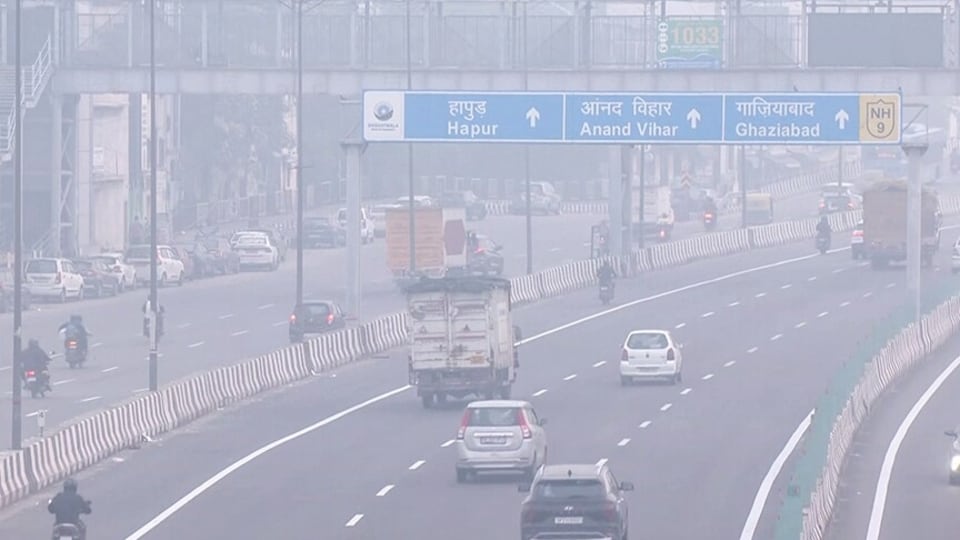
The decision came as Delhi's Air Quality Index (AQI) climbed to 324 at 4pm on November 2. The CAQM said unfavourable weather conditions were likely to keep air quality in the 'very poor' category over the coming days, prompting it to step up pollution-control measures across the region.
In an order issued on Monday, the GRAP sub-committee said it reviewed the air quality situation along with forecasts from the India Meteorological Department (IMD) and the Indian Institute of Tropical Meteorology (IITM). It directed all agencies concerned to implement measures under Stages I and II of GRAP across the NCR.
ALSO READ | Supreme Court allows bursting of green firecrackers in Delhi on November 7-8; restores ban thereafter
What stage II GRAP measures mean
With stage II restrictions in force, authorities across Delhi-NCR have been asked to intensify efforts to control dust and vehicular pollution.
The measures include regular mechanical cleaning of roads, water sprinkling and the use of anti-smog guns to reduce dust. Authorities will also ensure proper collection of garbage and construction waste and take action against open burning of waste.
Traffic police will be deployed at busy roads and intersections to reduce congestion. Officials will intensify checks for valid pollution-under-control (PUC) certificates and take action against visibly polluting vehicles. Rules on older diesel and petrol vehicles will also be strictly enforced.
Industries, brick kilns and power plants will face stricter inspections to ensure they follow pollution-control rules and use approved fuels. Hotels, restaurants and roadside eateries have been asked not to use coal or firewood in tandoors and switch to electricity or gas-based appliances.
ALSO READ | Delhi's AQI crosses 300 for first time this season, more smog expected in coming days
Authorities will also ensure uninterrupted power supply to reduce dependence on diesel generators, whose use will remain regulated except for specified emergency services.
To reduce vehicular emissions, the government will increase the frequency of metro, RRTS and CNG and electric bus services. Offices have also been encouraged to arrange shared transport for employees.
What citizens should do
The CAQM has advised people to use public transport or carpool, keep their vehicles well-maintained, ensure valid PUC certificates and switch off engines at traffic signals.
Residents have also been asked to avoid burning garbage, dispose of waste properly, limit the use of diesel generators and refrain from bursting firecrackers. Pollution-related violations can be reported through the 311, Green Delhi and SAMEER apps.
ALSO READ | Delhi air quality takes a nosedive ahead of Diwali, anti-pollution curbs kick in
Delhi AQI ‘very poor’
Delhi's AQI has risen sharply over the past three days. It stood at 60 on Friday, following heavy rain that washed away pollutants and gave the Capital its cleanest October day in four years. The reading increased to 117 in the 'moderate' category on October 31 and 261 in the 'poor' category on November 1, before reaching 324 on Monday. The AQI had already touched 307 at 7.05am.
Of Delhi's 59 air quality monitoring stations, data was available for 58 on Monday. Of these, 36 recorded 'very poor' air quality, while Jahangirpuri was the only station in the 'severe' category, with an AQI of 417. Five stations recorded 'moderate' air quality, while the remaining stations were in the 'poor' category.
Unfavourable weather may worsen pollution
Meteorologist Navdeep Dahiya warned that the smog season had begun and that weather conditions could worsen pollution levels over the next few days.
“Most AQI sensors across Delhi NCR are now reporting AQI levels above 300 and many are climbing 400-500 range tonight. The flow of winds are from north west with calm conditions. All emissions will persist in the atmosphere for longer duration,” he said in a post on X.
Dahiya added that no favourable meteorological conditions were expected over the next seven to 10 days, warning that smog would worsen across Delhi-NCR and the northern plains.
(With inputs from Saloni Bhatia)
Deep Dive


