
 E-Paper



Four key messages from bypoll results
Is there a larger message in the results of the bypolls for 30 assembly constituencies and three Lok Sabha seats? Here are four points which stand out:


The results of the bypolls for 30 assembly constituencies (ACs) and three Lok Sabha seats were declared on November 2, 2011. Is there a larger message in these results? Here are four points which stand out.
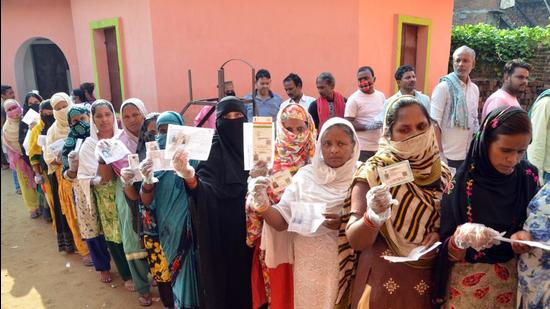
Vocal for local: Strong chief ministers reassert their authority
It was advantage to the incumbent party in states which have strong regional leaders as chief ministers (CMs). Mamata Banerjee (West Bengal), Himanta Biswa Sarma (Assam), Nitish Kumar (Bihar), Ashok Gehlot (Rajasthan) and Shivraj Singh Chauhan (Madhya Pradesh) will be happy with these results. All of them except Sarma have been CMs for more than one term. While Sarma is a first-time chief minister, he has emerged as the strongest leader in the Northeast in the recent past.
This is unlike the situation at least two of the Bharatiya Janata Party’s (BJP) CMs, Jairam Thakur in Himachal Pradesh and Basavaraj Bommai in Karnataka, find themselves in. Both Thakur and Bommai have had to face defeats in their own backyard in the state. In Thakur’s case, the biggest blow came in the loss of Mandi Lok Sabha seat which elected Pratibha Singh, the wife of veteran Congress leader Virbhadra Singh who passed away in June this year.
The latest results underline the fact that it pays to have heavyweight CMs in states not just to influence voters but can also break into Opposition ranks. Both in Assam and West Bengal, there has been an exodus of Opposition MLAs to the winning party after the results.
The importance of strong CMs is especially true for the BJP, which is an extremely centralised party today and has what can be described as lightweight leaders in many states. To be sure, the results are not exactly good news for at least one regional strongman, K Chandrasekhar Rao of the Telangana Rashtra Samithi, whose party lost the Huzurabad seat to the BJP. It was a former TRS minister who had defected to the BJP and won this AC again. The BJP has further strengthened its claim as the main Opposition party in the state.
The secular-communal binary did not play much of a role
The latest results are yet another proof that India’s politics is too complicated to be explained by a simply secular-communal binary. The BJP in Assam and the All-India Trinamool Congress (AITC) in West Bengal have secured the most overwhelming victory in these bypolls. The political situation in these two states is radically different. Sarma has been pushing the polarisation rhetoric in Assam. He used the bypoll victory to say that the eviction drive (it is mostly Muslims who face evictions) in the state will continue.
Under Mamata Banerjee, the AITC overcame the BJP’s polarisation tactic to mobilise a large share of Hindu voters along with an overwhelming section of the Muslims. While communal fault lines matter a lot in politics, there is no one-size-fits-all formula at the moment.
Even in states where the Congress has gained ground vis-a-vis the BJP in a one-on-one contest such as Himachal Pradesh, the state leadership did not really target the BJP over its communalism, unlike the posturing by the national leadership of the party. Post-result tweets by Pratibha Singh and Rahul Gandhi proves this point.
Will the farmers’ protest really damage the BJP?
The results of the Ellenabad bypoll in Haryana have made this question a pertinent one. Abhay Chautala of the Indian National Lok Dal (INLD) retained this AC in the bypoll. Chautala had resigned as an MLA to protest against the three farm laws brought by the union government last year. However, what is remarkable about the Ellenabad results is the fact that even the BJP’s vote share increased significantly; from 30.1% to 39.1%, between the 2019 assembly elections and the latest bypoll. This, when read with the fact that the BJP decided to field a non-Jat strongman Govind Kanda this time, raises a question of whether the BJP is crafting together a coalition of non-Jats to counter the headwinds from the farmers’ movements.
While the Haryana elections will only happen in 2024 and the BJP has never had much of a presence in Punjab, a consolidation of non-Jat and non-Muslim votes could minimise, if not completely negate, the BJP’s potential losses in the Uttar Pradesh elections early next year.
2020 and déjà vu for the RJD
For the Rashtriya Janata Dal (RJD) in Bihar, the latest by-polls yet were another repeat of the 2020 assembly elections. The party, especially its de-facto leader Tejashwi Yadav is claiming that its performance has been credible even in the face of defeat. While claims of credible performance are useful in putting up a brave face, what the RJD desperately needs is an electoral victory in the state, which it has not had since 2005. The fact that an ailing Lalu Prasad also joined the RJD’s campaign this time, clearly shows how seriously the party took these bypolls.
The RJD has tried various tactics without success so far. A grand alliance of the Congress and left parties in 2020 could not dislodge Nitish Kumar. It decided to part ways with the Congress this time and yet could not register a win.
While the Congress was nowhere in the contest in both ACs which went to polls in Bihar, in at least one AC (Tarapur), its vote share (2.12%) was pretty close to the victory margin (2.27%). The Congress being in the RJD camp in Bihar is also soft signalling of sorts to the upper caste electorate in Bihar, which is uncomfortable with the aggressive Mandal style politics the RJD is known for. As the RJD prepares to make caste census and dilution of 50% limit on reservations its core agenda, this tension will become even deeper.
Another dilemma for the RJD will be its posturing vis-à-vis Chirag Paswan’s faction of the Lok Janshakti Party. LJP (Ram Vilas) has seen a fall in its vote share in both ACs which went to polls this time. While the prospect of having Ram Vilas Paswan’s son in the RJD camp will be appealing – it is the rival faction which is a part of the NDA in the centre – questions remain about the pros and cons of accommodating Chirag Paswan by alienating other allies (left and Congress), unless the RJD itself is willing to contest fewer seats.
 ABOUT THE AUTHORRoshan Kishore
Roshan Kishore is the Data and Political Economy Editor at Hindustan Times. His weekly column for HT Premium Terms of Trade appears every Friday.


