
 E-Paper



From Chandrayaan 3 to Milky Way: The Shiva and Shakti connection
Astronomers have identified two ancient streams of stars named after ‘Shakti’ and ‘Shiva’, believed to be among the Milky Way Galaxy's earliest building blocks

 Prefer HTon Google


Chandrayaan 3's landing site ‘Shiv Shakti’ has received an approval from the International Astronomical Union (IAU) Working Group for Planetary System Nomenclature. The global recognition comes exactly six months after Prime Minister Narendra Modi had announced the name for the site where the Vikram lander had made the touchdown.
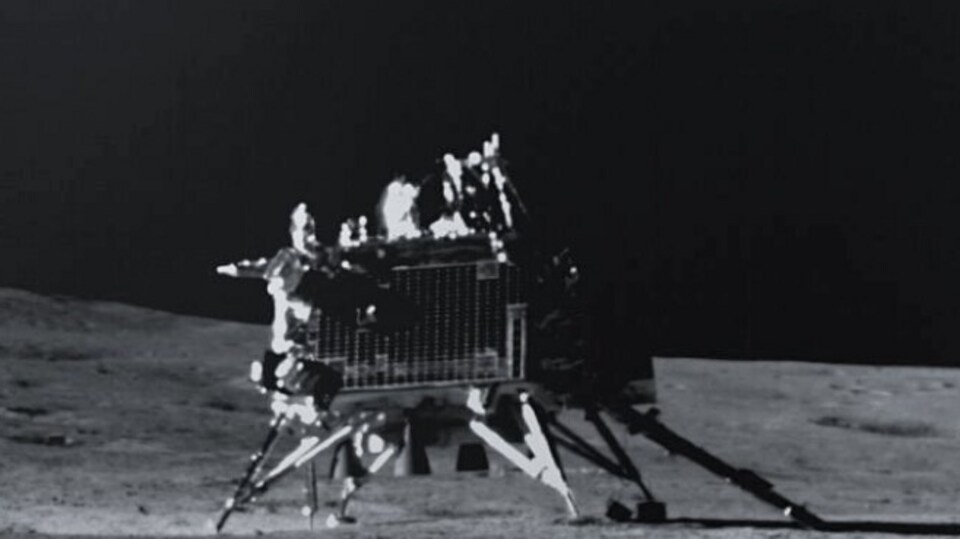
But India's space domination is not limited to Chandrayaan 3 alone. Astronomers have identified two ancient streams of stars named after ‘Shakti’ and ‘Shiva’, believed to be among the Milky Way Galaxy's earliest building blocks, Reuters reported.
Both ‘Shakti’ and ‘Shiva’ were found using observations from the European Space Agency's Gaia space telescope.
Launched in 2013, Gaia's dataset now includes positions, changes in the positions and distances for almost 1.5 billion stars within our galaxy.
According to astronomers, they might be relics of two distinct galaxies that merged roughly 12 billion years ago with the Milky Way's primordial pieces during the galaxy's infancy.
As per the report, ‘Shakti’ and Shiva' are comprised of stars with similar chemical compositions that formed 12-13 billion years ago. Each of the structures has a mass about 10 million times greater than our sun.
In Hinduism, the union between Shiva and Shakti gave rise to the cosmos. Identifying the Shakti and Shiva structures has helped to bring the Milky Way's turbulent earliest stages into focus.
"Broadly, our study addresses a very fundamental question of modern astrophysics: how do galaxies form in our universe?" astronomer Khyati Malhan of the Max Planck Institute for Astronomy in Germany, lead author of the research published this week in the Astrophysical Journal, told Reuters.
The Big Bang that initiated the Milky Way Galaxy, took place 13.8 billion years ago. The galaxy is believed to have possessed an irregular form, with long filaments of gas, dust and stars coalescing and weaving together.


