
 E-Paper



Fundamental rights of gig workers not violated: Govt
The Union government told the Supreme Court that gig workers' rights aren't violated, highlighting e-Shram for welfare access, amid ongoing legal disputes.

 Prefer HTon Google


The Union government told the Supreme Court that gig workers and app-based service providers have not had their fundamental rights violated, citing the e-Shram portal that enables unorganised sector workers to access various welfare schemes under statutory provisions.
The Centre’s response came three years after the court issued notice on a public interest litigation filed by the Indian Federation of App-Based Transport Workers (IFAT) seeking social security measures. The government emphasised that the 2020 Code on Social Security, which includes specific provisions for unorganised workers, gig workers and platform workers, will be implemented through an official notification, though no timeline was specified. While the Code received Presidential assent in September 2020, it has remained inoperative due to lack of notification.
Last month, the Supreme Court told the Centre that labour and social security rights for gig workers and app-based service providers cannot be denied if a statutory regime provides for such protections. The Centre was directed to file a response by Dec. 17 ahead of the January hearing.
The Labour Ministry filed an affidavit on Dec. 20 stating, “e-Shram provides for registration of unorganised workers, including platform workers.” The ministry launched the e-Shram One-Stop-Solution on Oct. 21, integrating all social security and welfare schemes for unorganised workers onto a single portal. “This will enable unorganised workers including platform workers registered on e-Shram to access social security schemes and see benefits availed by them so far on a single portal,” the ministry added.
To boost registration, the government issued an advisory on Sept. 16 urging platform aggregators to encourage their workers to register on the e-Shram portal. However, the affidavit did not disclose current registration numbers for gig workers.
The government sought dismissal of the petition, asserting, “The benefits to workers including unorganised workers are available as per the eligibility criteria of respective schemes. Hence the fundamental rights of the petitioners under Article 14 (right to equality), Article 21 (right to life and liberty) and Article 23 (prohibition of trafficking in human beings and forced labour) have not been violated.”
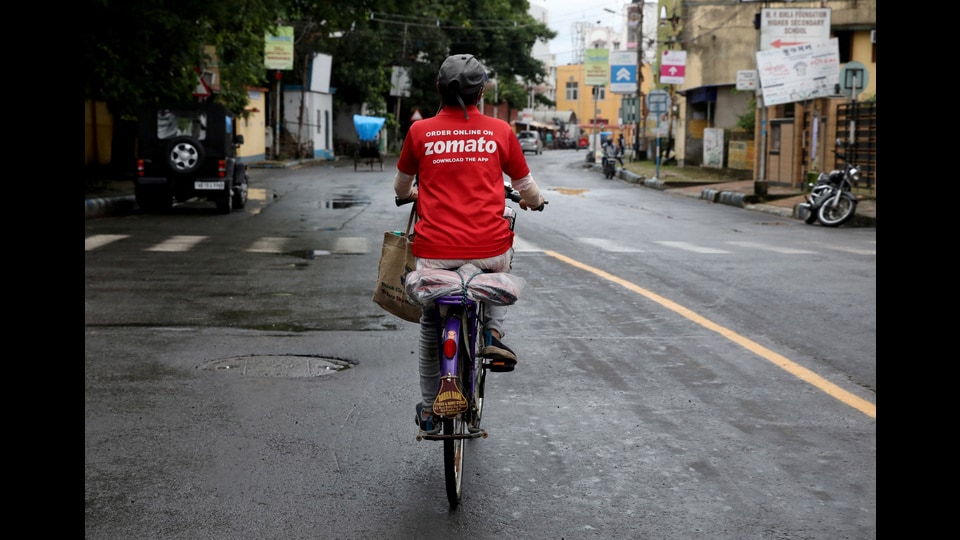
The IFAT petition, filed by advocate Nupur Kumar, named major platforms including Zomato, Swiggy, Uber and Ola. It accused these companies of denying workers their entitlements by misclassifying them as independent contractors rather than employees, thereby depriving them of essential social security benefits and violating their fundamental rights under Articles 14 and 21 of the Constitution.
Filed in September 2021, the petition sought court recognition of drivers and delivery providers as “workmen” under various social security laws. “It is the case of the petitioners who are commonly known as ‘gig workers’ and ‘platform workers’ that they are in an employment relationship with the aggregators and hence covered by the definition of ‘workman’ within the meaning of all the applicable social security legislations,” the petition stated.
The legislation encompasses The Workmen’s Compensation Act, 1923; The Industrial Disputes Act, 1947; The Employee’s State Insurance Act, 1948; Employee’s Provident Funds and Miscellaneous Provisions Act, 1952; The Maternity Benefit Act, 1961; The Payment of Gratuity Act, 1972; and the Unorganized Workers’ Social Welfare Security Act, 2008.
Critics have argued that the 2020 Code on Social Security inadequately addresses gig workers’ concerns. While it recognises them as a distinct category and defines platform workers who can avail benefits, the code does not provide statutory social security benefits comparable to organised sector employees, instead relegating them primarily to discretionary schemes to be introduced by the Centre or state governments.
The e-Shram One-Stop-Solution has integrated 12 social security schemes thus far, including Pradhan Mantri Suraksha Bima Yojana (accident insurance), Pradhan Mantri Jeevan Jyoti Bima Yojana (life insurance), Ayushman Bharat-Pradhan Mantri Jan Arogya Yojana (health scheme), PM Awas Yojana-Gramin (housing scheme), and Pradhan Mantri Shram Yogi Maandhan (pension scheme). Any unorganised worker who is not an active member of ESIC or EPFO and does not pay income tax can self-register on the portal.
The government’s affidavit emphasised its commitment “to provide social security by formulation of suitable welfare schemes for unorganised workers on matters relating to life and disability cover, health and maternity benefits, old age protection.” It noted that the Unorganised Workers’ Social Security Act 2008 addresses these concerns, and Section 3(4) of the Act empowers state governments to formulate welfare schemes covering provident fund, employment injury benefit, housing, education schemes for children, skill upgradation, funeral assistance and old age assistance.
During a Nov. 19 hearing, the government informed the court that the matter involves “policy decision” to explain the delay in filing a response. However, senior advocate Indira Jaising, arguing for IFAT, emphasised that the case concerned “human and economic rights of gig workers” and demanded the extension of statutory benefits comparable to organised sector employees.
The petition highlighted that major platforms’ contracts with workers are “take it or leave it” agreements, leaving workers no choice but to sign to earn their livelihood. In response, companies including Uber, Ola, Zomato and Swiggy maintained in their Supreme Court affidavits that “there exists no contract of employment between them and the petitioners and that their relationship are in the nature of partnership.” The platforms stated that drivers are “self-employed workers” who freely choose to use their platforms, able to “board in and board out” at will.
The case is scheduled for hearing on January 20.


