
 E-Paper



Gandhian educator and avowed sceptic: Dr HN
Maulana Abul Kalam Azad and HN Narasimhaiah, both education advocates influenced by Gandhi, significantly shaped India's educational landscape.

 Prefer HTon Google


One hundred and thirty seven years ago, on this day, in Mecca, a bonny baby boy was born to Maulana Khairuddin, a Bengali Muslim scholar of Afghan ancestry, and Sheikha Alia, the daughter of an Arabian scholar of great repute. Maulana Khairuddin was a Calcutta man; moving to Mecca in his youth, he returned to his hometown in 1890, with his two-year-old in tow. That toddler grew up to become part of Gandhiji’s closest circle, President of the Indian National Congress, independent India’s first education minister, and the force behind institutions like Jamia Millia Islamia, the University Grants Commission, and the first IIT at Kharagpur. Since 2008, his birthday has been commemorated as National Education Day.
Given his background, Bharat Ratna Maulana Abul Kalam Azad received a traditional religious education. Apart from Arabic, the precocious lad soon mastered Bengali, Persian, Hindustani, and English. At only 16, he had completed his studies, and established himself as a journalist, debater, and poet. At 20, he returned from an exciting trip to Egypt, Syria, Turkey and France, where he had met all manner of young rebels, to homegrown revolutionary Aurobindo Ghosh, and plunged into the nationalist struggle. Gandhi’s call to join the Non-Cooperation Movement in 1920 was a watershed moment – always a fierce believer in the transformative power of education, Maulana Azad became a staunch adversary of any attempt to divide Indians by religion.
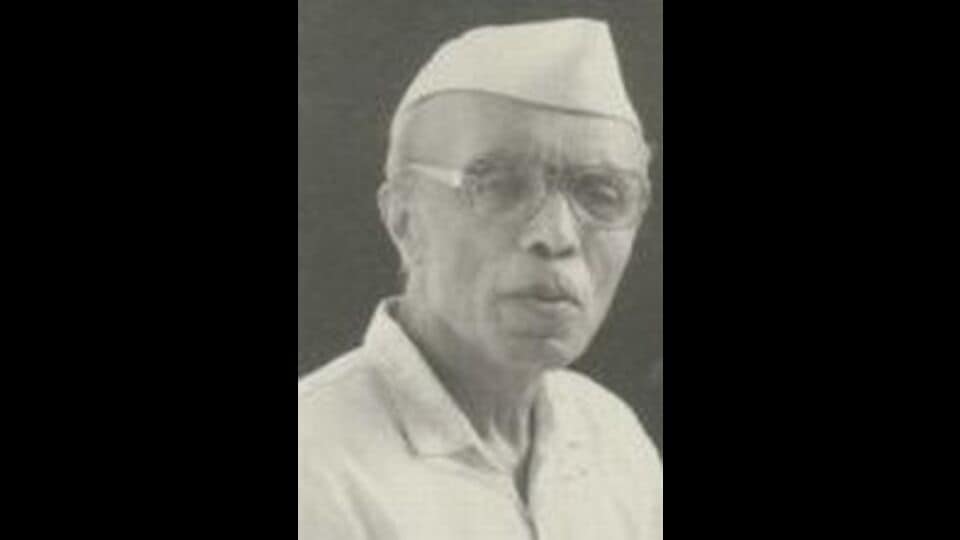
On June 6 in the same year, in a tiny village called Hosur (population: 6673,as per 2011 census) in Karnataka, a baby boy was born to a village school teacher and his labourer wife. The boy, Padma Bhushan H Narasimhaiah, popularly known as HN, would never meet Maulana Azad, but the two were similar in fundamental ways – both were brilliant students, both would become academicians, both believed implicitly in the transformative power of education – the kind that was universal, holistic, rational, and secular, and both would be deeply influenced by Gandhi.
After passing his Class 8 with flying colours, HN took a ‘gap year’ – his taluka school did not have a high school division. In 1935, his old headmaster, MS Narayana Rao who had been transferred to the National High School— founded by Annie Besant and other theosophists in 1917 — in Basavanagudi, Bengaluru, invited HN to come and join, promising to pay his fees. With no money for the bus, 15-year-old HN walked the 85 km to Bangalore.
When Gandhiji visited the school the next year, the new student was tasked with translating Gandhiji’s speech from Hindi to Kannada in real time. That brush with the Mahatma converted HN into a Gandhian for life – he wore nothing but khadi ever after, and briefly dropped out of his BSc in Central College to join the Quit India Movement in 1942. Of the nine months of prison time he endured, HN quipped that the Central Jail was not that different from Central College, since “both offer free board and lodging!”
Completing his MSc in Physics in 1946, HN joined National College as a lecturer and became hugely popular, both for his crystal-clear explanations of concepts in English and Kannada, and his tongue-in-cheek humour.
Heading off to the Ohio State University ten years later, he got his PhD in nuclear physics in 1960. He returned to serve as principal of National College and vice-chancellor of Bangalore University – during which time he introduced subjects like psychology, social work, music, dance and theatre into the curriculum. He was also the President of the Indian Rationalist Association, and founder of the still-thriving Bangalore Science Forum in 1962.
While he was vice-chancellor, the committed rationalist did not hesitate to take on even such revered figures as Sathya Sai Baba, whose miracles he promised to debunk. It earned him a lot of flak, with those disgruntled referring to him as Huchh (Mad) Narasimhaiah, a play on words that likely raised a delighted chuckle from the man himself.
(Roopa Pai is a writer who has carried on a longtime love affair with her hometown Bengaluru)


