
 E-Paper



‘Gentle’ crocodile of Kerala temple dead
The temple crocodile believed to be more than 75 years old was not eating properly for the past few days and its carcass was found on the banks of the temple pond. Later, a veterinary doctor confirmed its death, the temple officials said.


Crocodile “Babiya”, one of the main attractions at Sri Anandapadmanabha temple in Kasaragod in northern Kerala, died on Sunday, temple officials said, as many areas near the temple observed a shutdown on Monday as a mark of respect and thousands of devotees thronged the temple to pay their tributes.
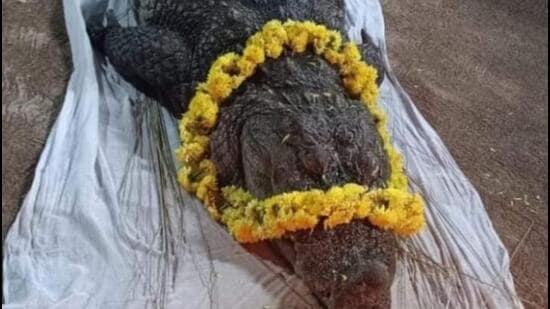
Babiya, “believed to be a vegetarian”, had a long list of fans and admirers, they said.
The temple crocodile believed to be more than 75 years old was not eating properly for the past few days and its carcass was found on the banks of the temple pond. Later, a veterinary doctor confirmed its death, the temple officials said.
Babiya was later cremated outside the temple and main priest, who was inconsolable, led its last rites. Known for its gentle behaviour, Babiya was in news two years ago when it entered the temple premises after scaling many steps as believers kept away from the shrine due to pandemic restrictions and priests then claimed this was Babiya’s maiden entry to the temple. Later, it went back to its original habitat - temple pond.
“The god’s own crocodile of Sri Anantapura Lake temple reached “Vishnu Padam”. The divine crocodile lived in the temple’s lake for over 70 years guarded the temple. May she attain Sadgati, Om Shanti!,” tweeted Union minister of state for agriculture Shobha Karandlaje, who visited the temple several times.
BJP state president K Surendran also paid tribute to the crocodile. “Babiya has left. For decades, was a constant presence at the Kumbla Ananthapuram Mahavishnu temple. Millions of devotees sought its darshan, considering it as the image of God,” he said in his condolence message.
“We have given Babiya a befitting last journey. Even children can go near to it and never had a history of wild behaviour on its part. Temple officials treat it as an inmate and many could not believe Babiya is no more,” said temple trusty Udaya Kumar.
Interestingly, nobody has any idea how the crocodile landed in the temple pond and who named it. But old timers do say it was in the temple pond for more than 75 years and never had a history of any wild behaviour. The main food of Babiya was reported to be offerings from the temple and it comes out immediately after the temple priest calls it.
Local people say circus personnel must have deposited hatchlings years back and one of them survived. North Kerala is famous for its circus but it is history now. But it is a fact Babiya never attacked anyone. It was a star attraction at the temple and it gives audience to visitors during the feasting hours only, said temple officials.
“The priest feeds Babiya twice a day. At times, he puts the rice ball right into its mouth. The priest had a unique chemistry with it. The temple pond had enough fishes and we believe it never attacks or eats them. We believe it is vegetarian keeping with the tradition of the ancient temple,” said another employee of the temple.
But wildlife experts said Babiya was a mugger crocodile and temple offerings - primarily rice and slices of banana and puffed rice - can be its food supplement and it could not survive with meagre offerings.
They said muggers survive on fish, rodents and reptiles and at times big preys.
The temple is situated in a small lake and many devotees after praying at the temple offer prayers before the lake also. The temple is known as the moolasthanam (original source) of Sree Padmanabhaswami temple in Thiruvananthapuram.


