NEW DELHI: India’s continuing dependence on Russian weapons is not in Germany’s interest, German defence minister Boris Pistorius said on Monday, ahead of his arrival in New Delhi on a visit aimed at bolstering security ties.
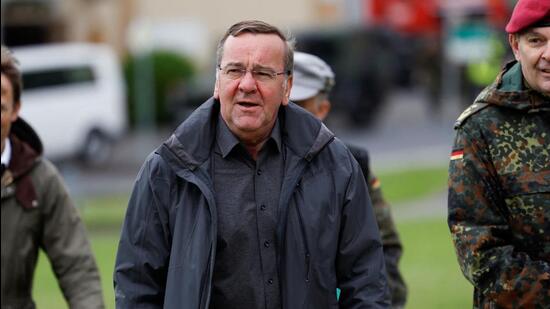
Pistorius is on his first tour of Asia since becoming defence minister in January. He participated in the Shangri-La Dialogue in Singapore on Sunday and held talks with his Indonesian counterpart Prabowo Subianto in Jakarta on Monday. Pistorius is scheduled to meet his Indian counterpart Rajnath Singh on Tuesday.
Asked during an interview with German state-owned broadcaster whether Germany will step up arms sales to India to change the country’s dependence on Russian weaponry, Pistorius replied: “It is not up to Germany to change that on our own. This is an issue we have to solve jointly with other partners.
“But of course, we can’t have an interest in the long run that India is so dependent on Russia’s delivery of weapons or other materials. Therefore, we have to think about that, what we can do.”
Pistorius also hinted at the possible sale of German submarines to India.
{{/usCountry}}Pistorius also hinted at the possible sale of German submarines to India.
{{/usCountry}}“When I will arrive in India, I will be accompanied by representatives of German defence industry companies and I want to send a signal with that – we are willing to support our reliable partners like Indonesia, like India. And that includes the possibility of delivering submarines, for example,” he said.
Reports have suggested that German is a contender for the Indian Navy’s plan to acquire six conventional submarines in a deal expected to be worth $5.2 billion. Germany’s chances have improved since France’s Naval Group pulled out of the project a year ago.
Germany last signed a major defence deal with India in 1981 for four HDW Type 209 submarines. In a major shift in its defence posture following the Ukraine crisis, Germany has begun loosening its strict arms export controls.
Pointing to the change in public opinion and German policies on defence exports, Pistorius said: “We have to find a balance between delivering weapons, on the one hand, to our reliable partners, and on the other hand, to control and to limit delivering weapons all over the world. Because we don’t need really so much weapons anymore in the world.”
Pistorius explained Germany’s focus on the Indo-Pacific by saying that the region will shape the 21st century in terms of security, freedom of navigation and international economic challenges. Germany, which has adopted its own Indo-Pacific guidelines, may not have an “active role” in the region but will show a presence by deploying warships in the area, he said.
Germany deployed its first warship to the Indo-Pacific – the frigate Bayern – in 2021 and will send another ship to the region in 2024. Germany’s stance must include the willingness to discuss how it can support its old and new partners in the region, he said.
India’s defence minister will host Pistorius a day after holding wide-ranging talks with US defence secretary Lloyd Austin, during which the two sides unveiled a roadmap for defence industrial cooperation to fast-track technology cooperation and co-production in areas such as air combat, intelligence, surveillance and reconnaissance, and munitions.