‘Global warming can’t be limited without drastic changes’
Swapna Panickal, climate scientist and co-author of the report said without immediate and large-scale reduction in global greenhouse emissions, even the 2 degree C warming threshold will be exceeded.
Hot extremes, humid heat stress, high sea-level rise, and more tropical cyclones. This is what is in store for India at 1.5 degrees C global warming, according to IPCC’s sixth assessment report ‘Climate Change 2021: The Physical Science Basis’. In an email interview to HT, Swapna Panickal, climate scientist and co-author of the report said without immediate and large-scale reduction in global greenhouse emissions, even the 2 degree C warming threshold will be exceeded. Edited excerpts
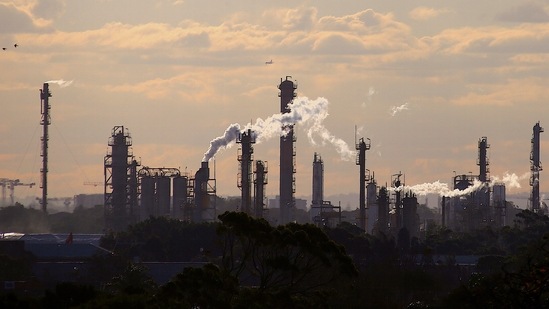
Unless there are immediate, rapid and large-scale reductions in greenhouse gas emissions, limiting warming to close to 1.5 degree C or even 2 degree C will be beyond reach. (Reuters)
What are the climate change impacts already being documented in India?
The South and Southeast Asian monsoon has weakened in the second half of the 20th century. Heat extremes have increased while cold extremes have decreased, and these trends will continue in the coming decades. The surface Indian Ocean has warmed faster than the global average. As a result, sea level will continue to rise in the 21st century. Sea level around Asia has increased faster than global average.
Which of these are irreversible?
The increase in ocean heat content and sea level rise are irreversible. Oceans will continue to warm. By 2050, sea level is expected to rise an additional 10–25 cm globally, whether or not greenhouse gas emissions are reduced. This is because sea level responds more slowly to changes in CO2 than other components of the climate system and will continue for some time even if emissions are stopped.
How will climate change impact our glaciers?
Snow cover has reduced since the early 21st century, and glaciers over the high mountain regions have thinned, retreated, and lost mass since the 1970s, although the Karakoram glaciers have either slightly gained mass or are in an approximately balanced state. Rising temperature and precipitation can increase the occurrence of glacial lake outburst, floods and landslides over high mountain regions.
How will it affect the southwest monsoon?
Projected precipitation changes in the near term (next 20-30 years) are uncertain due to natural variability, and this is an area of active research. Over South Asia, East Asia and West Africa, increases in monsoon precipitation due to warming from GHG (green house gas) emissions were counteracted by decreases in monsoon precipitation due to cooling from human-caused aerosol emissions over the 20th century, leading to a weakening of monsoon. But extremely heavy rain events will continue to rise.
How is tropical cyclone frequency and intensity likely to change?
The tropical cyclone intensity will increase; however, their genesis frequency will decrease or remain unchanged.
How do you think India should prepare for 1.5 degree to 2-degree warm world?
Unless there are immediate, rapid and large-scale reductions in greenhouse gas emissions, limiting warming to close to 1.5 degree C or even 2 degree C will be beyond reach.

 E-Paper