
 E-Paper



Godavari floods spark war of words between Telangana, AP
The latest floods to the Godavari river that created havoc in the temple town of Bhadrachalam and its surrounding areas have triggered a war of words between Telangana and Andhra Pradesh.


The latest floods to the Godavari river that created havoc in the temple town of Bhadrachalam and its surrounding areas have triggered a war of words between Telangana and Andhra Pradesh.
The Telangana government is arguing that the increase in the height of the Polavaram dam being constructed by the Andhra Pradesh government in West Godavari district by three metres was responsible for the flooding of Bhadrachalam in the backwaters of the river during the recent floods.
Speaking to reporters on Wednesday, Telangana special chief secretary (irrigation) Rajat Kumar said the state government had represented to the Centre several times to study the impact of the backwaters of Polavaram dam on the submergence of several villages.
“Apart from crops to the extent of one lakh acres in Telangana and parts of Andhra Pradesh, the backwaters would submerge historic places like 17th century Sri Sita Rama Swamy temple at Bhadrachalam town and also ancient “Parnashala” (hermitage) where Lord Ram had spent on the banks of Godavari river during his exile,” Kumar said.
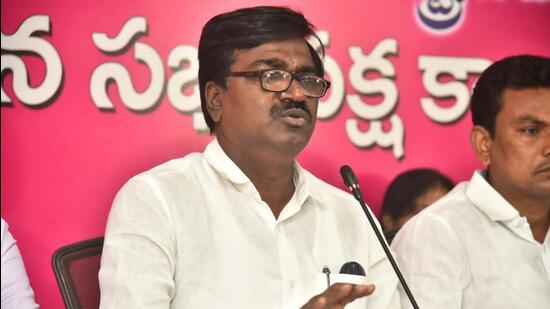
Telangana transport minister Puvvada Ajay, who is overseeing rescue and relief operations in Bhadrachalam, said the increase in the height of Polavaram dam to the present level of 45.72 metres was responsible for the recent floods to the temple town, most parts of which are still reeling under flood waters.
He said once the Polavaram project was completed, the water level at Bhadrachalam would permanently remain at 45.5 ft, which is above the first warning signal of 43 feet. “Because water will be impounded at the dam, the water level in Godavari river will continuously rise due to massive inflows from upstream of the river,” he said.
Ajay also found fault with the merger of seven revenue blocks of Bhadradri Kothagudem district with Andhra Pradesh at the time of bifurcation on the pretext that they would be submerged under Polavaram backwaters.
He wanted that the Centre take steps to demerge at least five villages surrounding Bhadrachalam -- Etapaka, Purushottapatnam, Kannaigudem, Pichukalapadu and Gundala panchayats from AP and return them to Telangnaa, so that it could take up protective measures from future floods.
“Whenever there are floods to Godavari river, people from these villages which are now in Andhra, come to Bhadrachalam to take shelter in the rescue camps, as the AP government won’t come to their rescue,” he said.
Andhra Pradesh state irrigation minister Ambati Rambabu, however, refuted the argument of the Telangana government that the increase in Polavaram dam was responsible for submergence of Bhadrachalam and surrounding villages.
He said the dam height at 45.72 ft was fixed as per the design approved by the Central Water Commission and there would be no damage to Bhadrachalam even if the water impounded at the dam. “If it has any doubts, the Telangana government can get it clarified from the Centre,” he said.
Andhra Pradesh education minister Botsa Satyanarayana strongly opposed the demand for demerger of villages from Andhra and their transfer to Telangana. “In that case, we may have to ask for the demerger of Hyderabad from Telangana and ask for its merger with AP,” he said.
He said there was no need for any concern for the Telangana government on providing relief operations in the submergence villages. “We know how to handle the rescue operations,” Satyanaryana said.


