
 E-Paper



Govt against life poll ban over convictions
The Union government opposes a lifetime ban on convicted lawmakers, defending a six-year disqualification period as constitutional and reasonable.

 Prefer HTon Google


The Union government has opposed a plea seeking a lifetime ban on convicted lawmakers contesting elections, asserting before the Supreme Court that there is “nothing inherently unconstitutional in limiting the effect of penalties by time” to ensure deterrence while avoiding “undue harshness”.
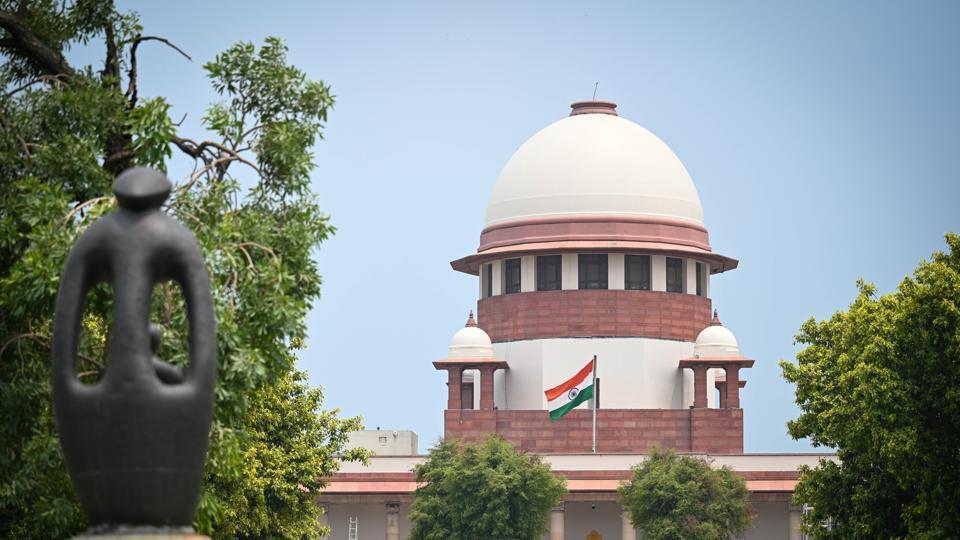
Defending the existing legal provisions that limit the disqualification of convicted legislators to six years after completing their jail time, the Centre, in an affidavit submitted before the top court, argued that the impugned provisions of the Representation of the People Act, 1951, are based on the principles of “proportionality and reasonability”, and that Parliament, as the exclusive lawmaking authority, has the discretion to decide the period of disqualification or penalties for convicted lawmakers.
“The disqualifications made under the impugned sections are limited by time as a matter of parliamentary policy, and it would not be appropriate to substitute the Petitioner’s understanding of the issue and impose a lifetime ban,” the affidavit, filed by the Union law ministry on Tuesday, said.
Responding to a public interest litigation (PIL) by advocate Ashwini Upadhyay, the affidavit said: “The relief that the petitioner is seeking amounts to rewriting of the provision as it effectively seeks to read ‘life-long’ instead of ‘six years’ in all sub-sections of Section 8 of the Representation of the People Act, 1951.”
The affidavit was filed in response to a February 10 order by a Supreme Court bench, led by justice Dipankar Datta, which questioned the rationale behind restricting the disqualification period to six years, observing that there exists an “apparent conflict of interest” in allowing a law-breaker to be a lawmaker. The court was hearing the PIL filed in 2016 by Upadhyay, challenging the constitutional validity of Sections 8 and 9 of the Act and seeking a lifetime ban on convicted legislators.
Section 8 disqualifies convicted legislators from contesting elections for six years after completing their sentence. It applies to a range of listed offenses and any conviction carrying a sentence of two or more years. Section 9 bars individuals dismissed from government service for corruption or disloyalty to the state from contesting elections for five years from the date of dismissal. Section 8 of the 1951 Act has been part of the law since its enactment.
A total of 26 convicted leaders registered wins in the 2024 Lok Sabha elections.
The Centre’s affidavit emphasised that while the judiciary has the power to strike down unconstitutional legislation, courts cannot direct Parliament to frame or amend laws in a particular manner.
“It is trite law that the Courts cannot direct Parliament to make a law or to legislate in a particular way,” the affidavit stated, citing the Supreme Court’s judgment in Madras Bar Association Vs Union of India (2021), which held that “the courts cannot direct the legislature to frame or enact a law in a particular manner”. The Centre also relied on the State of Himachal Pradesh vs Satpal Saini (2017) ruling, which underscored that policymaking is the domain of the executive and legislature, and courts cannot interfere with policy decisions unless they violate constitutional principles.
The affidavit further stressed that the issue of whether a lifetime ban should be imposed is a question solely within the domain of Parliament.
“As a matter of law, in imposing any penalty, Parliament seeks to maintain proportionality and reasonability. The petition fails to make the crucial distinction between the basis of disqualification and the effects of disqualification. While the basis remains unchanged as long as the conviction stands, the effect lasts for a fixed period of time,” the government argued.
The affidavit noted that time-limited penalties are a well-established principle across penal laws. “Post the serving of such penalty, a person is free to rejoin society and enjoy all other rights available to any individual. By confining the operation of the penalty to an appropriate length of time, deterrence is ensured while undue harshness is avoided.”
The government also dismissed the petitioner’s reliance on Articles 102 and 191 of the Constitution, which deal with the disqualification of legislators.
“These provisions are enabling provisions that confer power on Parliament to make laws governing disqualification. The Constitution has left the field open for Parliament to enact further laws as deemed fit, including determining both the grounds and duration of disqualification,” the affidavit said.
It pointed out that the other grounds for disqualification under Articles 102 and 191— such as holding an office of profit, unsoundness of mind, insolvency, and not being a citizen of India — are not permanent in nature and cease to exist once the disqualifying condition is resolved.
The court is set to take up the matter on March 4, with attorney general R Venkataramani expected to assist in the case. During the last hearing, the Supreme Court also directed the Election Commission to clarify its stance on the issue, remarking that “criminalisation of politics is a major issue”.
During the February 10 hearing, the court noted the alarming number of pending criminal cases against lawmakers, with amicus curiae and senior advocate Vijay Hansaria informing the bench that more than 5,000 cases remain unresolved. Justice Manmohan, part of the two-judge bench, expressed concern over the lack of progress in special MP/MLA courts, recounting his visit to the Rouse Avenue court in Delhi where he found that the judge handling cases against legislators had “retired for the day”.
The court is also examining the implementation of its 2015 ruling in Public Interest Foundation vs Union of India, which directed that cases against MPs and MLAs be disposed of within a year through day-to-day trials. The bench has called for a comprehensive study to understand why cases against lawmakers continue to stagnate.



