
 E-Paper



Govt pushes hard to complete 1st all-weather route to Ladakh
Senior military commanders said the third route to connect Ladakh by road is urgently needed given Pakistan and its all-weather friend, China’s interest in the Siachen Glacier and Daulat Beg Oldie.

 Prefer HTon Google


India’s national security planners are pushing hard to complete an all-weather strategic route to Ladakh that will link Darcha in Himachal Pradesh to Nimu via Padum in Kargil’s Zanskar valley, people familiar with the matter said.
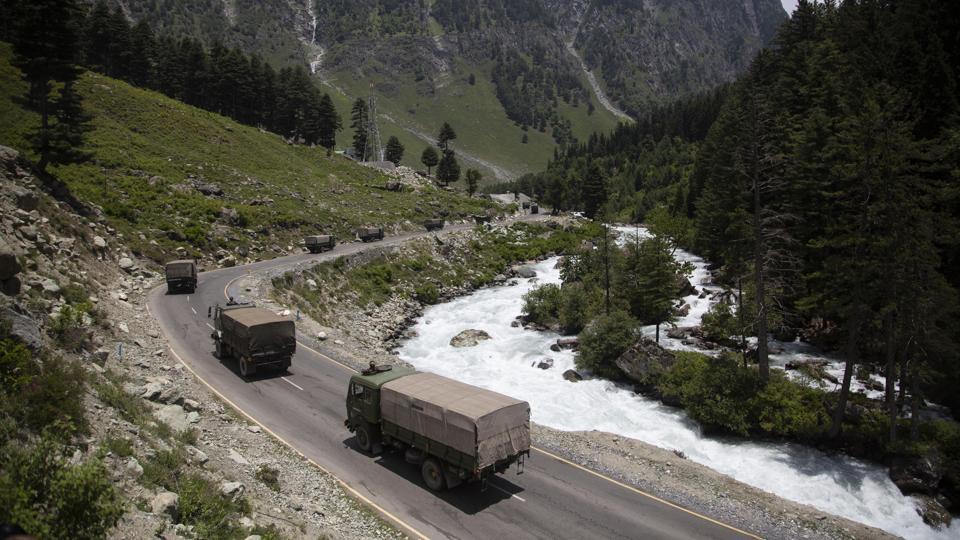
Senior military commanders said the third route to connect Ladakh by road is urgently needed given Pakistan and its all-weather friend, China’s interest in the Siachen Glacier and Daulat Beg Oldie.
Nimu is 35 kilometres from Leh town and headquarters of XIV Corps responsible for the defence of East Ladakh and Siachen Glacier.
This will be the first all-weather route to Ladakh which is already connected by two other routes; the first via Zoji La in Jammu and Kashmir and the second, via Himachal’s Manali-Upshi-Leh axis. The 9.02 kilometre Atal tunnel at Rohtang La, which will reduce the distance between Manali and Leh by 46 km, is set to become operational next month.
The defence ministry’s road project is being pushed hard by road and highways minister Nitin Gadkari and his colleague Gen VK Singh after China provoked a standoff along the Line of Actual Control in East Ladakh and started mobilising troops in the depth areas. New Delhi perceives Beijing’s reluctance to disengage despite reminders as an effort to create a new normal at the border.
Officials said the third route requires upgrading the Darcha-Padum-Nimu trekking route into a metalled road and building a 4.5-kilometre tunnel under Shingo La on the Darcha-Padum route. The project, which has been in the pipeline for a decade, is scheduled to be completed by the defence ministry within two years.
In an effort to ensure that the project meets its two-year deadline, Gadkari’s ministry has proposed that the task to build the tunnel should be given to the company that constructed the 9.02 km tunnel at Rohtang La on the condition that it meets the timeline.
According to military commanders, the need to build the third axis was felt as tunnelling would be required under four more high mountain passes on the existing Manali-Leh route if the road has to be kept open through the year. The Atal tunnel at Rohtang La on this route has been built at a height of 10,171 feet and is already the world’s longest at this altitude.
The four passes that would require tunnels on the existing Manali-Leh route are at higher altitudes: Baralacha La (16,500 feet), Nakee La (15,547 feet), Lachung La (16,616 feet), and Tanglang La (17,480 feet). These passes are only open for traffic between mid-May and mid-November and covered with deep snow remaining part of the year.
However, the Darcha-Padum-Nimu route requires only a single 4.5 km tunnel through the 16,570 feet Shingo La between Darcha and Padum to ensure that the road is closed only for two months in winter. Darcha is 147 kilometres from Manali and lies on the highway to Leh after Jispa and Keylong across Rohtang La.
The distance between Darcha and Padum is about 148 kilometres with the Zanskar sub-divisional town connected to Kargil via a 230-km long single lane road. Work is already on to construct the Darcha-Padum road with another 260 km road work in progress between Padum and Nimu.
“We are looking to build a road that bisects the Leh-Kargil highway around Lamayuru monastery and connects Darcha via Padum. This road will allow the Indian military and the local population to get round-the-year supplies… The route is not under the prying eyes of the Pakistan Army as in Kaksar in Kargil district or the DSDBO (Darbuk-Shyok-Daulat Beg Oldie) route that is under the observation of the People’s Liberation Army (PLA),” said a former army chief who asked not to be named.
Apart from keeping supply lines open for the military guarding Siachen, Kargil and DBO sectors, the Darcha-Nimu route will also develop the new union territory of Ladakh to match the aspirations of its people.


