
 E-Paper



Govt’s panel on China takes a hard look at PLA troop pullback in Ladakh
The Wednesday meeting of the CSG, which is apex policy advisor to the government on China, was attended by a few special invitees including senior ministers, HT learns.

 Prefer HTon Google


The government’s high-powered China Study Group (CSG) on Wednesday reviewed details of the disengagement of Chinese People’s Liberation Army (PLA) forces from Galwan, Gogra, Hot Springs and Pangong Tso after the July 6 agreement on this by the Special Representatives of the two countries, National Security Adviser Ajit Doval and Chinese foreign minister Wang Yi.
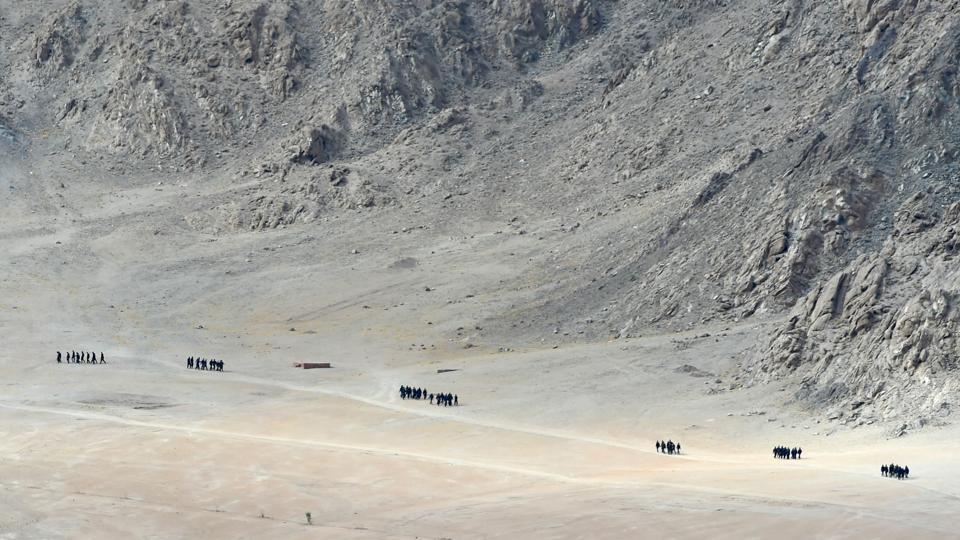
The Wednesday meeting of the CSG, which is apex policy advisor to the government on China, was attended by a few special invitees including senior ministers, HT learns.
It was discussed at the meeting that the PLA needs to withdraw from all areas along the 1,597km LAC in Ladakh as well as along the 1,126km LAC in Arunachal Pradesh.
According to government and military officials familiar with the matter, the Chinese PLA has withdrawn around 1.5km in the Galwan sector with its tents dismantled and armoured personnel carrier pushed back, and the withdrawal process has also started at Patrolling Point 15 (Gogra), Patrolling Point 17 (hot springs), and there has been a thinning of forces from Finger Four and the ridge above it on the Pangong Tso.
However, the officials added, it continues to remain in aggressive posture in Depsang Plains or the Raki nullah area; and while the activity of the Chinese PLA Air Force has gone down considerably in Ladkah sector, its forces are fully deployed and on high alert in the depth areas of both Tibet and Xinjiang region.
There is also a build-up across the Arunachal Pradesh LAC.
The group, which comprises some of the senior-most bureaucrats in the government, the armed forces, and the intelligence agencies, also discussed the next steps for de-escalataion along the Line of Actual Control (LAC).
The lowering of Chinese PLA posture came after Prime Minister Narendra Modi on July 3 said, without naming the country, that the days of “expansionism” were over.
With two US super carriers exercising in South China Sea — which along with Tibet, Xinjiang and Taiwan are part of One China Policy — in an attempt to back up ASEAN and Japanese concerns in the region, it is believed that Beijing may not have wanted a second front opened up simultaneously in Ladakh with India.
The impasse-breaking July 6 meeting between Special Representatives Doval and Wang was fixed a day after PM Modi’s visit to Nimu near Leh, when he made the comment cited above. Both Doval and Wang will review the border situation before the next step of de-escalation is ordered around three weeks from now.
While a section of Indian military establishment believes that the Chinese PLA will calibrate the withdrawal from Ladakh with the movement of the US super carriers in South China Sea, intelligence reports indicate that the US Navy is in no hurry to go away. US aircraft carriers Ronald Reagan and Nimitz are exercising in South China Sea, clearly laying down the line for China on Taiwan. Of particular interest are the Bashi Channel, from where internet cables run down to South East Asia, and Taiwan, the experts said.


