E-Paper



Govt scholarship budgets for marginalised students rise but beneficiaries decrease
The ministry of social justice and empowerment (MoSJE) manages several key schemes exhibiting this alarming trend.

 Prefer HTon Google


Central government scholarship schemes for the most marginalised student communities have recorded a consistent and unusual trend over the five years from 2019 to 2024, which also coincided with the ongoing implementation of the National Education Policy (NEP) 2020: Beneficiary numbers have sharply declined while sanctioned budgets have remained steady or even increased.
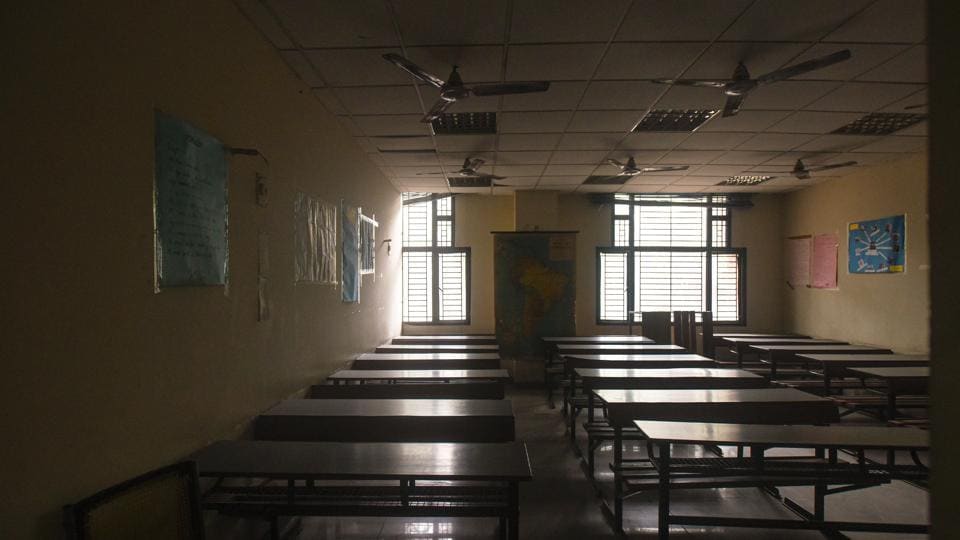
This pattern is documented in official responses submitted to Parliament between July and November 2024, reports from the parliamentary committee, and annual data from the ministries of social justice and empowerment, tribal affairs, and minority affairs.
The ministry of social justice and empowerment (MoSJE) manages several key schemes exhibiting this alarming trend. Most strikingly, the central assistance for the Post-Matric Scholarship for SC students almost doubled, from approximately ₹2,710 crore in 2019-20 to ₹5,475 crore in 2023-24. Paradoxically, the number of SC students benefitting fell by 12.7%, from 54.27 lakh to 47.39 lakh.
State-level data paints a grimmer picture: Uttar Pradesh saw funding increase by 3% while beneficiaries dropped by 30%% and Madhya Pradesh saw negligible growth of 1.94% in beneficiaries despite an increase in the funding of the state from ₹0 in 2019-20 to ₹36,680.48 lakh in 2023-24. Other MoSJE schemes fared no better.
The National Fellowship for SC students saw fellowships nearly halve to 2,221 despite exceeding its sanctioned budget between 2019-20 and 2023-24. The Free Coaching Scheme for SCs and OBCs collapsed, serving only 223 students in 2023-24 compared to 1,345 five years prior. For OBC, EBC, and DNT students under the PM-YASASVI scheme, Post-Matric beneficiaries fell from 40.94 lakh to 5.38 lakh before a partial recovery, with states like Uttar Pradesh and Karnataka reporting zero beneficiaries in intervening years. Pre-Matric Scholarships for these groups saw a fall from 94.52 lakh to 4.30 lakh recipients.
Earlier on July 7, HT reported that the ministry has issued provisional scholarship awards to less than half of those selected, or just 40 of the 106 candidates selected for its National Overseas Scholarship (NOS) for the forthcoming academic year, 2025-26. It has said that letters for the remaining 66 candidates “may be issued… subject to availability of funds”. A total of 125 slots are available for each year under the scheme.
Administrative hurdles cited as causes
Responding to the Parliamentary Committee on Social Justice and Empowerment in a report published in March this year, the MoSJE attributed the failures to systemic bottlenecks. For SC schemes (SHREYAS), reasons included delayed proposal submissions by institutions, stagnant allocations due to fixed slots and lower-than-expected applications, administrative delays in processing, and a rigid ₹8 lakh income ceiling for overseas scholarships excluding eligible candidates. For PM-YASASVI, the ministry pointed to the “non-receipt of applications” from states and Union territories, resulting in abysmally low uptake rates (12.5% for Pre-Matric, 33.5% for Post-Matric), alongside verification delays on the National Scholarship Portal (NSP). Citing “past experience” of underutilisation, the ministry has already reduced the 2025-26 budget for the PM-YASASVI Top Class School Scheme by ₹50 crore.
ST scholarships: Volatility and underfunding concerns
The ministry of tribal affairs (MoTA) also recorded worrying trends. Beneficiaries of the Pre-Matric Scholarship for ST students dropped by 51.27%, from 13.75 lakh to 6.70 lakh, with allocations decreasing and a further cut planned for 2025-26. A CAG audit found the scheme covered only 80.14% of its target between 2017-2022, citing biometric authentication failures and reduced awareness efforts. The Post-Matric Scholarship showed volatile beneficiary numbers, dropping to 13.64 lakh in 2023-24, even as its budget allocation for 2025-26 rose to ₹2,462.68 crore. MoTA confirmed it has already spent ₹10,577.91 crore of the ₹12,516.70 crore sanctioned for ST scholarships from 2021-22 to 2025-26, leaving only ₹1,938.79 crore for the current fiscal year (2025-26) and necessitating a request for an additional ₹1,983.67 crore. The National Overseas Scholarship for ST students faced a near-total budget cut of 99.83%.
Minority scholarships: Discontinued, disproportionate impact
The sharpest decline occurred under the Ministry of Minority Affairs. The Pre-Matric Scholarship, supporting 55-57 lakh students annually until 2021-22, was reduced to zero budget and zero beneficiaries by 2023-24. The Post-Matric Scholarship and the Merit-cum-Means Scholarship met the same fate. The ministry in its response to the Parliamentary Committee on Social Justice and Empowerment (report tabled in March this year) cited “overlapping benefits” and “rationalisation” for the discontinuation. To be sure, the ministry said that the overlap is with scholarships provided by the Ministries of Social Justice and Tribal Affairs—Muslim and Christians cannot be classified as SC in India. HT has also previously reported about the issues facing Maulana Azad National Fellowship (MANF) scholars, the fellowship, which was discontinued in December 2022 for new entrants, continues for existing scholars until the end of their tenure. MANF is a five-year financial support programme for MPhil and PhD students from six notified minority communities—Muslims, Buddhists, Christians, Jains, Parsis, and Sikhs. The ministry however announced on Friday that pending payments have now been released.
This systemic failure to deliver scholarships coincides with persistently lower Gross Enrollment Ratio (GER) in higher education enrollment rates for marginalised communities compared to national figures. In 2019-20, the GER in higher education in India was 27.1% but for SCs it was 23.4% and for STs it was 18%. The GER in 2021-22 (the latest data available) at the national-level increased to 28.4% but for SCs it was 25.9% and for STs it was 21.2%. The government has a target of 50% GER by 2035.
What do the ministries say
HT reached out to the three ministries for a response. While the tribal affairs ministry did not respond, a social justice ministry senior official requesting anonymity told HT that the major reason behind the dwindling numbers is delays from the state, non-functioning portals for scholarships, and in a few cases—no green signal for disbursement from the department of expenditure. “The portals do not work in several states and while we are working with states to ensure they are up and running, sometimes the states do not care. Other issues are that the National Scheduled Castes Finance and Development Corporation does not always have approval from the department of expenditure to disburse the money.”
A senior official from the ministry of minority affairs told HT that while most of its schemes have been discontinued, the ones where the disbursement is yet to happen for previous years — there have been reports of “siphoning” and “fraud” wherein the CBI at the state level is looking into such cases. “We are waiting for closure reports from several states on such frauds, once these are in, we can start disbursing,” the official said.