Field tests to determine the reliability of the new, quick-result blood tests bought by India have been inconclusive, according to an official from India’s top medical research body who said that these kits should not be used to detect whether a person has had a Covid-19 infection for now.
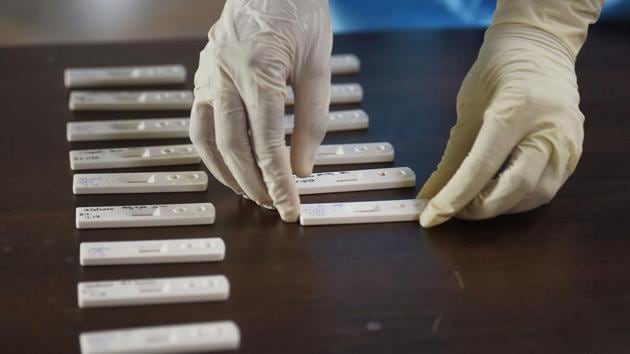
The development deals a blow to plans of many states to ramp up testing by deploying the kits that were imported less than a fortnight ago. Their use was halted within a couple of days after they returned wildly varying results, often giving false negatives.
“The use of rapid test kits continues to remain prohibited as the result of field tests has been inconclusive. The experts are working to find out the cause of such huge variations in test results, and until they reach any conclusion, it is advised to the states to not use rapid test kits for Covid-19 testing,” said an Indian Council for Medical Research official, requesting anonymity.
“Once our experts reach a conclusion, we will come out with a fresh advisory on its use, until then the status quo remains,” the official added.
On April 16, the ICMR received a consignment of 550,000 of these test kits from two companies in China. On April 21, the ICMR put on hold the use of rapid testing kits after complains from several states. The first came from West Bengal, which said the kits returned ‘inconclusive results’. Soon, Rajasthan found that patients already confirmed through reverse transcription polymerase chain reaction (RT-PCR) tests were reported as negative by the rapid test kits.
{{/usCountry}}On April 16, the ICMR received a consignment of 550,000 of these test kits from two companies in China. On April 21, the ICMR put on hold the use of rapid testing kits after complains from several states. The first came from West Bengal, which said the kits returned ‘inconclusive results’. Soon, Rajasthan found that patients already confirmed through reverse transcription polymerase chain reaction (RT-PCR) tests were reported as negative by the rapid test kits.
{{/usCountry}}“After one state complained of faulty results, we checked with three other states and they had similar feedback to share. There was a variation between 6% and 71% in the test results...this was abnormal, and needed to be investigated further. So, we have decided to halt the rapid testing for a day,” Dr Raman R Gangakhedkar, chief, epidemiology and communicable diseases, ICMR, had said while asking states to discontinue its use earlier this week. After India halted its use, both the Chinese companies that exported the kits issued a statement saying their testing kits were of optimum quality and they would cooperate with the Indian authorities to get to the cause behind the inaccurate test results. “…we will fully cooperate with the ICMR review and any re-testing arrangements. Safety and product quality are our highest priorities…,” said Wondfo in a statement on Saturday.
Experts say it is high time India stops relying on China for its essential medical supplies. “...we should encourage Indian manufacturers by protecting their investments and creating a market. India has the capability ... ,” said Dr T Jacob John, former head of virology department, CMC Vellore.