
 E-Paper



Govt tweaks rules, reduces judiciary control on India’s environment watchdog
New appointment rules do away condition that only a retired SC judge or chief justice of high court could become the chairperson of the National Green Tribunal

 Prefer HTon Google


The Union government modified the process of appointments to the National Green Tribunal, bringing in clauses that experts say will considerably weaken the country’s environmental watchdog.
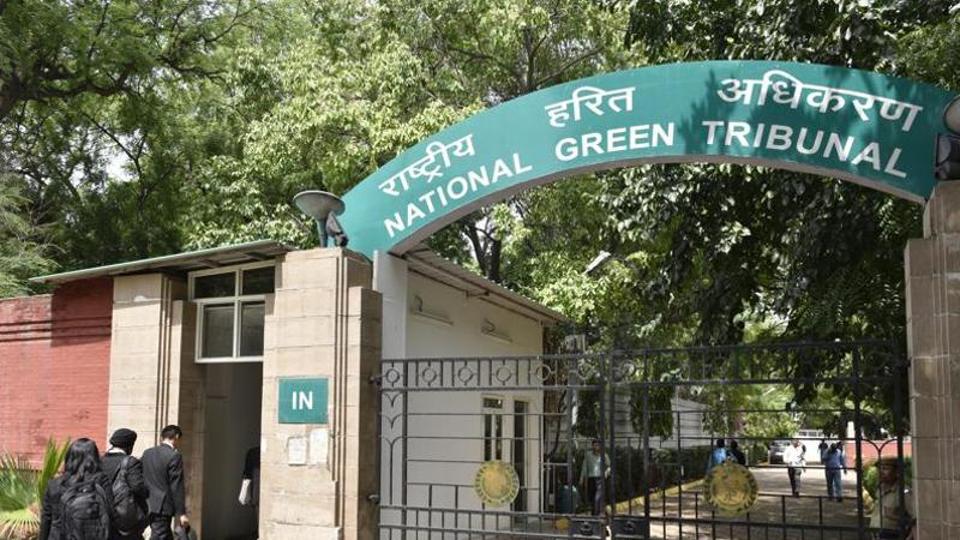
The NGT has in the past struck down projects that threatened the ecology and forced slacking government officials to take action in the interest of public health, but ran into trouble with the government that accused it of judicial overreach.
The new rules do away with a condition that the NGT can only be headed by a former Supreme Court judge or the chief justice of a high court, and takes away the judiciary’s control on the process to appoint the tribunal’s members.
Opposition parties and constitutional experts say such a move chips away at the independence of these institutions, and reflects the government’s desire to ride roughshod over opponents and control even autonomous bodies.
“The amendment is bound to render the National Green Tribunal ineffective for adjudicating on environmental disputes and protecting fundamental rights,” environment lawyer Ritwick Dutta said.
Its chairperson will now be recommended by a five-member panel that will be led by the chief justice of India (CJI) or a nominee of the CJI, but a majority of the other members — four out of five — in the panel will be recommended by the environment ministry.
Previously, the chief justice could exclusively recommend a judge for the post of the chairperson.
The National Democratic Alliance government has since 2014 attempted to dilute the powers of the green tribunal, currently headed by retired Supreme Court judge Swatanter Kumar. Ministers have accused it of taking over policy-making powers, after cases such as when the NGT struck down environment clearances issued by the government.
The new uniform appointment rules for 19 tribunals were notified on June 1 as per the ‘Tribunal, Appellate Tribunal and other Authorities (Qualification, Experience and Other Conditions of Members) Rules 2017’.
While passing the Finance Bill for the year, the government had in April merged eight autonomous tribunals with other tribunals, and also gave itself the power to appoint and remove the members in another 17 such bodies.
“They (the new rules) are a disaster,” said former environment minister Jairam Ramesh, who got the NGT bill passed in both houses of Parliament in 2010. “The rules make a complete mockery of a law passed by Parliament after extensive debate in both the houses”.
Dutta said the new rules will affect the independence, authority and capacity of the NGT to adjudicate on environmental issues and lead to a complete executive takeover of a judicial function.
Rules of appointment were changed for 18 other tribunals as well.
Tribunals such as NGT are given a ‘quasi-judicial’ status — giving them a power to stop executive orders and order punitive action. Orders by NGT can only be challenged in the Supreme Court.
The National Green Tribunal started with a principal bench in Delhi in 2010 and has now expanded to four zonal benches in each region of the country and four circuit benches ---- Shimla, Shillong, Jodhpur and Kochi.
Thousands of appeals against the Centre, state governments and corporate bodies are listed with the tribunal, which has forced the governments --- Centre and states --- to take corrective measures. The tribunal has issued orders against use of polluting vehicles in the National Capital Region and also polluting water bodies including Ganga and Yamuna.


