
 E-Paper



Govt urges senior citizens to take vaccine
The drive was opened up to people above the age of 60 and those older than 45 but with certain medical conditions. The government said a little over 7 million doses have been given to these groups.


The centre on Thursday urged senior citizens to come forward and take their coronavirus vaccine doses quickly as the government plans to gradually allow younger people to become eligible, which could add to the rush at centres later.
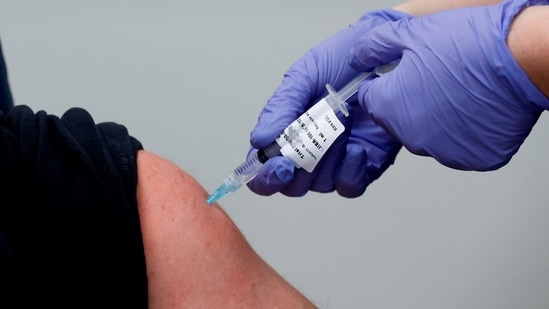
Since January 16, when the campaign began, 26 million doses have been administered. The drive was opened up to people above the age of 60 and those older than 45 but with certain medical conditions. The government said a little over 7 million doses have been given to these groups.
“We request senior citizens to take the vaccine quickly because then we will add more age-appropriate groups that will increase the rush” said VK Paul, member (health), Niti Aayog, during the weekly media briefing on Covid-19 updates, suggesting people above 50 may soon become eligible, even if they have no comorbid conditions.
Click here for full Covid-19 coverage
“We are now focused on relatively large group of individuals above the age of 60 as well as those up to the age of 45 with comorbidities. We are building up momentum to cover significantly large group; we will see the progress, and moving forward further increase in the circle of those who are eligible will be considered,” he added.
The officials at the weekly briefing also gave details about how vaccinations are being carried out. Close to 71% of the 25 million vaccinations so far have been done in government-run institutions, with the remaining number being done by private hospitals and nursing homes.
Union health secretary, Rajesh Bhushan, said that these are the private hospitals empanelled under the Ayushman Bharat-Pradhan Mantra Jan Arogya Yojna (AB-PMJAY), Central Government Health Scheme (CGHS), and state government sponsored health schemes that are partaking in the exercise.
“In places like Odisha, Maharashtra, Delhi and Telangana, these also include such private facilities which are not covered under the above three categories. These have been permitted because they have adequate number of space, cold chain, vaccinators and arrangements to address adverse event following immunisation,” he said.
On March 4, one million vaccine doses were administered in 24 hours, while on March 8, the number was two million.
“While for state government hospitals, the advice is they should do it for minimum four days a week because they have other work also which is non-Covid essential facilities. The states have been given discretion, we do not want to adversely impact the non-Covid essential health services which are delivered by the same hospitals,” he said.
Also Read: US President Joe Biden signs $1.9 trillion relief bill before speech to nation
“Till yesterday (Wednesday), we completed 53 days of vaccination administration in India. According to Our World in Data, in the first 53 days, US vaccinated 36.8 million doses which started its vaccination in December last year. India which started its vaccination programme on January 16 has given 25.6 million vaccine doses, Brazil which started its vaccination process a day after India has administered 11.3 million doses, while the UK which started the same on December 8 last even before the US has administered 9.4 million doses,” he said.
“Just 0.020% adverse event post immunisation has been reported with 0.00025% resulting in hospitalisation in India, which is minuscule,” Bhushan added.
Paul also informed that Bharat Biotech’s Covaxin has been issued a regular emergency use authorization, as the condition to administer it in clinical trial mode was removed by the Drugs Controller General of India (DCGI), VG Somani, on Thursday based on subject expert committee recommendation on Wednesday.
“The vaccine is safe and efficacious. It is truly a make-in-India vaccine and it is a moment of pride for us,” said Dr Balram Bhargava, director general, Indian Council of Medical Research (ICMR).


