
 E-Paper



Govt will create guardrails around new IT rules: MoS Rajeev Chandrasekhar
“Around the IT guidelines and the IT Act, there are some grey areas. We will create guardrails and SOPs and release them to the public. The jurisprudence will evolve; cyberspace is an area that governments are coming to terms with,” Chandrasekhar said


Union minister of state for electronics and information technology Rajeev Chandrasekhar on Monday said the government is working on “guardrails”, or standard operating procedures (SOPs), to address “grey areas” for social media companies, such as Facebook and Twitter, to comply with the new intermediary guidelines.
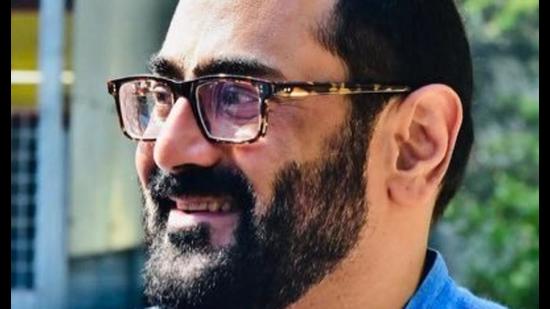
“Around the IT guidelines and the IT Act, there are some grey areas. We will create guardrails and SOPs and release them to the public. The jurisprudence will evolve; cyberspace is an area that governments are coming to terms with,” Chandrasekhar said in an interview.
Stating that the internet initially began as an enabler of connectivity, the minister said: “But in 2021, the internet has both good and bad facets. The law will accordingly evolve and the ministry will create clarifications where necessary.”
Social media platforms and industry bodies have been seeking SOPs from the government ever since the new guidelines came into effect on February 25. The guidelines, seen as controversial by the industry as well as activists, put in place a new mechanism for companies to regulate content, appoint officers who will be liable for compliance, and adopt features such as traceability of messages and voluntary user verification.
The SOPs are expected to clarify which all government bodies can ask social media companies to remove content -- one issue that has been repeatedly raised by companies.
Chandrasekhar said the government is committed to ensuring that the internet is open, safe and secure. “At the same time, the intermediaries that provide these services also have to be accountable. We don’t want any child or any woman or any person to feel unsafe on the internet.”
The minister highlighted that the new guidelines, which courted controversy for traceability requirements and takedown powers over news articles, were meant to ensure user safety. “As far as the issue of takedown is concerned, every sovereign government has the right to direct takedown of content that is illegal, wrong or can cause harm to users.”
The guidelines have been challenged by at least seven associations and activists representing digital new platforms and intermediaries. WhatsApp has also challenged the traceability clause, which mandates intermediaries primarily in the nature of messaging to identify the originator of a message.
Chandrasekhar also stressed that the right to free speech was guaranteed by the Constitution and no bureaucrat or minister could take it away. “On the issue of censorship, there is no cause for concern. There is no reason for anyone to fear it. The Constitution guarantees the rights. If people try to take it away, like the UPA did with section 66A, the courts will strike it down.”
His reference is to the now defunct section 66A of the IT Act which was read down by the courts. Section 66 (A), which prohibited the sending of information of a “grossly offensive” or “menacing” nature through computers and communication devices, has been used by several states to arrest people over posts on social media that officials claimed were “seditious”,” communally sensitive” or abusive.Most of these arrests were for posting controversial remarks or photos, while some were for sharing, commenting on or liking such posts. The section was struck down by the Supreme Court in 2015.
The minister said that as tech conglomerates turn bigger and more powerful, his government wanted to ensure they remained accountable.
“We don’t want the internet to be unsafe. Social media intermediaries provide a service, we don’t want them to ignore the users. The guidelines are about creating user safety as platforms become bigger,” he said.
Drawing attention to Prime Minister Narendra Modi’s assertion that the internet should remain free of government interference, Chandrasekhar said some platforms are using their own rules to scuttle free speech.
“I use the words open, safe and trusted. The PM’s track record on this has been that the internet should remain free of government interference. Moreover, we are concerned that some platforms use their own rules to scuttle free speech. That the government is censoring content is a narrative that is being peddled by some people.”
The government has been a stand off with Twitter since January this year, when it asked the company to remove content about the farmers protests. Twitter refused to block account of activists and journalists saying that it was defending free speech. The government also sent Twitter two non-compliance notices. The company was also initially non-compliant with the new guidelines but has since appointed the necessary officials.


