
 E-Paper



GRAP-3 restrictions revoked in Delhi; curbs under Stage 1, 2 to be intensified
The Air Quality Index (AQI) in Delhi has shown gradual improvement over the past few days and was recorded at 327 on Wednesday.

 Prefer HTon Google


The Commission for Air Quality Management on Wednesday revoked the restrictions under Stage 3 of the Graded Response Action Plan (GRAP) in Delhi-NCR. Curbs under the first and second stage of GRAP will be intensified in the capital and its surrounding areas.
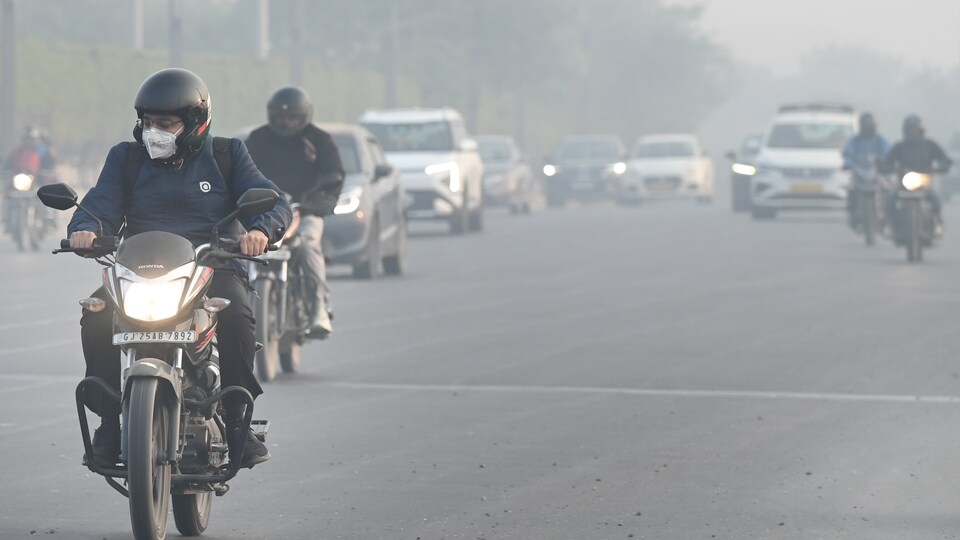
The Air Quality Index (AQI) in Delhi has shown gradual improvement over the past few days and was recorded at 327 on Wednesday. Forecasts issued by the IMD and IITM indicate that air quality is likely to remain in the ‘very poor’ category in the coming days.
Also read| Not just Delhi, majority of Indian cities have toxic air: Study
In view of the improved conditions, the Sub-Committee on the Graded Response Action Plan (GRAP) has decided to withdraw its 11 November 2025 order enforcing Stage III, which applies to the ‘severe’ air quality category. The withdrawal comes into effect immediately.
However, the panel has made it clear that construction and demolition sites that were previously issued closure notices for violations will not be allowed to resume work unless they receive a specific order from the Commission permitting them to do so.
Also read| ‘I won’t be able to work today’: Delhi Gen Z's no-nonsense text to boss amid poor AQI
Measures under GRAP Stage I and Stage II will remain in place as per the revised guidelines issued on 21 November 2025. All agencies across the National Capital Region have been directed to strictly implement these actions, monitor compliance, and ensure that air quality does not slip back into the ‘severe’ or ‘severe+’ categories. Authorities have also been asked to intensify enforcement under Stage I and II, maintaining close vigilance across the region.
Officials emphasised that although Stage III restrictions have been revoked, the winter season remains challenging due to unfavourable weather conditions.
The Sub-Committee stated that it will closely track the air quality in Delhi and continue to review the situation. Further decisions will be taken based on real-time AQI levels and forecasts from the IMD and IITM.
How GRAP was modified
The Supreme Court on Wednesday approved significant changes to the Graded Response Action Plan (GRAP) for the National Capital Region, endorsing short-term measures proposed by the Commission for Air Quality Management (CAQM) to tackle Delhi’s winter pollution crisis.
Here is the modification in simple form:
What Changed in GRAP?
The severity levels have been brought forward, meaning tougher rules will now apply sooner as pollution rises.
Under the proposed system, Stage 4 measures have now been moved to Stage 3. This means public, municipal and private offices will operate at 50% staff strength, and central government offices will switch to work-from-home, when the AQI touches the Stage 3 range of 301–400, instead of waiting for it to cross 450.
Similarly, Stage 3 measures have been shifted to Stage 2. As a result, staggered government office timings will now kick in when the AQI enters the 201–300 band.
In addition, Stage 2 measures have been moved to Stage 1, bringing uninterrupted power supply to curb diesel generator use into effect earlier, at an AQI of 101–200.


