E-Paper



Great Nicobar project gets nod from NGT; environmental activists decry move
The project requires 166.10 sq km of land, of which 130.75 sq km is forest land and 84.10 sq km is tribal land.

 Prefer HTon Google


The National Green Tribunal (NGT) has held that adequate environmental safeguards have been provided in the environmental clearance granted to the Great Nicobar Holistic Development project and that there is no good ground for it to interfere in what is a project of “strategic importance”.
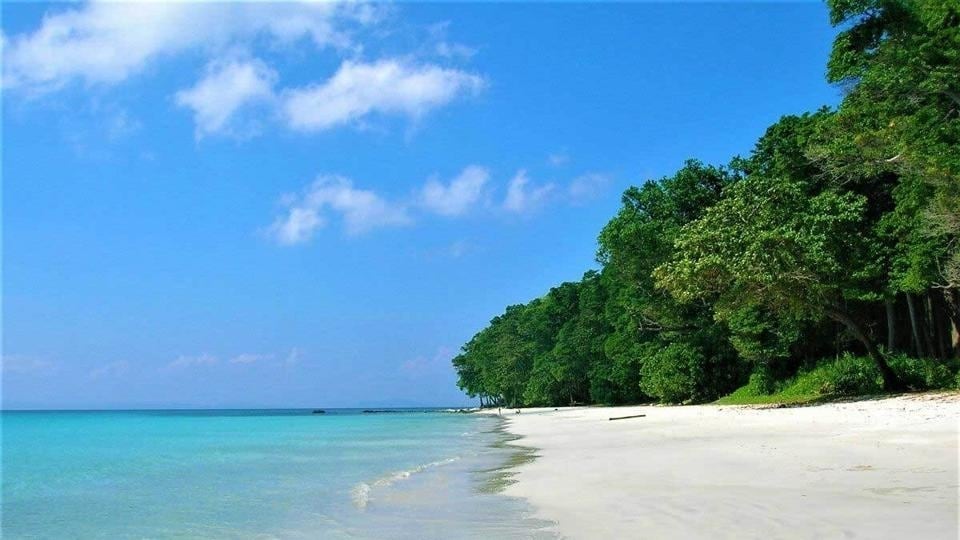
The clearance paves the way for the ₹81,834.22 crore project that comprises an international container transshipment terminal, an international airport, a power plant and a township, although the petitioners have the option of appealing the tribunal’s order in the Supreme Court.
The project requires 166.10 sq km of land, of which 130.75 sq km is forest land and 84.10 sq km is tribal land.

In a 26-page order issued on Monday, NGT said: “We find that adequate safeguards have been provided in the Environmental Clearance (EC) conditions and in the first round of litigation the tribunal had refused to interfere in the EC and remaining issues noted by the tribunal in the first round of litigation have been dealt with by the high-powered committee...”
The order also directed the authorities to ensure “full and strict” compliance with the conditions listed in the EC. The tribunal’s reference to the first round is about a 2022 challenge by the Debi Goenka of Conservation Action Trust, in response to which, NGT said it had found no ground to interfere with the forest clearance. Veteran environmentalist, Ashish Kothari had also challenged these clearances separately. And its reference to the high-powered committee is to the one it set up in April 2023 — the committee is headed by the secretary, Union environment ministry — to revisit the EC. At the time, activists asked how a subordinate authority headed by the environment secretary could revisit an EC granted by the same ministry.
The Debi Goenka Trust challenged that order in the Calcutta high court where it is pending.
Monday’s order came in response to an application by Ashish Kothari who raised two main issues — the limited terms of reference of the high-powered committee and violation of Island Coastal Regulation Zone norms — one of which prohibits the destruction of corals.
In its order, NGT accepted the Zoological Survey of India’s controversial submission that there is no major coral reef in one of the affected areas, Galathea Bay. It added that for the existing scattered coral reefs in the adjoining area, ZSI has suggested translocation.
Kothari had also said that since Galathea Bay is a turtle nesting ground and also a hatching site for the endangered Megapode (a bird), it comes under CRZ-I, which means it is an “ecologically sensitive area”. His claim was based on a report of Wildlife Institute of India (WII) and National Marine Turtle Action Plan.
But NGT accepted the Union government’s stand that based on a site visit by a team from National Centre for Sustainable Coastal Management (NCSCM), no part of the Great Nicobar project is in a CRZ-I area.
And on the third issue, the terms of reference, NGT endorsed the Union government’s submission that data for three seasons (against the one season considered) was not required while looking at protection of corals , because there is “no high erosion site” in the islands.
Kothari’s legal team said they have not decided yet if they would challenge the order.
Chandra Bhushan, chairman of Andaman and Nicobar Islands Integrated Development Corporation Limited (ANIIDCO), the project proponent of Great Nicobar Holistic Development Project, did not respond to HT’s calls or messages seeking a response on the NGT order.
Environmental activists decried the NGT order.
“It is extremely unfortunate that a tribunal established to protect our environment is not doing what it was meant to do. Nicobar forests are one of the world’s most undisturbed, unexplored and unexploited forests – all these will be destroyed for projects that are not viable and which will not serve the desired purpose. I do hope that our appeal against the earlier NGT ruling that is pending in the Kolkata High Court will be taken up expeditiously,” said Debi Goenka, executive trustee, Conservation Action Trust.
The Nicobar Islands fall in the Sundaland Biodiversity Hotspot. This region covers the western half of the Indonesian archipelago, a group of some 17,000 islands stretching 5,000 kilometers, and is dominated by the islands of Borneo and Sumatra. Independent experts and scientists have raised several environmental concerns with the project. These include loss of biodiversity and impacts on the indigenous people like the Shompen and Great Nicobarese in the ecologically sensitive islands. Great Nicobar is home to a very rich ecosystem, including 650 species of angiosperms, ferns, gymnosperms, bryophytes, among others and 1800 species of fauna, some of which are endemic to this area.
Congress leader and former environment minister Jairam Ramesh termed the move “disappointing”. “The decision of the National Green Tribunal giving its approval to the Great Nicobar project is deeply disappointing. There is clear evidence that the project will have disastrous ecological impacts. The conditions for its clearance, that the NGT draws reference to, will do little to deal with these long-term consequences. The matter is, however, still under argument in the Calcutta High Court that now is the only beacon of hope,” he posted on X.