
 E-Paper



Gujarat assembly polls in 2 phases, verdict on Dec 8
Roughly 4.9 million people across 182 constituencies will vote in two phases in assembly elections in Gujarat on December 1 and 5, the election commission announced on Thursday, kick-starting a poll contest where a traditionally bipolar polity may morph into a triangular contest with the entry of a new player.


Roughly 4.9 million people across 182 constituencies will vote in two phases in assembly elections in Gujarat on December 1 and 5, the election commission announced on Thursday, kick-starting a poll contest where a traditionally bipolar polity may morph into a triangular contest with the entry of a new player.
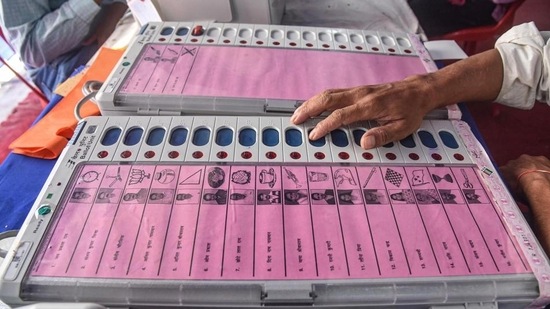
The votes will be counted on December 8, the same day as Himachal Pradesh. The Bharatiya Janata Party will be looking for its seventh consecutive assembly poll victory in what is a prestige fight for the ruling party in Prime Minister Narendra Modi’s home state. The Congress will hope to replicate its strong performance in 2017 and not slip into third position behind the new entrant, the Aam Aadmi Party (AAP), which is banking on its governance record and delivery of amenities in Delhi to spring a surprise.
“There are 100 days left for the assembly in Gujarat to conclude,” said chief election commissioner Rajiv Kumar. “There are 4.9 crore electors across 182 constituencies.” Of these constituencies, 142 are general, 13 are reserved for Scheduled Castes and 27 for Scheduled Tribes, according to the a press note released by ECI.
Also read: HP Polls: BJP fulfils its promises, unlike others: Rajnath Singh
In the first phase, 89 constituencies in the western and southern parts of the state — the Kutch and Saurashtra regions, along with south Gujarat — will go to the polls. The Congress outperformed the BJP in these regions in the last assembly elections but may find it tough to hold on to its gains. In the second phase, 93 constituencies concentrated in north and central Gujarat — a BJP stronghold — will vote.
The election commission also rubbished allegations by some opposition leaders that the announcement of the Gujarat polls was delayed — the schedule for Himachal Pradesh was made public two weeks ago — to help the BJP.

“There is a gap of 40 days between the end of the assemblies of the two states (Himachal Pradesh and Gujarat). According to the rules, it should be at least 30 days so that one result doesn’t impact the other…It is a combination of multiple factors and we are well within the factors of consideration, including polls in nearby states,” the chief election commissioner said.
Kumar pointed out that the same pattern of announcements was followed in 2017 and was the result of many factors, including the recent collapse of a British-era bridge in north Gujarat’s Morbi town that claimed 135 lives.
“We also had to take note of the tragedy that had befallen the state. That was also one factor for the delay. There was state mourning in the state till yesterday (Wednesday). So, it is [because of] multiple factors,” he said.
The BJP has deep roots in Gujarat, a state it has ruled for the last 24 years. But in the last election in 2017, the Congress gave it a run for its money, posting its best results in a generation on the back of widespread dissatisfaction among farmers and small businessman and angry protests by the Patidar community over demands for reservation. In the end, the BJP won 99 seats and the Congress 77. This time, though, the contest is three-cornered due to the AAP’s high-decibel campaign led by Delhi chief minister Arvind Kejriwal.
The poll watchdog will set up 51,782 polling stations and live webcasting of the process will be done in half of them. For 3,481 voters from the Siddi community (an ethnic group who trace their ancestry to the Bantu people in southeast Africa), the commission has set up three special polling stations. Postal ballots will be available to people who are above 80, are disabled or suffering from Covid. The process will be videographed.
“From Jan 1, 2022, to October 22, 3,24,420 new voters shall be able to cast votes because of the four qualifying dates notified for registration of electors,” Kumar said. “We will take special steps to ensure that they can vote.”
Kumar also defended the body’s reputation and said it continued to remain fiercely impartial. “Actions and outcomes speak larger than words. In a large number of assembly elections, results have shown, at times, those who were critical of the commission have got surprising results. I do not want to go into the details,” he said, in an apparent reference to some leaders blaming electronic voting machines after polls.
The BJP will bank on the popularity of Modi and home minister Amit Shah, and the government’s development record. The party will hope that its move to change the chief minister last year, and replace most of the council of ministers will blunt anti-incumbency on the ground, especially on issues of price rise and unemployment.
The ruling party expressed confidence about winning the upcoming elections. Gujarat Chief Minister Bhupendra Patel said his party would once again retain power in the state.”Election Commission has announced dates of Gujarat polls. New voters and the people of state will bless BJP’s politics of development and visionary leadership. I am of the firm belief that once again lotus will bloom in Gujarat,” Patel tweeted.
With little anger among farmers and traders, and the Patidar agitation largely extinguished, the Congress campaign has been lukewarm with no pan-state leader to take on chief minister Bhupendra Patel or match the popularity of Modi and Shah. The party has also suffered the exit of key leaders from the backward and Patidar communities, but will bank on its stable vote base in the rural regions (it always receives around 38% of the vote, which crossed 40% in 2017) and promises of subsidised amenities and loan waivers will help it retain its tag as the main opposition party in the state.
Also read: Assembly by-polls: Polling underway in 6 states, results on Sunday
Congress, which has been in the opposition in Gujarat for the last more than 27 years, also said it would emerge victorious. “Seven crore brothers and sisters of Gujarat think that Congress is the only alternative for change in the state,” party president Mallikarjun Kharge tweeted.
For the AAP, any success in its maiden outing will be considered impressive. The party has mounted a high-octane campaign on its promise of improving basic services such as health care and education and showcased its governance model in Delhi. The party is not only targeting urban centres that traditionally lean to the BJP (the party did well in Surat civic polls last year) but also rural seats dominated by Patidars in Saurashtra, which backed the Congress the last time.
Delhi CM Arvind Kejriwal, who has been paying visits to Gujarat every week as part of the AAP’s campaign, is hopeful of a change of guard in Gujarat.
“People of Gujarat are ready for a big change. We will definitely win,” the AAP national convener said in a tweet.


