E-Paper



Gujarat tops country with 1,560 forest land diversion approvals in 5 years
Haryana followed with 1,424 approvals, Uttar Pradesh with 1,188, Punjab with 1,067, and Madhya Pradesh with 902

 Prefer HTon Google


Gujarat has topped the country in the number of proposals approved for diversion of forest land for non-forest purposes during the last five financial years. According to an official reply given in the Rajya Sabha on February 5 to an unstarred question by MP Sanjay Singh, Gujarat had 1,560 proposals cleared under the Van (Sanrakshan Evam Samvardhan) Adhiniyam, 1980, between April 1, 2020, and March 31, 2025. This is the highest figure among all states and union territories. Haryana followed with 1,424 approvals, Uttar Pradesh with 1,188, Punjab with 1,067, and Madhya Pradesh with 902. In total, 10,026 proposals were approved across the country during this period, while only 120 were rejected.
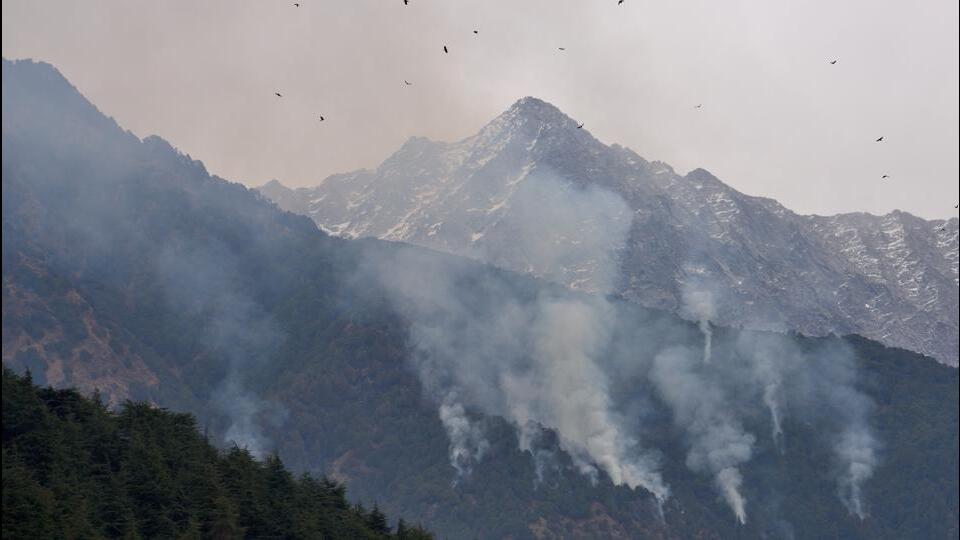
The Minister of State for Environment, Forest and Climate Change, Kirti Vardhan Singh, said in the reply: “During the last five financial years, from 2020-21 to 2024-25, an area of 97,050.30 hectares of forest land has been diverted for non-forestry purposes under the Van (Sanrakshan Evam Samvardhan) Adhiniyam, 1980.” He added, “The process of granting approval under the Van (Sanrakshan Evam Samvardhan) Adhiniyam, 1980, is continuous. The central government, following the prescribed statutory approval process, takes prompt decisions on proposals that are complete in all respects.”
In terms of area diverted, Gujarat recorded 6,850.11 hectares over the five years, placing it among the leading states, though not the highest. Madhya Pradesh diverted the largest area at 24,346.96 hectares, followed by Odisha at 12,875.94 hectares. Gujarat’s year-wise figures were 1,891.10 hectares in 2020-21, 1,714.47 hectares in 2021-22, 1,474.30 hectares in 2022-23, 537.19 hectares in 2023-24, and 1,233.05 hectares in 2024-25.
Nationally, road projects accounted for the largest share of diverted forest land at 22,233.44 hectares, followed by mining and quarrying at 18,913.64 hectares, hydel and irrigation projects at 17,434.38 hectares, power transmission lines at 13,859.31 hectares, railways at 5,957.68 hectares, and defence activities at 6,041.96 hectares. Other notable categories included drinking water supply at 1,281.29 hectares, rehabilitation at 1,508.55 hectares, petrol pumps at 1,926.86 hectares, optical fibre cables at 391.13 hectares, and pipelines at 669.38 hectares.
The ministry has maintained that India’s overall forest and tree cover has shown a continuous increase between 2013 and 2023, according to the India State of Forest Report published by the Forest Survey of India, rising from 789,979sqkm in ISFR 2013 to 827,357km in ISFR 2023, even as diversion takes place for developmental needs.
In reply to another question on the same date in the Rajya Sabha, asked by Rajeev Shukla, the ministry addressed concerns raised by the MP that, according to the US-based Global Forest Watch platform, India’s forest cover stands at only 440,000sqkm (roughly 15% of its geographical area) and is therefore declining rather than increasing.
The ministry rejected this interpretation and said that the criteria, parameters, and definitions adopted by Global Forest Watch are different and not tailored to reflect India’s unique ecological and socio-economic conditions. Instead, it relied on the official assessment conducted by the Forest Survey of India (FSI), Dehradun, which uses wall-to-wall remote sensing supported by intensive ground verification and National Forest Inventory data.
To support forest growth, the government is implementing schemes such as the National Mission for a Green India, Nagar Van Yojana, Mangrove Initiative for Shoreline Habitats and Tangible Incomes, Compensatory Afforestation Fund Management and Planning Authority, Integrated Development of Wildlife Habitats, forest fire prevention programmes, and the ongoing nationwide plantation campaign, Ek Ped Maa Ke Naam.