
 E-Paper





Follow the latest breaking news, major developments and agenda-setting stories from India and around the world with the newsdesk at Hindustan Times. Operating round the clock, the desk brings together experienced editors, reporters and correspondents to deliver fast, accurate and contextual reporting across subjects that influence public policy, governance, business, society and international affairs. The HT News Desk covers politics, elections, government policies, the economy, business and markets, science and technology, the environment, law and order, infrastructure, education, climate issues and geopolitics, while closely tracking developments across states, institutions and global capitals. The team also leads coverage of major breaking news events, policy announcements, court proceedings, natural disasters, public emergencies and significant international developments. Reports published by the newsdesk are based on information gathered from reporters on the ground, official statements, government agencies, court records, regulatory filings, recognised institutions and other authoritative sources. Stories undergo editorial scrutiny and verification processes to ensure accuracy, fairness and relevance, and are updated as events evolve and additional information becomes available. Whether covering a key political decision in New Delhi, an economic policy shift affecting millions, a landmark court ruling or a major global event, the HT News Desk aims to provide readers with reliable, fact-based journalism that delivers not only the latest developments but also the context and analysis needed to understand their wider implications.
H-1B rejections spike in fourth quarter of 2017
There was a sharp rise in rejection of H-1B petitions in the fiscal quarter immediately following President Donald Trump’s announcement of restrictive policies in 2017, said a study based on US data, that also showed more Indians were turned down than others.


There was a sharp rise in rejection of H-1B petitions in the fiscal quarter immediately following President Donald Trump’s announcement of restrictive policies in 2017, said a study based on US data, that also showed more Indians were turned down than others.
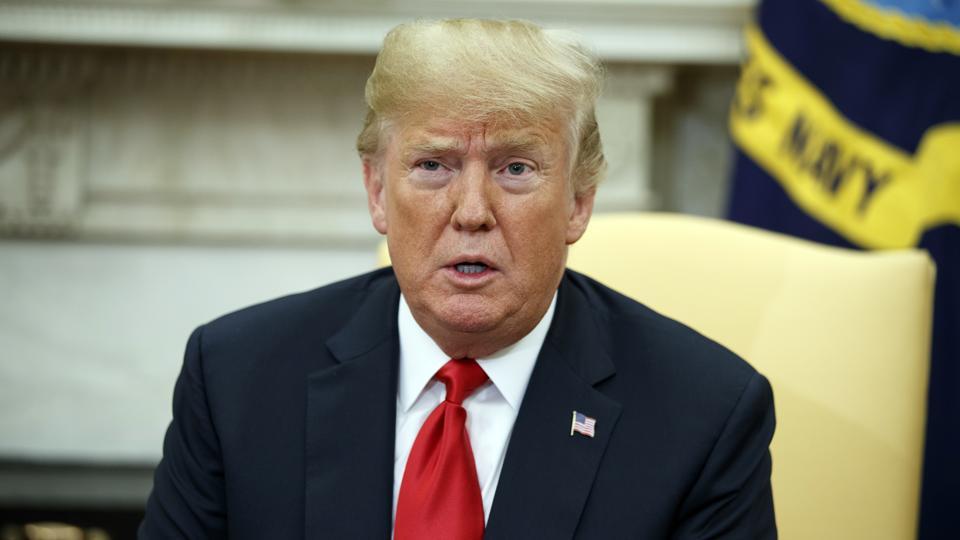
The study by National Foundation for American Policy compared data obtained from the US Citizenship and Immigration Services (USCIS) in April-June 2017, during which Trump issued the Buy American, Hire American policy, and the July-Septemberquarter to study the impact.
The spike in denials for Indians was 42%, from 16.6 % in the third fiscal quarter to 23.6% in the fourth. For those from other countries, it went up by 40%, from 14% to 19.6%; and for the combined total of applicants, it was in the same range at 40% but lower, from 15.9% in the third to 22.4%.
The numbers for “request for evidence”, which is more information needed to complete an application, went up from 24.2% in the third quarter to 72.4% in the fourth for Indians; from 18% to 61.2% for all others; and from 22.5% to 68.9% for all combined.
The study shows that obtaining H-1Bs has become more difficult as a result of Trump’s policies, and that Indians — the largest recipients of H-1Bs accounting for more than 70% of the annual 85,000 H-1B visas — were impacted the most.
Asked if there was any evidence of targeting of Indians, Stuart Anderson, of the NFAP, said, “The data show that USCIS adjudicators are more likely to deny the applications of Indians for H-1B and other categories of skilled worker visas.”
But, he added: “it’s not possible to know with certainty if bias is a factor in adjudication decisions. Only a serious internal review could determine that. It’s obvious that it would be less of an issue if the number of denials and Requests for Evidence were at a much lower level than they are today.”
This is the first study of the impact of President Trump’s restrictive policies even on legal immigration, in which he has committed his administration to rid the system of abuse and misuse regarding H-1B visa programme and all other employment based schemes while announcing his “Buy American, Hire American” programme in April.
The NFAP, a non-partisan body that has studied immigration closely, used data from the USCIS for the third and fourth quarters (the fourth quarter beginning July 1) to say in a new report out Wednesday, the spike has been “likely due to new Trump administration policies”.
“The data indicate the new administration needed time to get in place its new political appointees – considered by observers to be a who’s who of opponents of all forms of immigration – and to exert their will on USCIS career adjudicators, who were not considered favorably inclined in the first place toward businesses or high-skilled foreign nationals,” Andersen, who worked on immigration in the Bush administration, said in a statement.


