
 E-Paper



Half of total Covid-19 deaths logged between April, May
Forty-one per cent of the total Covid-19 deaths in April and May in India came from Maharashtra, Karnataka and Delhi, according to the data shared by the National Centre for Disease Control (NCDC) with HT in reply to a Right To Information application.

 Prefer HTon Google


About half of India’s Covid-19 deaths since April 2020 were reported in just two months, April and May this year, according to government data, which underlines how deadly the second wave of the pandemic in the country was and how it overwhelmed the health care infrastructure.
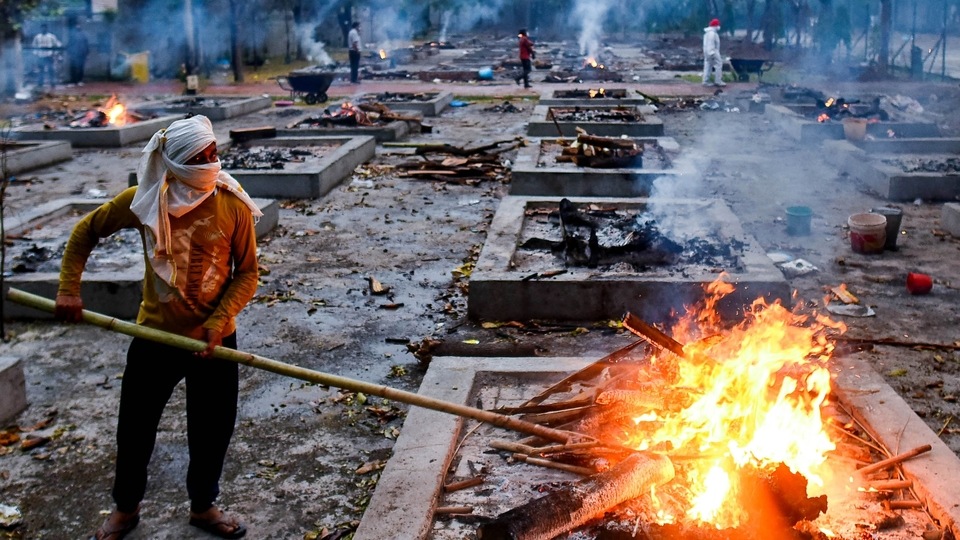
Forty-one per cent of the total Covid-19 deaths in April and May in India came from Maharashtra, Karnataka and Delhi, according to the data shared by the National Centre for Disease Control (NCDC) with HT in reply to a Right To Information application.
NCDC said that of the 329,065 people who died of Covid-19 between April 2020 and May 2021, 166,632 fatalities were reported in April and May 2021. As many as 120,770 people died in May and 45,882 in April, two months when the second wave of the pandemic was raging across the country.
Close to 60% of the total Covid-19 deaths in 14 months in Delhi, Karnataka and Punjab, took place in April and May this year, the data shows.
In June, 69,354 Covid-19 deaths were recorded, which included those added after data was reconciled. Before April-May, the highest deaths reported in a month was in September 2020, with 33,035 deaths. September-October was considered the peak of the first Covid-19 wave.
All India Institute of Medical Sciences director Dr Randeep Guleria has said that the devastation of the second wave should prepare people for the third wave, especially with the possibility of new variants emerging. “As of now, there are no signs to indicate that third wave would be as lethal as the second one,” he added.
Experts said that the indications of another Covid-19 wave began emerging in March this year, when the Covid-19 deaths more than doubled nationally, with spikes seen in Punjab, Madhya Pradesh, Haryana and Gujarat. This was also the time when political parties were aggressively campaigning for assembly elections in Assam, Kerala, West Bengal and Tamil Nadu and preparations were being made for the Mahakumbh in Haridwar.
“The (increased) deaths indicate that state governments ignored the second wave signs and reacted late,” said Dr Shaheed Jamil, who earlier headed the central government’s advisory group on Covid-19 genome sequencing.
NCDC is the health ministry’s nodal agency to maintain all Covid-19 disease records under the Integrated Disease Surveillance Programme (IDSP). However, non-Covid-19 deaths are not reported to IDSP, NCDC joint director Dr Vinay Kumar Garg said in the RTI response. He added that they don’t have data on the cause of deaths reported during the pandemic.
Uttar Pradesh, which reported a total of 20,346 deaths between April 2020 and May 2021, recorded 8,108 deaths in May, 2021, and 3,438 in April, 2021. Its neighbour, Uttarakhand, which has 1/20th of UP’s population, reported 3,899 deaths in May, which is 48% of the total deaths in Uttar Pradesh for that month. Close to 1,100 Covid-19 deaths that took place in April and May in Uttarakhand were reconciled in the June data and not reflected in NCDC’s May Covid-19 death data.
Bihar, which reported 2,624 deaths in May, added 3,951 deaths in the first week of June, taking the death toll to 6,575. These cases were added after the Patna high court asked the state government to conduct an audit of all deaths in the state. “This includes deaths that took place in April and May,” said a senior Bihar health department official, asking not to be named.
Dr DS Negi, director general, medical health, Uttar Pradesh, said their strategy was to test, trace and treat suspected patients, which helped in quick isolation of positive cases and identification of contacts. “This helped us to identify positive Covid cases and isolate them early. Patients got critical care and we could save many lives,” he said.
If Covid deaths of all states are compared, Maharashtra reported the highest Covid-19 deaths (26,859) among Indian states in May followed by Karnataka, Tamil Nadu and Delhi.
The highest death rate for a million people for both the entire Covid-19 period and April-May this year was of Goa followed by Delhi, Puducherry, Maharashtra, Chandigarh and Uttarakhand, showed the analysis of NCDC’s death data along with the 2021 Census population projection.
“We are reporting all the deaths because our surveillance is stringent and our machinery is robust. Not just Covid, we are topping deaths due to Swine Flu and its cases. This isn’t anything to be proud of but it is because we report all deaths. This year, we have reported around 80,000 deaths due to Covid-19,” said Maharashtra surveillance officer Dr Pradeep Awate.
Delhi health minister Satyendar Jain said: “While we understand the gravity of the situation it is also important for one to understand that the data presented by the Delhi government has been completely transparent at all points, even if it gave others the opportunity to take jibes at us.” Karnataka health minister K Sudhakar said despite a spurt in Covid cases, the state was able to save many lives because of adequate health facilities.
Union health minister Mansukh Mandaviya, in a written reply in the Rajya Sabha on July 20, said health was a state subject and the central government has provided all help to the states. “Due to concerted actions of central and state governments, the isolation bed capacity and ICU bed capacity, which was merely 10,180 and 2,168 before the first lockdown (as on 23rd March 2020), could be increased to 18,21,420 isolation beds and 1,21,671 ICU beds (as on 16th July 2021),” he said.
(With inputs from state bureaus)


