
 E-Paper



Explained: What is a heatwave and how to protect yourself
The heatwave in India comes at a time when states and Union Territories (UTs) are facing a power crisis. On Thursday, the country’s peak power demand met or the highest supply in a day touched the all-time high of 204.65 GW.

 Prefer HTon Google


The heatwave in India has intensified with the mercury crossing the 45-degree mark at several places on Thursday. The India Meteorological Department (IMD) said the spell of heatwave will persist over northwest and central India for the next five days and over east India for the next three days.
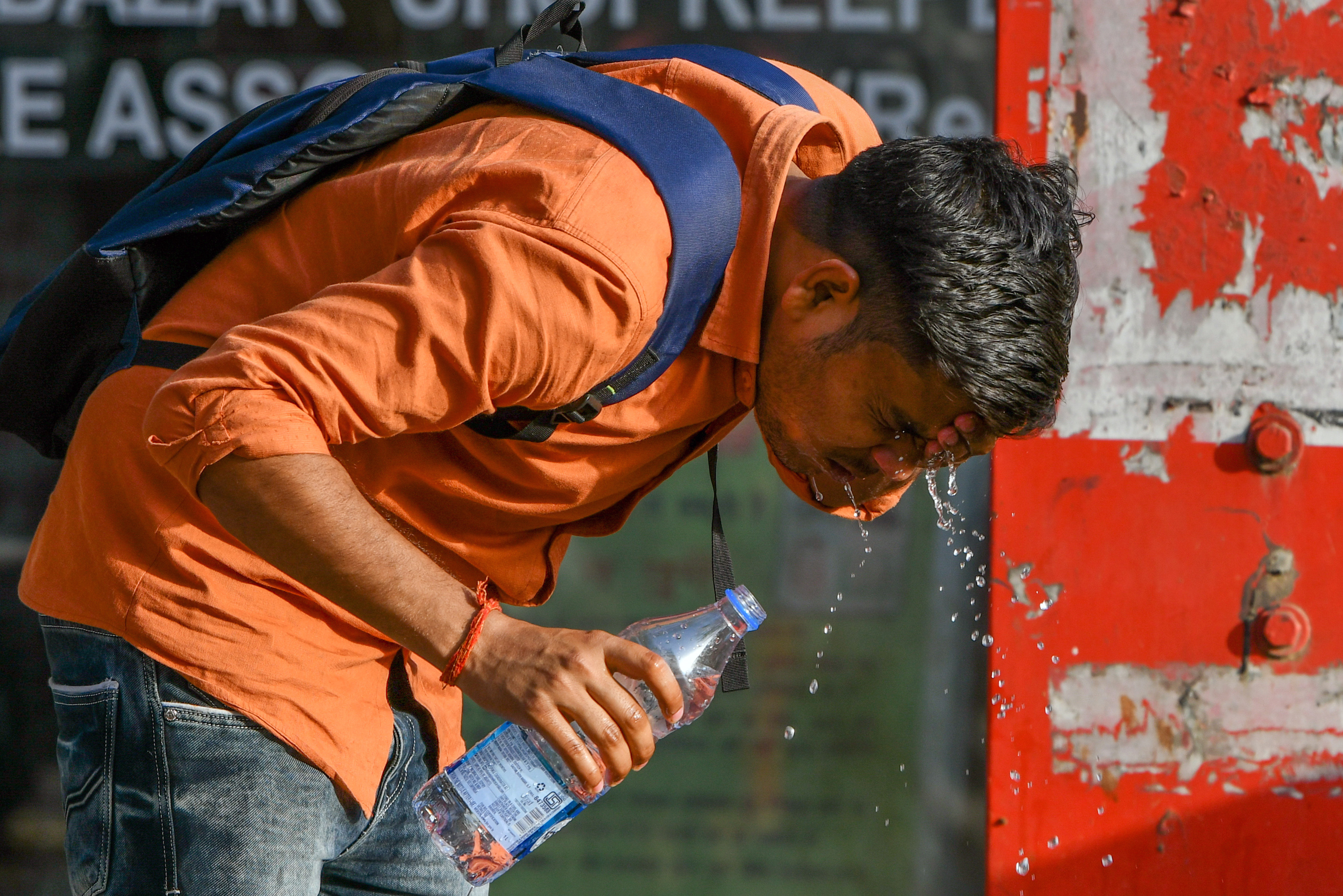
“A rise of about two degrees Celsius in the maximum temperature (is) very likely over most parts of northwest India during the next two days and no significant change thereafter,” the IMD said.
The heatwave comes at a time when states and Union Territories (UTs) are facing a power crisis. On Thursday, the country’s peak power demand met or the highest supply in a day touched the all-time high of 204.65 GW.
The IMD has already issued an orange alert for Rajasthan, Delhi, Haryana, Uttar Pradesh and Odisha.
Here are some frequently asked questions (FAQs) regarding heatwave:
What is a heatwave?
According to the IMD, a heatwave is a condition of air temperature which becomes fatal to the human body when exposed. Quantitatively,, a heatwave is defined based on the temperature thresholds over a region in terms of actual temperature or its departure from normal.
What are the criteria for declaring a heatwave?
A heatwave is considered if the maximum temperature of a station reaches at least 40°C or more for plains and at least 30°C or more for Hilly regions.
The period of a heatwave in India
It occurs mainly from March to June. But in some rare cases, a heatwave can also occur in July, according to the IMD. The peak month of the heatwave in the country is in May.
Heatwave prone states in India
Here are the heatwave prone states in the country- Punjab, Haryana, Delhi, Uttar Pradesh, Bihar, Jharkhand, West Bengal, Odisha, Madhya Pradesh, Rajasthan, Gujarat, parts of Maharashtra and Karnataka, Andhra Pradesh and Telangana.
Kerala and Tamil Nadu experience heatwaves sometimes as well.
How does IMD monitor heatwave?
The IMD says it has a big network of surface observatories covering the entire country to measure meteorological parameters like temperature, relative humidity, pressure etc.
“Based on daily maximum temperature station data, climatology of maximum temperature is prepared for the period 1981-2010 to find out the normal maximum temperature of the day for a particular station. Thereafter, IMD declared heatwave over the region as per its definition,” The IMD adds.
How can you get details about heatwaves?
People can find out details regarding heatwaves from the All India Weather Forecast bulletin (https://mausam.imd.gov.in/imd_latest/contents/all_india_forcast_bulletin.php), and the special heatwave guidance bulletins (http://internal.imd.gov.in/pages/heatwave_mausam.php) from 1 April to 30 June daily.
The information is also shared with concerned state government authorities, media and other stakeholders like Indian Railway, health departments, power sector etc.
How to protect yourself from heatwave?
> Drink sufficient water as often as possible, even if not thirsty.
> Avoid going out in the sun, especially between 12 noon and 3 pm.
> Avoid strenuous activities when the outside temperature is high.
> Wear lightweight, light-coloured, loose, and porous cotton clothes.
> Avoid alcohol, tea, coffee and carbonated soft drinks, which dehydrate the body.
> Keep your home cool, use curtains, shutters or sunshades and open windows at night.
> Use fans, and damp clothing and take bath in cold water frequently.


