
 E-Paper



Hottest summer takes 1,453 lives in France; India’s heatwave toll 94
2019 has been an exceptionally hot year across the world with record melting of Arctic Ice and record numbers of heatwaves across the world.

 Prefer HTon Google


Two heatwaves with maximum temperatures of about 46 degree Celsius claimed 1,453 lives in France this year, the country’s health minister Agnes Buzyn said on Friday. In comparison, in India, where peak temperatures this summer touched 50.8 degrees, 94 people died from four heatwaves spanning May and June, according to the home ministry’s records.
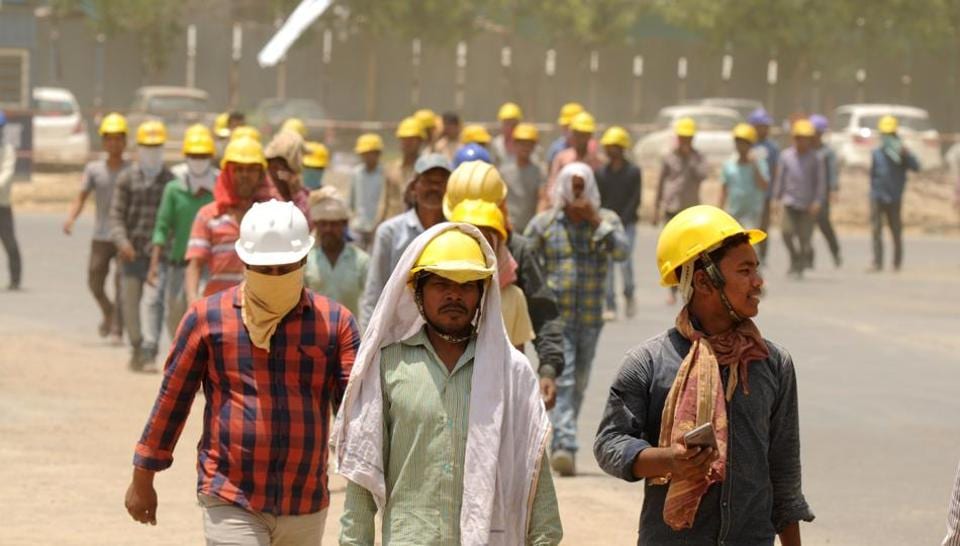
2019 has been an exceptionally hot year across the world with record melting of Arctic Ice and record numbers of heatwaves across the world. According to the World Meteorological Organisation (WMO), the five warmest years in recorded history have been the last five, and 18 of the 19 warmest years have occurred since 2001.
To be sure, not all heatwave deaths get reported in India where such data is collected by the health ministry under Integrated Disease Surveillance Programme, which officials admit, may not be recording deaths that take places outside the health monitoring system.
Meteorological departments declare heatwaves when the temperature is five degrees above normal for between three to five consecutive days. France recorded its highest ever temperature of 45.9 degree Celsius on June 28 in the southern town of Gallargues-le-Montueux. The maximum temperature recorded in India was 50.8 degree Celsius in Churu, Rajasthan on June 2.
Buzyn said on Friday that the two heatwaves --- June 24 to July 7 and July 21 to July 27 --- claimed 1,453 lives, significantly lower than the disastrous summer of 2003, when an estimated 15,000 died in an August heatwave.
According to data provided in Lok Sabha on June 16, 94 people died because of four heatwaves in India, starting from mid-April till first week of June. “With the efforts of the Central Government and State Government, number of deaths due to heatwaves has declined significantly during 2016-2018,” home minister Amit Shah said in a written reply.
In India, more than 6,000 people have died because of heatwaves since 2010, according to government data. The maximum number of deaths in the last decade was reported in 2015, when 2040 people died, according to home ministry data. The deaths prompted the National Disaster Management Authority to draft state and district specific plans with the help of the state governments to combat deaths because of heatwaves. Since then, the number of heatwave related deaths have come down with only 25 reported in 2018.
Anup Kumar Shrivastava, an expert at the National Disaster Management Authority (NDMA), said heatwaves are an annual affair in India, and the country is better prepared to deal with natural calamity. “We have identified heatwave spots across India, where preventive action is taken. I don’t know whether this happens in France.”
WMO Secretary-General Petteri Taalas said July temperature has rewritten climate history, with dozens of new temperature records at local, national and global level. “The extraordinary heat was accompanied by dramatic ice melt in Greenland, in the Arctic and on European glaciers,” he said, terming it a reality of climate change, not “science fiction”.
Such heatwaves are consistent with climate scenarios which predict more frequent, drawn out and intense heat events as greenhouse gas concentrations lead to a rise in global temperatures. “Every heatwave occurring in Europe today is made more likely and more intense by human-induced climate change,” said a study published by scientists at World Weather Attribution on the Human contribution to record-breaking 2019 heatwave in France, Belgium, the Czech Republic, Germany, Italy, Spain and Switzerland.


