How CAIT and Praveen Khandelwal are railing against e-commerce platforms
Amazon and Walmart-owned Flipkart dominate the Indian e-commerce space, although India’s richest man, Mukesh Ambani, has plans to dominate the Indian retail space, offline and online
The Confederation of All India Traders, or CAIT, has always had an opinion (and not hesitated to make itself heard), especially on matters concerning small retail stores, but in recent years, the business-association-and-lobby-group, which works out of a small office in Delhi’s Karol Bagh, and its head, Praveen Khandelwal, have become important and influential voices in the space.
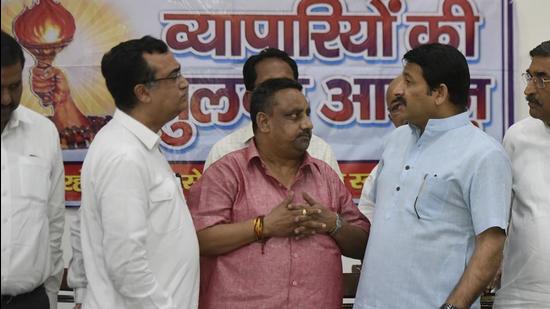
Following the Reuters report, Khandelwal’s organisation of small traders has called for a detailed federal probe into Amazon’s “unfair practices”. (Vipin Kumar/HT PHOTO)
Their current target is Amazon’s India arm. CAIT and Khandelwal have long railed against e-commerce platforms and the way in which they disadvantage small retailers -- ironical in part because some 30,000 of CAIT’s members are themselves on such platforms -- but after a Reuters report last week alleged that the e-commerce giant systematically ripped off Indian goods and manipulated search results to boost sales, their efforts have accelerated.
Last Wednesday’s Reuters report, based on a trove of internal Amazon documents showed that, “at least in India, manipulating search results to favour Amazon’s products, as well as copying other sellers’ goods, were part of a formal strategy at Amazon and that at least two senior executives had reviewed it”. In response, Amazon said: “We believe these claims are factually incorrect and unsubstantiated.”
Khandelwal commands a massive 80-million army of Indian pop-and-mom store-owners, a bastion of voters of Prime Minister Narendra Modi’s ruling Bharatiya Janata Party (BJP).
Amazon and Walmart-owned Flipkart dominate the Indian e-commerce space, although India’s richest man, Mukesh Ambani, has plans to dominate the Indian retail space, offline and online. According to a March 2021 report by financial technology firm FIS (Fidelity National Information Services Inc), the Covid-19 pandemic has boosted the country’s e-commerce market, expected to grow 84% to reach $111 billion by 2024. India’s e-commerce market is set to clock $100-120 billion in gross merchandise value with 300-350 million shoppers by 2025, another recent report by Bain and Co. said.
Following the Reuters report, Khandelwal’s organisation of small traders has called for a detailed federal probe into Amazon’s “unfair practices”.
India recently brought in several changes in how e-commerce platforms do business; at least some of these are believed to be influenced by Indian Main Street sellers led by Khandelwal’s CAIT.
In June, the Union government proposed substantive changes in the way e-commerce platforms, such as Amazon and Flipkart, operate, through a draft to amend the Consumer Protection (e-commerce) Rules 2020.
The draft proposes greater scrutiny of flash sales, enhanced liability of e-commerce sites, data protection for consumers, and stronger grievance redressal. The draft rules outlaw flash sales – instant, unannounced sales that usually accompany discounts – that are “manipulated” to give advantage or preferential treatment to a particular seller or a group of sellers.
The new changes also make it necessary to treat Indian sellers and manufacturers on a par with global merchants, while all products must display their country of origin – a move said to be inspired by Modi’s “Aatmanirbhar”, or self-reliance, campaign.
“The key thing always is to ensure fair competition. But frequently shifting the goalposts don’t do much good. I view the new stipulations on flash sales, for instance, as part of an old mindset that deny consumers the benefit of low pricings,” said Pradeep Mehta, a consumer rights expert who was consulted by the NDA government while drafting the Consumer Protection (Amendment) Bill 2019.
Yet Khandelwal is waging a war against what he calls are “unfair trade practices” of e-commerce giants and lobbies with federal authorities to bring stricter rules, even though more and more consumers are turning to online sellers.
Khandelwal has always lobbied for interests of small shopkeepers through his organisation, but Amazon.com Inc’s Jeff Bezos has turned into a bete noire. Few can match the American giant, butKhandelwal is testing the waters for a homegrown e-commerce platform being called Bharat E Market, a venture nationalist supporters of the BJP are hailing.
“We are struggling against unfair trade practices and it is also a question of survival of small shopkeepers. There is nothing political,” he said. But there are telltale signs of his influence, including a large photograph of him and the Prime Minister Modi in his office.
“People say I am against Jeff Bezos. No, I am against unfair trade practices. Reliance is now getting into the market. They are welcome as long as they play by the rules,” he says. He rounded off his views on Ambani’s Reliance with a comment he didn’t explain further: “It is better that companies like Reliance should stay where their core competencies lie.”
Covid-19 has hit small businesses the hardest and although India still seeks foreign capital to spur growth and kicked off a massive privatisation agenda, e-commerce giants such as Flipkart and Amazon are only consolidating their positions as the pandemic stamped out brick-and-mortar shopping.
In the first four days of festive sales that began on October 2, 2021, Flipkart and Amazon India amassed $2.7 billion in sales, including early access for premium members, according to estimates from consultancy RedSeer Consulting, HT’s sister publication Mint reported.
Bezos announced a massive $2 billion investment in India during his second visit to India in India. In January 2020, India’s commerce minister Piyush Goyal said of Amazon that “it’s not as if they are doing a great favour to India when they invest a billion dollars”.
Lobbying by the likes of Khandelwal has ensured safeguards unique to India when it comes to e-commerce rules. Unlike in other markets, Amazon India can’t sell its own inventory directly to customers on its platform in India, a move meant to protect the interests of traders CAIT speaks for.
To sidestep curbs on own-inventory selling, Amazon formed Cloudtail, a JV between Amazon Asia and a venture capital firm of Infosys founder, NR Narayana Murthy. But in August 2021, perhaps because of all the scrutiny on the space, the two partners announced that they were ending their seven-year-old partnership by next May.
Amazon has also found itself on the radar of theRashtriya Swayamsevak Sangh (RSS), the idealogical parent of the BJP. A Sept 26 issue of Panchjanya, the RSS’s weekly magazine, likened Amazon to the East India Company and the Indian government is looking into reports that Amazon’s Indian arm may have paid bribes to government officials.
Amazon India says the e-commerce platform has helped bring efficiency to small sellers. In an April statement, it said: “Since inception, Amazon has cumulatively digitized 2.5 million MSMEs (micro, small and medium enterprises), driven exports worth $3 billion and created 1 million jobs in India.”
Despite all his political influence, Khandelwal, a wealthy trader of hardware items, who threatened that CAIT would go on strike against the $16 billion acquisition of Flipkart by Walmart, was unable to stop the deal.
But in January 2020, the Competition Commission of India, launched an investigation into Amazon and Flipkart for influencing sales through deep discounts.

 E-Paper