
 E-Paper



How ‘caste bias’ in Bikaner college snuffed out a family’s hope
“He is gone,” she whispers – pointing towards the kitchen where she would make bathua and besan barfis every time her son, 20-year-old Pradeep Meghwal, came home from his college in Bikaner. “It was his favourite,” she says. “And I will never make it for him again.”


It’s been nearly two months since Prem Devi cooked for her family. Every time someone walks in, she retreats deeper into the shadows. People try to talk to her, but she pulls her red bandhani saree over the face and turns away. Outside, visitors arrive and talk loudly, but indoors Devi collapses into stifled sobs. Only one sentence comes back to her again and again.
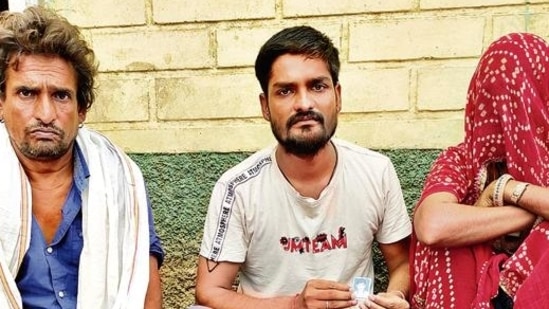
“He is gone,” she whispers – pointing towards the kitchen where she would make bathua and besan barfis every time her son, 20-year-old Pradeep Meghwal, came home from his college in Bikaner. “It was his favourite,” she says. “And I will never make it for him again.”
Pradeep took his life on September 22 after months of alleged caste-based harassment from dominant-caste batchmates and apparent inaction by college authorities in Bikaner. Devi now wonders whether she was wrong to send him to a big city. “I should have stopped him from going back there,” she said. “But I didn’t know what he was going through.”
Pradeep’s ordeal mirrors the experiences of many students from marginalised castes and tribes, who battle harassment and bullying in institutions from their higher-caste peers but find it difficult to access redressal. It is also recalls the 2019 suicide of Payal Tadvi, who killed herself after months of casteist abuse and harassment in a Maharashtra medical college in a case that shook the education fraternity.
Hope of the family
Located at the edge of Rajasthan’s desert belt, Karkedi is ringed by dunes of sand. Scrubs and small patches of vegetation dot the landscape, and a dirt road veers off the state highway into the village of 300 households, of which around 45 are Dalits. Farm plots are small, yet many villagers are engaged in agriculture. Young men often make their way to nearby towns of Losal, Kuchaman or Sikar for construction and other temporary labour jobs.
Pradeep was the opportunity for his family to climb out of this destitution. The shy boy passed his Class 12 examinations with 82% marks from the state board in 2018 – the first Dalit from the region to secure first division. “He was focused on getting into college; it was his dream to land a job,” said Bhanwar Meghwal, their next-door neighbour.
He enrolled in the College of Agriculture in Bikaner in 2018 for the undergraduate honours degree in agriculture, records reviewed by HT show. For a while, everything was great. He passed exams with ease, made friends, and told his parents that he will look for a government job soon. “We wanted him to become an agriculture supervisor (an entry-level state government job that pays roughly R30,000 a month) but he had higher ambitions. He promised us that he will make us proud,” said his father, Omprakash.
Every few weeks, Pradeep would leave the hostel and travel back to his village, roughly 250km away, for home-cooked food and time with his two brothers. But unbeknownst to the family, his caste was becoming a hurdle for him in college and pushing him into depression – a change noticed only by his mother. “He stopped eating his fill of rotis and his favourite tea. He became quieter,” said Devi. “But I didn’t know why.”
Harassment
Trouble began six months ago, when Pradeep became close with a first-year female student from a so-called higher caste, said police officials aware of the matter and family members of the deceased. This incensed four other boys in the college – one was Pradeep’s batchmate and three others were juniors – all from the other backward class (OBC) community who shared the same caste, Jat, as the woman.
“They took his phone and downloaded his conversation with the woman on WhatsApp, and then started blackmailing him. They asked him how he dared talk to a woman of a caste higher than his, and threatened to break his bones,” said Omprakash.
On August 18, Pradeep returned home. His family was getting ready to celebrate because he had secured an internship at the local Krishi Vikas Kendra, a step closer to getting a government job.
“But when he came, he was shaking like a leaf. He said the threats had escalated and they’d started referring to him by caste slurs in college and thrashed him,” said Ranjeet Meghwal, his elder brother.
The men had entered his hostel room the day before he came to the village and told him that if the “low caste” didn’t stay in their bounds, his limbs would not be in a condition to earn him a living, stated the FIR later in Bikaner.
That afternoon, when Omprakash was in the field, Ranjeet at the shop and Prem Devi resting in her room, Pradeep stepped out. He returned at night, collapsing on the courtyard. His brother rushed out, only to learn that he had consumed poison.
The family took him to the local hospital, and returned with a recovering Pradeep three days later. Despite his protests, the family decided to lodge a complaint with the college authorities.
The college set up a five-member disciplinary committee and on the basis of its report, issued an order on September 9, a copy of which is with HT.
It put two students named by Pradeep – Ravindra Faroda and Gagan Ajit Singh – under probation and fined them ₹2,500 and ₹1,500 respectively and said the students were found “guilty of indiscipline and misconduct.”
Importantly, Pradeep himself, along with two other students, was reprimanded. He was “strongly warned to not involve in any act of indiscipline in the future, failing which disciplinary action will be initiated”.
The dean of the College of Agriculture, IP Singh, confirmed the probe and caste-based harassment to HT but added that the institution took adequate action.
“The boy was involved with a girl who was his junior. There was a caste difference. He got into a fight with some other boys in the college who belonged to the caste of the girl. They threatened him to keep away from her,” said Singh.
He said an inquiry was conducted after the family approached the college. “We took action and identified all the boys; we kept them on conduct probation and fined them.”
But the family was livid. “If they knew that the boys were troubling them, why didn’t the college take strict action? Can R4.000 deter anyone?” asked Ranjeet.
Final days
Five days later, on date, things came to a head.
Pradeep had returned to the college for his term-ending examinations, as had the others. After one such exam, the four OBC men gathered in a common area and gave him an ultimatum; they also roughed him up, according to two friends of Pradeep who requested anonymity. Later that day, he tried to fling himself in front of a truck outside the college, confirmed his family and the college authorities.
“The boys kept asking the woman why she continued to talk to “neech” (lower) men. Will you also talk to us, they asked,” stated the FIR, a copy of which is with HT.
He was sent back home again. At home, he was a shadow of his former self – silent but restless, unable to sit down but also afraid of venturing out. His parents repeatedly implored him to stay back, or to tell them what’s wrong, but he refused. He was also missing his exams and after a couple of days at home, was itching to get back to college, said Ranjeet.
They didn’t know how to help him, or how his mood could lift. They thought of going to doctors but knew no one in the hinterlands who could help Pradeep. They were sure if the caste bullying stopped, Pradeep would recover.
They were wary of allowing him back to college. And yet, they knew they had no real choice. “He was missing his exams and his only big chance to make a career for himself,” said Ranjeet.
He took a train back to Bikaner on September 22, promising to his family that he will come back after finishing his pending papers.
That evening, at 7.36pm, Ranjeet saw his brother had changed his WhatsApp status and posted stories announcing his intent to take his life. For the next several minutes, he tried to frantically dial Pradeep but to no avail. “Reading his two-page note was heartbreaking where he described his feelings for the woman and the pain inflicted on his due to his caste by the men,” said Ranjeet.
In the early hours of the morning, police informed the Meghwal family that Pradeep was found dead in the railway tracks behind the college. Their hope had been snuffed out.
Questions
Why did the family let him return to Bikaner?
This question has been gnawing at the Meghwals for about a month, and has been hurled at them by neighbours, authorities and the administration of the College of Agriculture.
“His family shouldn’t have left him like this. He was mentally disturbed. He should have got treatment but instead family left him,” said IP Singh.
Singh admits that higher-caste boys harassed Pradeep for months but insists the college did all it could. “The woman belonged to caste of the boys. Naturally, in inter-caste conflict, advice is given to the boy that keep away from our girl. We know our Indian society. Caste shackles are very big here,” he said. “The boy was not handsome, he was very ordinary looking. How the friendship with the girl happened; it is very surprising.”
He said he even met Pradeep and spoke to him when the probe was conducted and advised him to “leave all this” and concentrate on studies. “We informed the family. Where could we have taken him? If he needed medical attention, I could have sent him to doctor. But he had suicidal tendencies,” he explained.
The four men have been booked by police for abetment of suicide and under sections of the Scheduled Caste and Scheduled Tribe (Prevention of Atrocities) Act that penalise public abuse and threats to a Dalit person. Two of them were arrested on Saturday.
“We had no role in the death, it was a different matter. We didn’t even know him very well. He was depressed,” said Rajkumar Bijarniya, one of the accused. Another accused, Froda, declined to comment. A third accused, Gagan Ajit Singh, said that he didn’t want to be associated with such negativity. “Such things shouldn’t be made into issues,” he said.
Pradeep’s family is wracked with guilt and anger. They never stopped Pradeep from going back because they knew how important passing an exam can be in an impoverished Dalit family. “My youngest brother and I dropped out of school and started working because we wanted to put Pradeep through college,” said Ranjeet.
Both of them took shifts to work in the field and the shop to pay the roughly Rs1 lakh a year fees for his undergraduate degree. Neither Pradeep nor his family ever imagined that his dropping out of college was an option.
There was another reason: Ignorance. “We simply didn’t know how badly he was being harassed. We thought it will go away after complaining with the college. We didn’t know how much he was suffering. We didn’t want to stand in the way of his dream,” said Omprakash.
Regret
Local activists say the trajectory of the case is typical in a state with one of the worst investigation records for cases under the SC/ST Act – roughly one in two cases don’t reach the charge sheet stage, according to NCRB data for 2020. “Dalits are murdered, pushed to suicide, raped, stopped from riding horses in weddings or conducting last rites but authorities are not concerned unless protests erupt,” said Hariram Mehrada, chief of the Ambedkar Dalit Adhikar Manch in Rajasthan.
Police said the investigation is ongoing. “We are collecting all the facts and recording statements,” said Bikaner circle officer Pawan Kumar, who is probing the case. Bichhwal station house officer Manoj Sharma said the two arrested men – Froda and Singh – have been sent to 14-days judicial custody.
These days, the Meghwal household is always a hub of activity. Relatives drop by throughout the day. Activists walk in and out of the house, photocopying documents. Friends of Pradeep call to commiserate.
But Prem Devi is unmoved. Her memory is stuck at the last time she saw her son, stepping out of the house. “He was leaving when he turned back, and said, everyone believes in me, but I don’t know if I can live up to their hopes. Why didn’t I tell him he didn’t need to?”


