
 E-Paper



How cotton built the Canara Union
A different generation had come of age in a similar way in March 1980, when a handsome, lanky 25-year-old with the most amazing wristwork became the first Indian to win the All-England Championships. In Bengaluru, the celebrations then were particularly joyous in Malleswaram, for the new champion, Prakash Padukone, had trained for many years at the courts of the legendary Canara Union, on 8th Main.


On the 15th of May this year, India exploded in jubilation as her men’s badminton team lifted the prestigious Thomas Cup for the very first time. A different generation had come of age in a similar way in March 1980, when a handsome, lanky 25-year-old with the most amazing wristwork became the first Indian to win the All-England Championships. In Bengaluru, the celebrations then were particularly joyous in Malleswaram, for the new champion, Prakash Padukone, had trained for many years at the courts of the legendary Canara Union, on 8th Main.
The building that houses the hallowed courts, now called the Prakash Courts, was raised over a century ago, in 1919, and has a hoary history, linked inextricably to the 19th century global trade in cotton, the Industrial Revolution, and the American Civil War. Circa 1860, Lancashire’s cotton industry, a product of the Industrial Revolution, was experiencing a boom the likes of which it had never seen before. But trouble was brewing in America, from where most of the raw cotton was imported. In 1861, America plunged into a protracted Civil War, with boycotts and blockades cutting off cotton to Lancashire.
Looking for alternatives, Lancashire’s eyes naturally fell on the black, loamy soil of the cotton-growing regions of the Deccan Plateau. Around the same time, Anappa Sirur, a prosecutor for the British government in the North Kanara district of Karnataka, was looking to change his line of work, heartsick at the moral compromises he was being forced to make. He found the perfect fit with a Scottish cotton-exporting firm called P Chrystal & Co, which was looking for someone to manage their bustling operations at the Kumta port. When Anappa retired, his unimpeachable reputation ensured that his sons were also absorbed into P Chrystal & Co.
Soon after, looking to diversify into cotton spinning and weaving themselves, P Chrystal tasked the older Sirur boy with setting up two mills in Hubli, and put the younger one, Narayan, in charge of a mill they had acquired in Bangalore called the Mysore Mills, whose permanent assets were owned by the Maharaja. By the turn of the century, however, with their fortunes changing, P Chrystal decided to put their mills up for sale. It was Narayan’s son, Dattatreya, not yet 30, who negotiated with the Mysore government to buy the mill in 1904.
It was a hard, hard slog for Dattatreya, aka DN Sirur, to turn the fading Mysore Mills (later Raja Mills; today, the Mantri mall stands in that location) around. Things changed dramatically in 1918, when the severe manpower shortage in Lancashire sent business to India in the aftermath of World War I. Flush with funds, DN Sirur lost no time replacing his European managers with Indian ones, mostly drawn from his own community of Chitrapur Saraswat Brahmins. Scores more were employed in the mill and moved to Malleswaram, altering the demographics of the neighbourhood. In 1919, DN Sirur made a generous donation towards the setting up of a social and cultural centre in Malleswaram for Chitrapur Saraswats (to which community Prakash also belongs), and the Canara Union was born.
DN Sirur would go on to set up another mill, a state-of-the-art one this time, just a little up the road. The Minerva Mills would enjoy its own great successes, and, in 1980, 43 years after his passing, become a cause célèbre for the Indian judicial system – look up Minerva Mills Ltd vs Union of India – resulting in a landmark judgment by the Supreme Court that would serve to safeguard the Indian Constitution.
Fun fact: Infosys co-founder Nandan Nilekani’s dad, Mohanrao, worked as general manager in the Mysore and Minerva Mills!
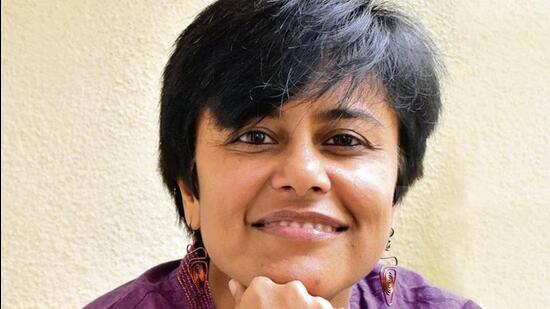
(Roopa Pai is a writer who has carried on a longtime love affair with her hometown Bengaluru)


