
 E-Paper



How Cyclone 'Remal' got its name and what it means
As a result of the cyclone, extremely heavy rainfall will take place in the coastal districts of West Bengal and north Odisha on May 26-27.

 Prefer HTon Google


The first cyclone in the Bay of Bengal this pre-monsoon season, Cyclone Remal, is expected to make landfall between Sagar Island in West Bengal and Bangladesh's Khepupara on Sunday midnight, the India Meteorological Department (IMD) said on Friday. The cyclone may lead to wind speeds of 120 kilometres per hour on Sunday.
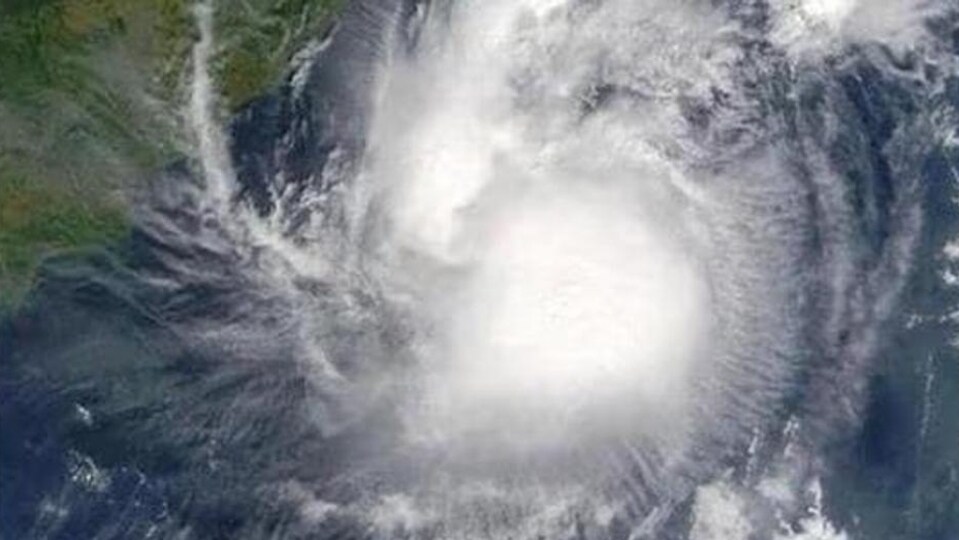
"It's very likely to cross Bangladesh and adjoining West Bengal coasts between Sagar Island and Khepupara around Sunday midnight as a severe cyclonic storm," the IMD said in an update.
As a result of the cyclone, extremely heavy rainfall will take place in the coastal districts of West Bengal and north Odisha on May 26-27. Extremely heavy precipitation may hit parts of northeast India on May 27-28.
In the wake of the cyclone, authorities have advised fisherfolk out at sea to return to the coast and not venture into the Bay of Bengal until May 27.
ALSO READ| Cyclone Remal: Severe cyclonic storm to cross Bengal coast on May 26 midnight | 10 things to know
Name of the cyclone
The cyclone has been named ‘Remal’, according to a system of naming cyclones in the Indian Ocean region. A standard naming convention is followed for tropical cyclones forming in the North Indian Ocean, including the Arabian Sea and the Bay of Bengal.
As the IMD is a part of the Regional Specialised Meteorological Centres (RSMCs), it gives names to the tropical cyclones after consulting 12 other countries in the region. The name 'Remal' has been suggested by Oman and means 'sand' in Arabic.
Expected damage due to the cyclone
As a result of the powerful winds brought by the cyclone and heavy rainfall, major damage to vulnerable structures is expected. Power and communication lines, kutcha roads, crops and orchards in South and North 24 Parganas districts of West Bengal will be vulnerable, the IMD has warned.
People living in vulnerable structures have been advised to vacate such places and move to safer indoor locations.
Warming of oceans and its link with formation of cyclones
According to scientists, sea surface temperatures increases as a result of such water bodies absorbing most of the excess heat from greenhouse gas emissions. Due to warmer sea surface temperatures, cyclonic storms are intensifying rapidly and retaining their potency for longer periods.
Senior IMD scientist D S Pai informed that warmer sea surface temperatures mean more moisture, favourable for the intensification of cyclones.
Madhavan Rajeevan, former secretary of the Union Ministry of Earth Sciences, said a sea surface temperature of 27 degrees Celsius and above is needed for a low-pressure system to intensify into a cyclone. The sea surface temperature in the Bay of Bengal is around 30 degrees Celsius at present.
"The Bay of Bengal and the Arabian Sea are very warm at present, so a tropical cyclone can easily form," Rajeevan said.
"A cyclone will not intensify if the vertical wind shear is very large. It will weaken," Rajeevan added.
(With inputs from news agencies ANI, PTI)


