E-Paper



How different regions are faring in Covid-19 vaccination
According to population projections made for March 2021 by the National Commission on Population, this translates to a total of around 14 doses per 100 population, with 10.7% of the population having received at least the first dose and 3% having received both doses.

 Prefer HTon Google


Until May 19, India had administered at least 186 million doses of Covid-19 vaccines in all, according to the CoWIN dashboard. At least 145 million of these were first doses and 41 million were second doses. Put otherwise, India has fully vaccinated 41 million people, and has given at least one dose to 145 million more.
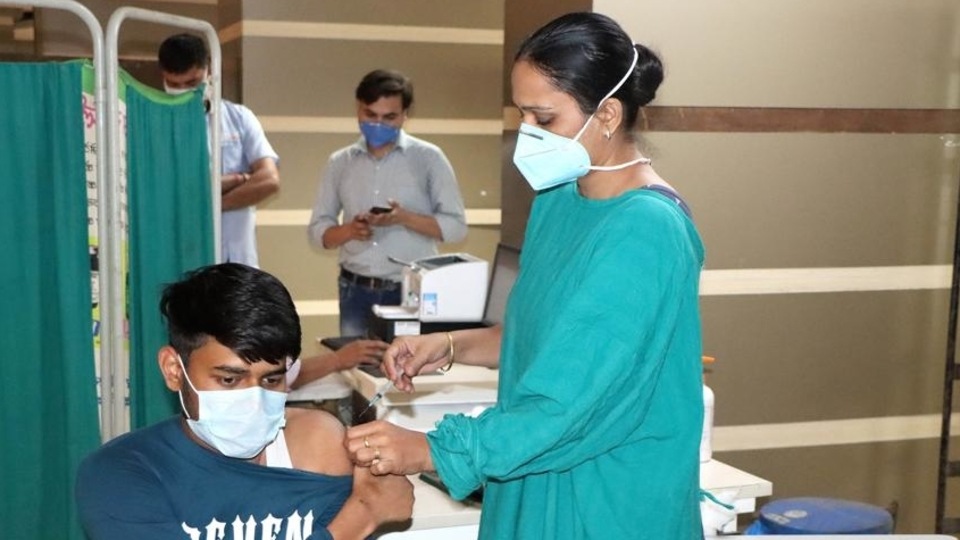
According to population projections made for March 2021 by the National Commission on Population, this translates to a total of around 14 doses per 100 population, with 10.7% of the population having received at least the first dose and 3% having received both doses. These headline numbers, however, hide a wide variation across different regions.
1. 70% of districts have received less than 20 doses per 100 population
Official estimates of district-level population are not available. However, even the 2011 census data can offer insights into the variation in vaccination coverage across districts. This shows that 70% or 448 of 639 districts in the census have received only up to 20 doses per 100 population. Almost 2/3rd of the 187 districts where the coverage is only up to 10 doses per 100 population are in Uttar Pradesh, Bihar, and Tamil Nadu, and not just because of the large number of districts in these states. Over 80% of districts in these three states have administered only up to 10 doses per 100 population.
Also Read| Bharat Biotech to ramp up Covaxin production by additional 200 million doses
To be sure, there are also 12 districts where the coverage is over 40 doses per 100 population. Three of them (the Central and New Delhi census districts of Delhi and Gurgaon) are, however, in the National Capital Region, where people travelling from neighbouring areas to get a jab might have inflated the coverage data.

2. Universal coverage doesn’t always translate into vulnerable population coverage
2021 population projections at the state level confirm the findings of the district level data. Himachal Pradesh, Kerala, Uttarakhand and Delhi have administered the highest doses per capita; and Uttar Pradesh, Bihar, and Tamil Nadu have administered the least. But a break-up by age suggests not all states with the highest universal coverage have covered the highest share of their older population.
For example, the top 10 states (north eastern states except Assam merged as one) by share of population covered by at least one dose (a split by age is available from the Co-WIN dashboard for this) among the 22 states for which we have population projections are Himachal Pradesh, Kerala, Delhi, Uttarakhand, Chhattisgarh, Gujarat, Rajasthan, the seven north-eastern states, and Haryana. Himachal, which is about 7 percentage points ahead of Kerala, has done well in covering its 45-plus population too.
Also Read| Covishield versus Covaxin: What government says about comparing two Covid jabs
Over 3/4th of this age group has been covered by at least one dose although the share of 45+ population in the state (30.6%) is the third highest among the 22 states. The remaining nine states have covered roughly similar shares of their total population (14% to 19%) with at least one dose. However, the difference in the coverage of their respective 45+ populations is much bigger. Kerala, for instance, has covered only 46% of its 45+ population and Chhattisgarh, 66%. This is because Chhattisgarh has a smaller 45+ population (23.6% of total population) and Kerala the highest (36%). Rajasthan and Uttarakhand are similarly ahead in inoculating a higher share of their older population among states with similar levels of universal coverage because of a younger population.
But Delhi, Uttarakhand, the north-eastern states, and Haryana are not. They are, however, ahead of their peers in vaccinating their younger population, despite having the highest, 4th highest, 2nd highest, and 6th highest share of 18-44 population, respectively among the 22 states.
3. Supply may have halted progress in vaccinating even
To be sure, vaccine supply might have played a role in these age-specific trends in inoculation. It was only on April 1 that vaccination was opened completely for the 45-60 age group and India’s vaccination speed reduced two weeks after that. This could have prevented states from vaccinating the freshly eligible older population. 74% of the 45+ age group vaccinated until May 19 had been vaccinated by April 15. Even in the 18-44 age group, 45% of those vaccinated so far had been vaccinated by April 15 (younger healthcare and frontline workers were among the first to get vaccinated), although general vaccination for this age group was opened up only on May 1.