
 E-Paper



How does bad ventilation spread Covid? Govt's principal scientific advisor explains
Keeping windows and doors open is good ventilation but not ideal as the placement of the fan can make transmission of the virus from one person to another easy. The ideal ventilation includes an exhaust fan near the window, Centre's guideline says.


Apart from adhering to social distancing and mask rules, ventilation plays a key role in stopping the transmission of the Covid-19 virus, the office of the principal scientific adviser to the government of India said issuing a detailed guideline on stopping the transmission. Advisor Dr K VijayRaghavan recently tweeted that whether vaccinated or not, one must not forget the three principles of crushing the pandemic — masks, physical distancing and ventilation. The detailed guideline comes as an extension of the advice.
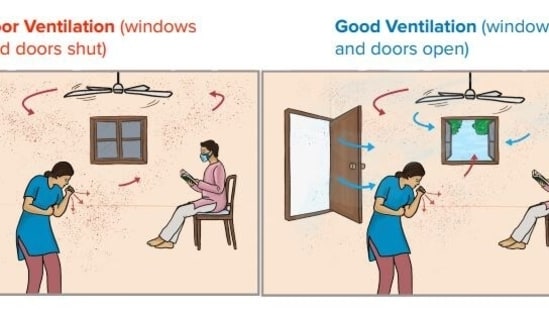
"Just as smells can be diluted by ventilation, the dangerous concentration of the virus can be reduced by ensuring that outdoor air flows in," the guideline said adding that the placement of the fan is also crucial as the fan should not be at a place where it can cause contaminated air to flow directly to someone else. If the windows and doors of a room are shut, the exhaust fans should keep running. "Add an exhaust fan OR turn a pedestal fan into an exhaust fan by turning it to face outdoors, to create the ideal airflow for maximum protection from indoor infection," the guideline said.
'Vaccinated or not': Government's scientific advisor has 3 tips against Covid-19
For workspaces, the guideline suggests keeping windows and doors ajar with the air-conditioners running so that clean air can enter and dilute virus particles. For maximum air circulation, the addition of an exhaust fan has also been suggested.
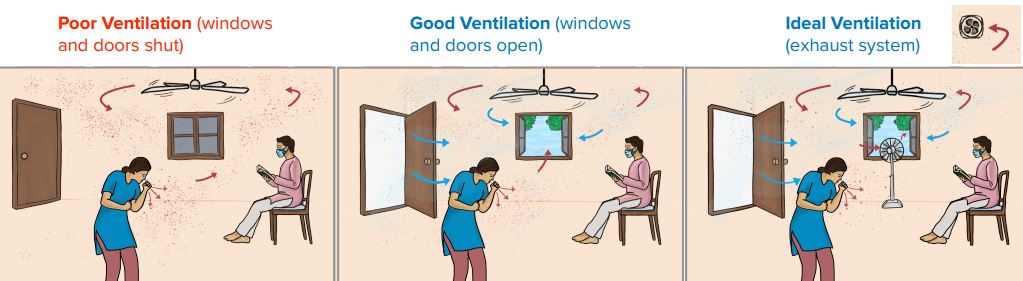
Lack of windows, cross-ventilation creates excessive viral load and increase the chances of infection inside poorly ventilated spaces, the guideline said.
Explaining why utmost caution is the need of the hour, the guideline reiterated that some infected people may never show any symptoms but can release enough droplets to create a "viral load" that can infect many others.
"Saliva and nasal discharge in the form of droplets and aerosols carry the virus from one person to another. Larger size droplets fall to the ground and on surfaces, and smaller aerosol particles are carried in the air to greater distances. In closed un-ventilated indoor spaces, droplets and aerosols become quickly concentrated and greatly increase the risk of transmission to people in the area," the Centre said.


