E-Paper



How Kerala’s plan to eliminate ‘extreme poverty’ changed lives
Kerala's government prioritizes housing for extremely poor families, assisting Rejimol and Fathima through its Extreme Poverty Alleviation Project.

 Prefer HTon Google


A few hundred metres away from the government lower primary school in Konattussery stands the unfinished house of Rejimol MR, a coir worker. It stands just beside her husband Sunil Kumar’s decrepit ancestral home. Surrounded by swamps and paddy fields, it is perhaps not the best place to build a house, but it is the only land they own. With Kumar being deaf and mute since birth and unable to contribute a steady income, it is Rejimol’s modest daily incomethat sustains the life of the couple and their two young daughters.
With her husband’s ancestral house certified by local officials as unsafe and slowly but surely crumbling to earth, Rejimol and her family have long dreamt of moving to a new home. That may soon remain a dream no longer, as the state government prioritised the family for housing needs under the “Athidaridrya Nirmarjana Paddhathi” or the Extreme Poverty Alleviation Project (EPAP).
Under the project’s umbrella, the family has received three installments of ₹4 lakh due from the state under its flagship “Life Mission” housing scheme and is arranging the rest of the funds through bank loans. The two-bedroom house, on which half the construction is complete, is budgeted by the local contractor at around ₹8 lakh.
“It is certainly a big relief for us that at least half of the home’s cost has been borne by the government. We want to secure the remaining bank loan quickly and move into the new house,” Rejimol told HT.
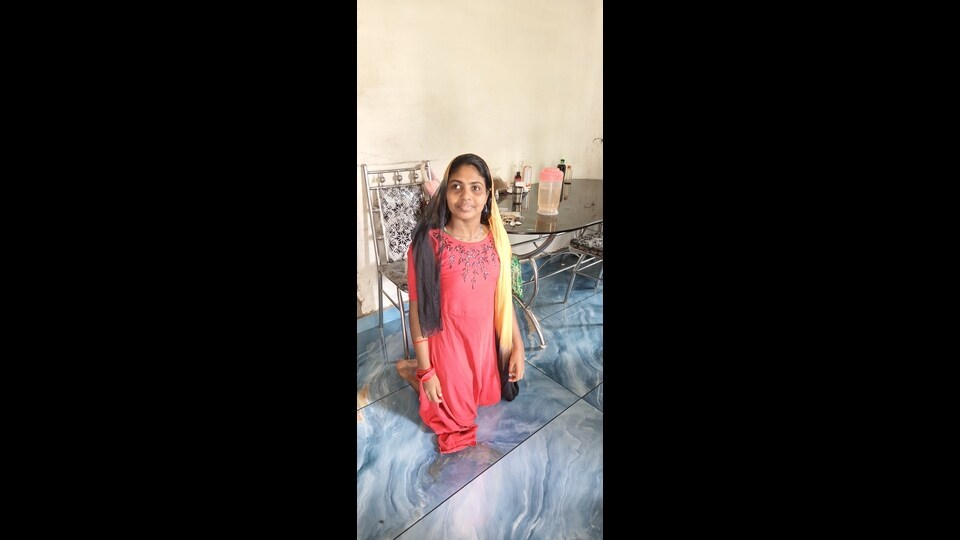
Around four kilometres away, 37-year-old Fathima Abdul Kareem, paralysed waist-down since birth, was confined to her modest single-storey home for most of her life. Her mother Suhana says the family tried all kinds of treatment to no avail. Though she has a sociology degree, her inability to go outside has meant that the dream of a full-time job remained distant.
That’s when the ward-level team, deployed as part of the EPAP scheme, comprising officials from Kudumbashree visited her home a few months ago and identified Fathima as eligible for assistance under “Ujjeevanam” scheme, meant to ensure livelihood to members of “extremely poor” families through financial assistance. The livelihood schemes could be anything from fish or poultry-rearing to selling lottery tickets to tailoring and making paper pens. Fathima chose jewellery and umbrella making. “I had an affinity towards making inexpensive jewellery using gems and stones and learnt on my own. I would watch YouTube videos to catch up on the latest trends. Gradually, I also learnt how to make umbrellas from scratch. Now, I get a lot of orders for both,” she said.
Under the scheme, Fathima was given assistance of ₹48,500, using which she bought the raw materials to create jewellery and umbrellas. Besides, her family also got an assistance of ₹50,000 for house repairs.
Both Rejimol and Fathima belong to the 64,006 families categorised as “extremely poor” by the LDF government in Kerala, and are now beneficiaries of a four-year-long project aimed at eliminating extreme poverty in the state. On November 1, the anniversary of the state’s formation day, chief minister Pinarayi Vijayan will make the formal declaration of the scheme’s success at a glittering event in Thiruvananthapuram. The government claims Kerala is the first state in India to do so.
MB Rajesh, minister for local self-governments, said that the idea to initiate the project in 2021 to identify households living in “extreme poverty” came on the back of a a Niti Aayog study that found that the state had the lowest poverty rate in the country at 0.7%.
“We understood that it was important to reach out to this population, however small it is, and meet their needs as part of a dedicated programme. Ground-level surveys were done in the first phase to identify such families based on indicators like access to food, health, housing and livelihood. As part of the surveys, 1,03,099 individuals from 64,006 families were identified as extremely poor,” the minister said at a press conference on Oct 22.
As part of the programme, family-specific microplans were created at the grassroots level to address various needs such as land, housing, identification cards, food, medicine and palliative care, and livelihoods, he said, adding that needs were met in a phase-by-phase manner through an integration of all government schemes.
“Out of the 64,006 families identified in surveys, 4421 individuals (considered as single-member families) died in intervening years, 261 families identified as nomads could not be traced and 47 cases where different members of the same family were identified in various local bodies and micro plans were set up for them, considering them as a single family. So, except 4729 families, the remaining 59,277 families have been lifted out of extreme poverty,” Rajesh added.
Micro-plans and decentralisation of services
Officials who were part of the project at the grassroots level said the exercise was designed in a way that allowed the seamless exchange of ideas, inputs and action plans between officers from various departments such as health, housing, revenue, transport, social justice. This helped in cutting bureaucratic red-tape, they said, adding that extensive and multiple surveys were carried out across all 1200 local bodies in the first year itself by grama sevikas and ward-level special teams.
Officials said that the first phase was the “Avakasham Athivegam” campaign, as part of which essential documents such as ration cards, Aadhaar, electoral ID, health insurance cards and social security pensions were provided to those who lacked them. The next phase involved understanding the specific needs of each family and creating micro-plans with short-term and long-term projects, they said.
Indulekha, a village extension officer in Pattanakkad panchayat in Alappuzha district who was at the heart of the EPAP project in the panchayat, said that those who urgently needed housing were prioritised in the list of beneficiaries of Life Mission, the state government’s flagship housing scheme.
“For issues pertaining to land, we referred to the revenue department and the district collector’s office to get sanctions. For delivery of essential medicines, we utilised the services of the ASHAs,” said the officer. “The deadline to achieve the goal of extreme poverty-freeness was always November 1, 2025. So we had to keep going,” she added.
Criticism persists amid glitches
The EPAP initiative, while well-intentioned and progressive, is not without glitches and is being used to sweep some of Kerala’s social and caste realities under the rug ahead of elections, certain sections of the population have claimed.
The Adivasi Gothra Mahasabha, a tribal outfit, said the proposed declaration on Nov 1 masks the realities of homelessness and landlessness, particularly among the Dalits and tribals in the society.
“At a single glance, it is clear that the figures of families in “extreme poverty” are fake and in reality, that figure is much higher. Among tribals in Wayanad, those belonging to Paniya, Adiya, Kattunayka and Vettakuruma are mostly landless, homeless and without stable incomes. Hundreds of such families are still living in leaking sheds along rivers and on the fringes of forests. They have not been included or assisted as part of the project,” the outfit said in a statement.
Kunjumol Sabu, a ward member in Vayalar panchayat, claimed that the administration’s method of delivering food kits in Alappuzha district was flawed.
“The district administration orders school kids to bring at least one essential item to be given over to poor families. These items are pooled from schools, sorted and delivered. Among those kids in school, there are even those who come from the same social background as those that the kits are aimed at. Would that kid be able to bring an item like others in his class? Is his social reality at home the same like others? The government doesn’t think of such issues while designing a project like this,” she said.
She added that the scheme of delivering food kits was temporary and lasted only a few months. “There are families who still need such food kits. But they are still denied. There was also pressure from above on ward members like us to reduce the number of beneficiaries,” she alleged.
J Prabhash, former professor of political science at Kerala University, opined that the project, to his mind, was more a “political stunt” than a genuine attempt at eliminating poverty. “The state government hasn’t clarified which scientific study it used to identify these 64,000 families as extremely poor. What were the indicators? Were income levels assessed? Obviously, we know there are hundreds of families particularly among tribals who are poor and without land or homes. I don’t think they have been included. This is simply a political stunt ahead of the elections,” he said.