
 E-Paper



How NADA changes Indian cricket
The contention was that cricket was a ‘low-risk’ sport as far as doping violations were concerned—more skill than physical force—and that its top players were anyway available to be tested during ICC tournaments, and during other international fixtures.


Indian cricket’s governing body has agreed to come under the ambit of the National Anti-Doping Agency (NADA). So what changes in Indian cricket:
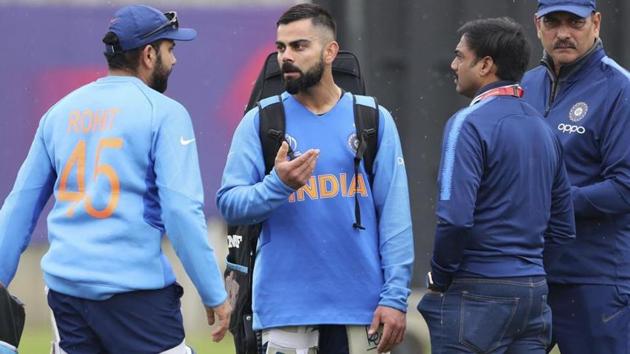
Having refused, for around two decades, to let cricketers be subjected to dope-testing like their counterparts in Olympic sports, the Board for Control of Cricket in India will now come under the regime of National Anti-Doping Agency. BCCI had hired Sweden’s International Dope Testing Management (IDTM) to collect samples and submit them to National Dope Testing Laboratory under Indian board’s own programme. However, the International Cricket Council (ICC), which is World Anti-Doping Agency (WADA)-compliant, has been pushing the Indian board to fall in line. Finally, the sports ministry made compliance mandatory for clearing bilateral tours.
Having agreed to come under NADA, the board has given in writing to the sports ministry that all cricketers will now be tested by the national anti-doping body. It means NADA’s anti-doping officials will collect the samples, and they will be tested in the New Delhi-based laboratory. NADA will also conduct the disciplinary process, if any cricketer tests positive.
The Indian cricket board has argued for long that it was not a national federation and hence did not have to come under the national anti-doping programme. The contention was that cricket was a ‘low-risk’ sport as far as doping violations were concerned—more skill than physical force—and that its top players were anyway available to be tested during ICC tournaments, and during other international fixtures. BCCI also kept blocking efforts to bring its top players under a common testing regime, saying that coming under the WADA whereabouts clause could weaken their security.
BCCI raised three issues—quality of dope testing kits, competence of the pathologists and sample collection procedure. NADA said it would use better quality kits, but BCCI will have to meet the extra charge.
Whereabouts are information provided by a limited number of elite athletes, included in a Registered Testing Pool (RTP), about their location to the international federation (IF) or National Anti-Doping Organisation (NADO). Athletes must make themselves available to drug testers for one hour a day—between 6am and 11pm—and provide information where they will be present, 90 days in advance. Any changes had to be updated on the website provided for that. Failure to be present at the specified time thrice within a 12-month period will be treated as a doping offence and lead to a suspension for up to four years. Because out-of-competition doping controls can be conducted without notice, they are one of the most powerful means of deterrence and detection of doping. The procedure is designed to give those top-level athletes a flexible tool to show their commitment to a doping-free sport, as well as appropriate, sufficient and effective privacy protection. WADA does not decide who should in the RTP. International federations decide who should be subject to these provisions internationally, and NADOs create a testing pool at the national level.
With power and athleticism vital to succeed in the shortest format, and many players bulking up a bit to improve their hitting abilities, the feeling is these players must be tested more often to ensure they are not taking any shortcuts by using banned substances.


