
 E-Paper



State of economy amid a surge in Covid infections
The seven-day average of daily new Covid-19 cases was 6,780 on December 27 and 18,236 on January 2. This number has been increasing continuously for exactly seven days now.

 Prefer HTon Google


India is clearly witnessing the beginning of a third wave of Covid-19 infections. The seven-day average of daily new cases was 6,780 on December 27 and 18,236 on January 2. This number has been increasing continuously for exactly seven days now. How are economic indicators reacting to this development? What is the state of the Indian economy at the cusp of yet another wave of the pandemic? Here are four charts to put this in perspective
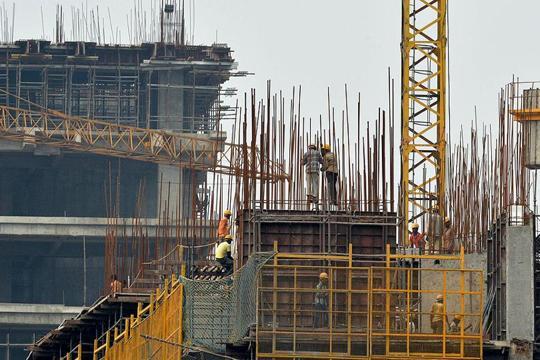
Stocks markets seem unperturbed at the moment
The BSE Sensex, India’s benchmark stock market index, gained 929 points on January 3 to close at 59,183. This is the highest single-day gain in the past 26 days, and the market has closed at the highest level since November 18. Among subindices, BSE Bankex that tracks the banking sector saw the highest increase at 2.55%. Bajaj Finance was the top gainer at 3.51% among the Sensex stocks.
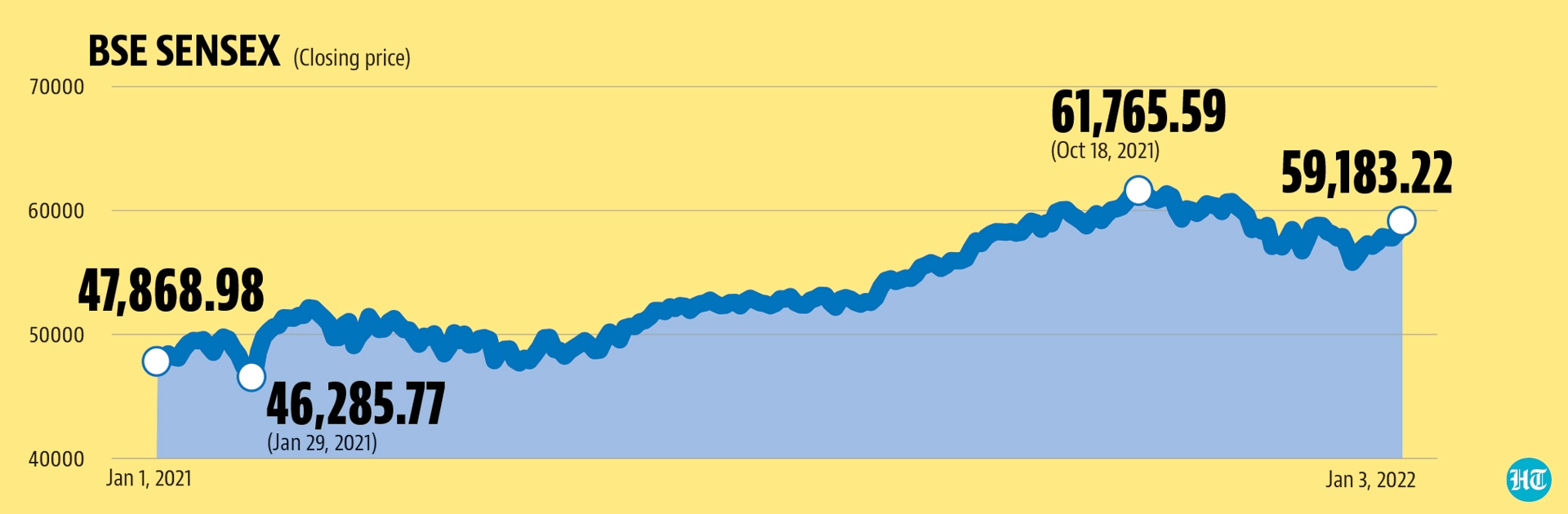
NIBRI at an all-time high in the week ended January 2
The Nomura India Business Resumption Index (NIBRI) reached an all-time high of 120.3, gaining marginally over the reading of 120.2 in the previous week. To be sure, the rise in NIBRI seems mainly on account of an increase in the Apple driving index, which increased by 10.4 percentage points. Workplace mobility actually fell by six percentage points, and even labour participation rate fell marginally from 40.7% to 40.6%.
“States have announced more restrictions, but elevated mobility and a rising positivity rate suggest a further rise in new cases. While early signs point to a lower mortality rate, it bears close monitoring. The restrictions could derail the recovery in contact-intensive services in Q1, but global experience suggests a smaller impact than previous waves and a swift growth rebound once cases peak,” Nomura Global Markets Research said in a research note.
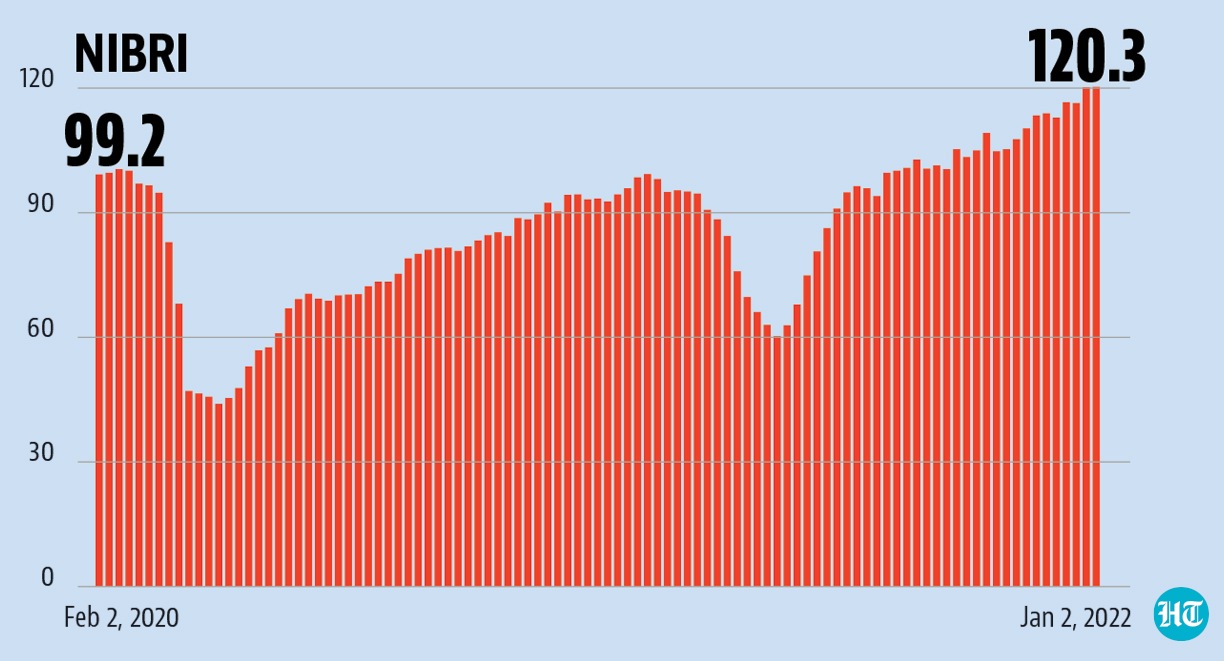
Manufacturing PMI continued to be in expansion zone in December
The IHS-Markit Purchasing Managers Index (PMI) for manufacturing was 55.5 in December 2021, the sixth consecutive month when it was above 50. However, the December value is lower than the November value of 57.6. A PMI value above 50 signifies an expansion in economic activity over previous month.
“Manufacturers were optimistic that output would continue to increase in 2022, but business sentiment was somewhat tamed by worries surrounding the path of the pandemic, inflationary pressures and lingering supply chain disruptions,” Pollyanna De Lima, economics associate director at IHS Markit said in a statement.
“We note that the (PMI) survey does not fully cover the Omicron impact on domestic producers’ perception as it was conducted between December 6-17 2021,” Madhavi Arora, lead economist at Emkay Global Financial Services, said in a note. Services PMI for December will be released on January 5.
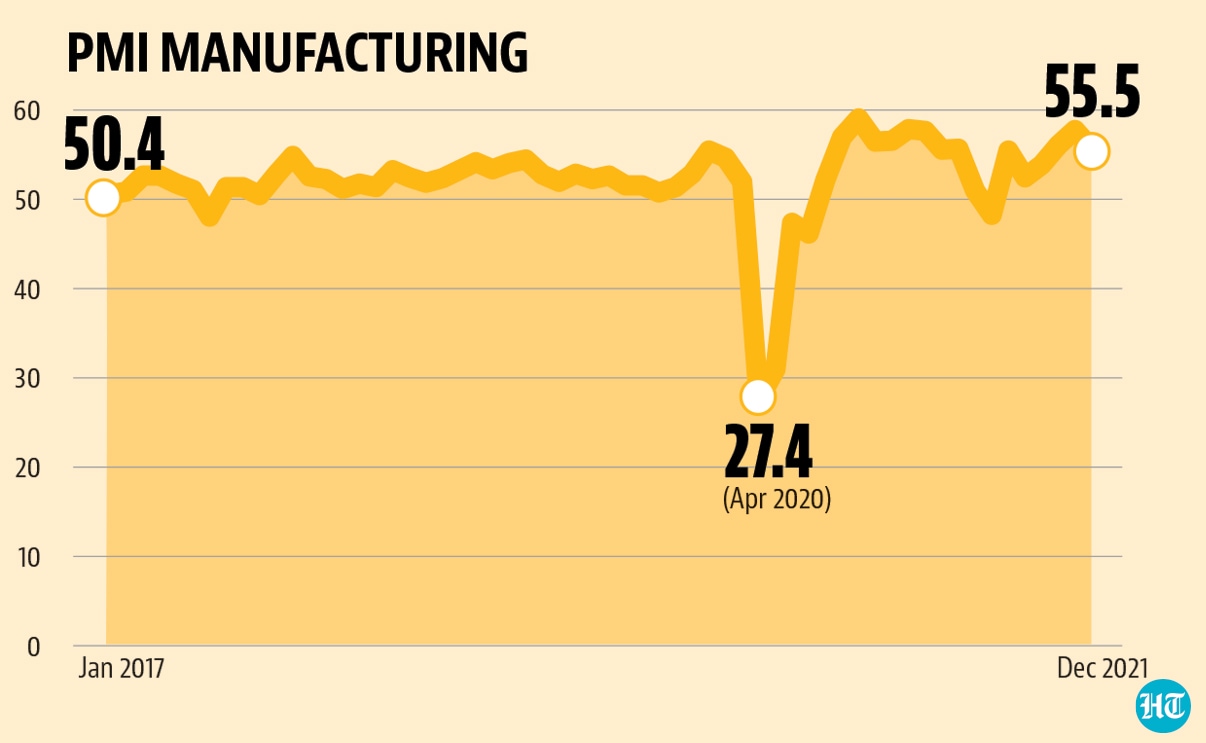
But the index of core sector industries suggests a moderation in November
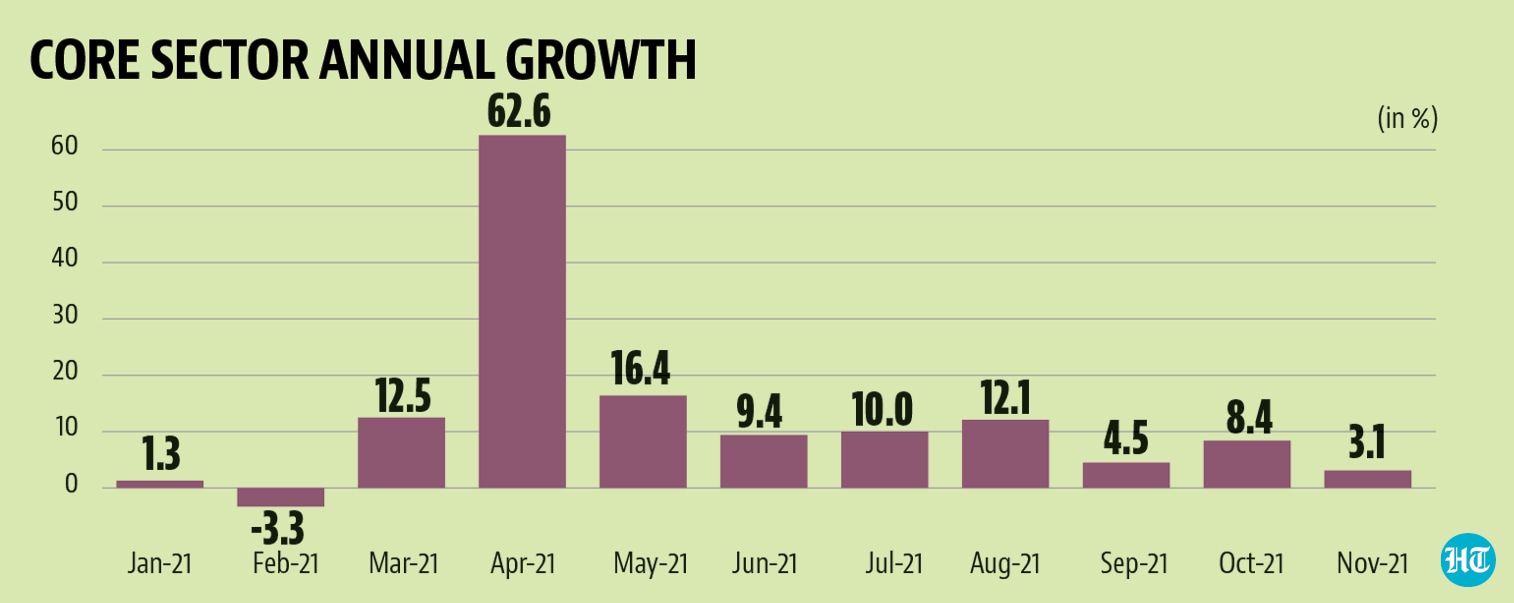
The index of eight core sector industries grew at an annual 3.1% in November, a sharp decline from the 8.4% growth seen in October, and also the lowest annual growth since March. When seen on a cumulative basis (April-November), the index was marginally above the pre-pandemic value of 129.9 in 2019-20 and 131.2 in 2021-22.
Mixed signals on capital expenditure front
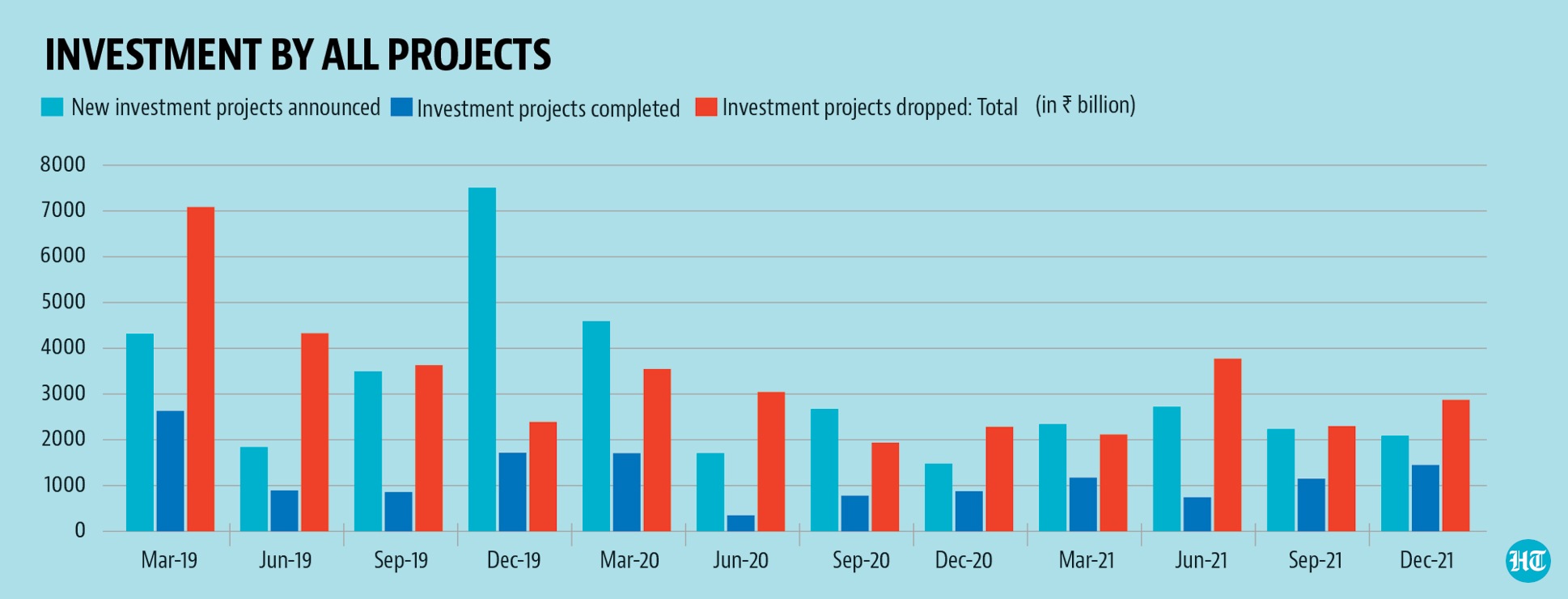
The revival of investment remains critical for long-term growth prospects of the economy. The capital expenditure database of the Centre for Monitoring Indian Economy (CMIE) offers mixed evidence. While the value of new project announcements fell in the second consecutive time to reach ₹2.1 trillion in the quarter ended December, the value of projects completed actually increased in the September and December quarters. The value of investment projects also fell in the September and December quarters. “Completions in the quarter of December 2021 were the highest compared to the levels achieved in any of the past six quarters,” Mahesh Vyas, chief executive of CMIE, wrote in an article on its website.
To be sure, the jump in project completions might have an election bias to it. “The pick-up in completion of projects seen in the quarter ended December 2021 has been partly influenced by political activism. The largest project completed during the quarter was the Purvanchal Expressway. This 341km, ₹225 billion project was inaugurated by the Prime Minister in November 2021. The 257km, ₹98 billion Sarayu Nahar project was inaugurated by the Prime Minister in December 2021. In December 2021, the Prime Minister also inaugurated the Rs.86 billion, 1.27 million tonnes of urea per annum FCI fertiliser plant at Gorakhpur in Uttar Pradesh. During the quarter, the Prime Minister also inaugurated the Rs.26 billion Arjun Sahayak Irrigation project in Uttar Pradesh. Just these four projects inaugurated by the Prime Minister during the quarter of December 2021 add up to projects worth Rs.435 billion or over 30 per cent of the total projects completed during the quarter,” Vyas wrote in his article.
 ABOUT THE AUTHORRoshan Kishore
Roshan Kishore is the Data and Political Economy Editor at Hindustan Times. He heads the newsroom's data journalism team, which produces Number Theory, a daily data-driven feature for the print edition and the HT app. Number Theory uses data analysis and story-telling based on it to add value to the newsroom’s daily coverage by putting stories in a larger context on a range of issues, including politics, macroeconomy, markets, global affairs and climate. Under his leadership HT’s data journalism work has established itself as a niche product in Indian journalism and pushed the boundaries of marrying academic rigour with news sense and speed. Along with writing and editing data stories, he has also been writing a weekly political economy column called Terms of Trade for HT Premium. A trained economist with an MPhil degree from Jawaharlal Nehru University, Kishore has also been a visiting fellow at the Centre for Advanced Studies of India (CASI) at the University of Pennsylvania. Along with his journalistic work, his writings have also appeared in journals such as the Economic and Political Weekly and working papers for CASI and UNESCAP.Read More


